
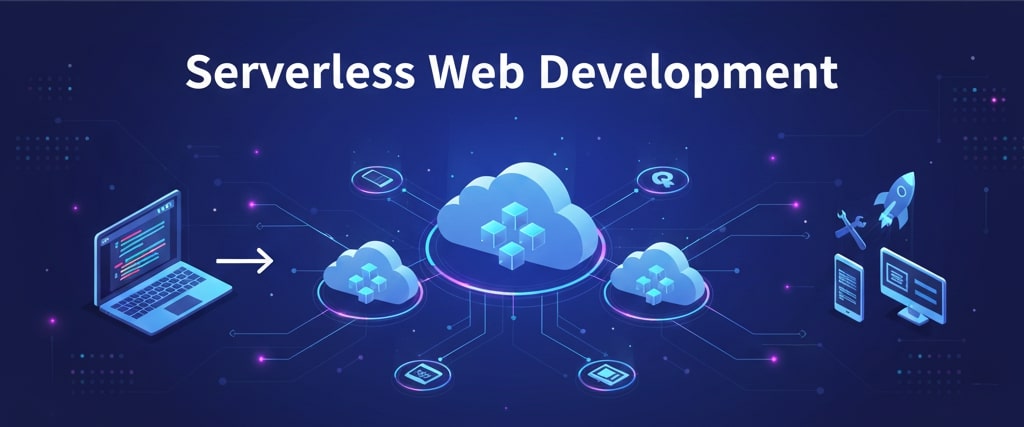
Serverless web development allows developers to build scalable, high-performance applications without managing servers, enabling faster deployment, automatic scaling, and cost-efficient execution. Modern platforms like AWS Lambda, Azure Functions, and Google Cloud Functions handle infrastructure while developers focus on code. Serverless is ideal for APIs, event-driven workflows, data processing, scheduled tasks, and media automation.
In today’s fast-paced digital landscape, businesses and developers are constantly searching for ways to deliver high-performance web applications without the overhead of managing servers. Serverless web development has emerged as a game changer, enabling teams to focus entirely on writing code and deploying features, while the cloud provider handles infrastructure, scaling, and maintenance.
Whether you’re a seasoned developer or just starting out, this guide will walk you through everything you need to know about serverless architecture in 2025. We’ll cover core concepts, leading platforms, best practices, real-world use cases, and tips for optimizing cost and performance. By the end, you’ll be ready to launch your next web app without worrying about servers, capacity planning, or complex DevOps workflows.
What Is Serverless Web Development?

Definition
Serverless web development refers to building and running web applications using managed cloud services where the developer does not provision or manage servers directly. Instead, the cloud provider automatically handles the infrastructure, scaling functions in response to traffic and only charges for actual compute time consumed.
How It Works
Under the hood, serverless apps are composed of individual functions or microservices that execute in stateless containers. When an HTTP request, event, or scheduled trigger occurs, the provider invokes the relevant function, allocates resources on demand, and then deallocates them once the execution completes. This pay-per-use model drives both cost efficiency and automatic scaling.
Key Benefits of Going Serverless

1. Cost Efficiency
Traditional servers run 24/7 and incur idle time costs. Serverless functions only bill you for the exact invocations and execution duration, significantly reducing expenses for sporadic or unpredictable workloads.
2. Automatic Scalability
With built-in scaling, serverless applications can handle sudden traffic spikes seamlessly. Providers automatically spin up additional instances of your functions to meet demand, then scale back down to zero when traffic subsides.
3. Faster Time to Market
By offloading infrastructure management to the cloud provider, developers can focus on core business logic and ship features more rapidly. Rapid prototyping becomes simpler when you don’t need to configure servers, load balancers, or auto-scaling groups manually.
4. Reduced Operational Overhead
Serverless reduces the need for a dedicated operations team. Patching, scaling, capacity planning, and high-availability configurations are abstracted away, allowing small teams to maintain large-scale applications efficiently.
Top Serverless Platforms
AWS Lambda
Amazon Web Services pioneered serverless with Lambda, offering seamless integration with other AWS services like API Gateway, DynamoDB, and S3. Lambda functions support multiple runtimes, including Node.js, Python, Java, and Go.
Azure Functions
Microsoft Azure Functions provides a flexible serverless environment that integrates with the Azure ecosystem. Developers can use C#, JavaScript, Python, and PowerShell to build HTTP-triggered functions, event handlers, and durable workflows.
Google Cloud Functions
Google’s serverless offering emphasises simplicity and integration with Firebase, Cloud Pub/Sub, and Cloud Storage. Ideal for event-driven microservices and real-time APIs, Cloud Functions supports Node.js, Python, Go, and Java runtimes.
Other Options
Several open-source and niche frameworks exist, such as the Serverless Framework, OpenFaaS, and Knative. These allow you to deploy serverless functions across multiple cloud providers or on-premises environments for multi-cloud or hybrid serverless strategies.
Best Practices for Serverless Development
Design for Small, Single-Purpose Functions
Keep functions focused on one task. Smaller functions are easier to maintain, test, and scale independently. Avoid monolithic handlers that try to do everything in a single execution.
Implement Robust Logging & Monitoring
Use managed tools like AWS CloudWatch, Azure Monitor, or Google Stackdriver to collect logs, metrics, and traces. Structured logging and distributed tracing help diagnose issues quickly in a serverless environment.
Handle Errors Gracefully
Build in retries, dead-letter queues, and fallback logic. Since functions can fail due to cold starts or transient issues, ensure your application degrades gracefully and retries critical operations automatically.
Secure Your Functions
Apply the principle of least privilege by granting functions only the permissions they need. Use managed identity or role-based access controls, encrypt sensitive environment variables, and validate all inputs to prevent injection attacks.
Common Use Cases
APIs & Microservices
Serverless functions shine when building RESTful or GraphQL APIs. Pair Lambda or Functions with an API Gateway to deliver scalable endpoints without provisioning web servers.
Real-Time Data Processing
Process streaming data from IoT devices, clickstreams, or logs using serverless functions triggered by events in Kafka, Pub/Sub, or Kinesis. Spin up compute only when new data arrives.
Scheduled Tasks
Run cron jobs, backups, and maintenance scripts with scheduled triggers—no VM needed. Schedule functions to execute at defined intervals using CloudWatch Events, Azure Timer Trigger, or Cloud Scheduler.
Image & Video Processing
Automatically generate thumbnails, transcode videos, or perform real-time media analysis by triggering functions upon file uploads to object storage services like S3 or Blob Storage.
CI/CD & Tooling for Serverless
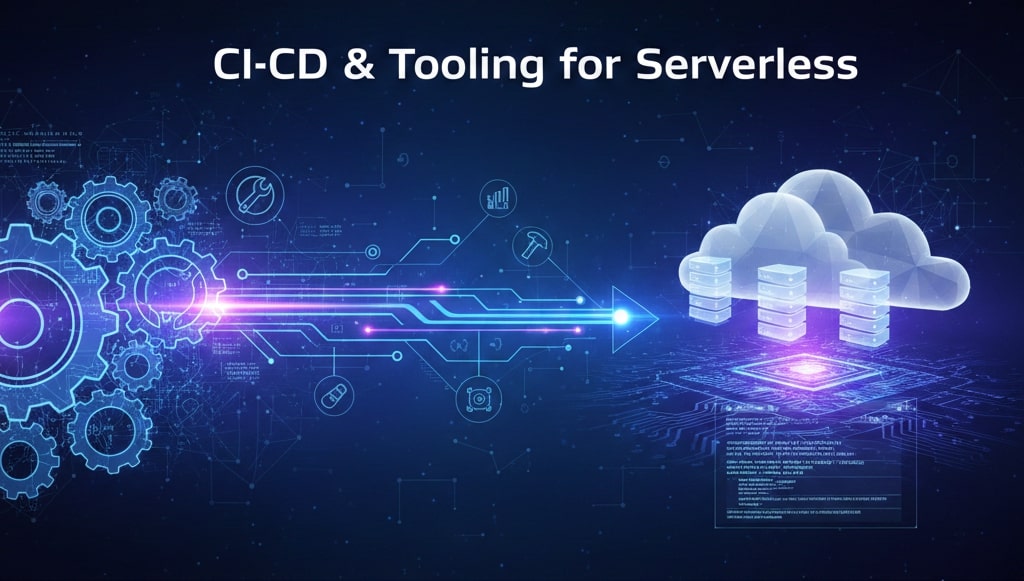
Adopt infrastructure-as-code (IaC) tools such as the Serverless Framework, AWS SAM, Azure Bicep, or Terraform to define functions, triggers, and related resources declaratively. Incorporate automated testing into your pipeline—unit tests for code, integration tests for function triggers, and end-to-end tests for complete flows.
Use managed CI/CD services like GitHub Actions, AWS CodePipeline, or Azure DevOps to orchestrate build, test, and deployment stages. Automate versioning, blue/green or canary deployments, and rollbacks to ensure safe releases.
Cost Optimization Tips
Right-size memory and timeout settings for each function. Monitor usage patterns and leverage reserved concurrency where available. Archive cold data in cheaper storage tiers, and consider provisioned concurrency for latency-sensitive workloads to avoid cold start delays.
Common Pitfalls & How to Avoid Them
Avoid long-running, stateful processes; serverless is ideal for short, stateless tasks. Watch out for hidden costs like data transfer or logging volume. Keep an eye on vendor limits and concurrent execution quotas to prevent throttling during traffic spikes.
Performance Optimization Strategies
Even though serverless abstracts infrastructure management, developers still need to focus on optimizing performance. Efficient code design, minimizing external API calls, and reducing cold starts are key areas to address. Caching frequently accessed data, using lightweight libraries, and optimizing function memory allocation can significantly improve execution speed. Additionally, monitoring response times and profiling function execution helps identify bottlenecks early, ensuring your application performs consistently under varying loads.
Serverless Observability and Debugging
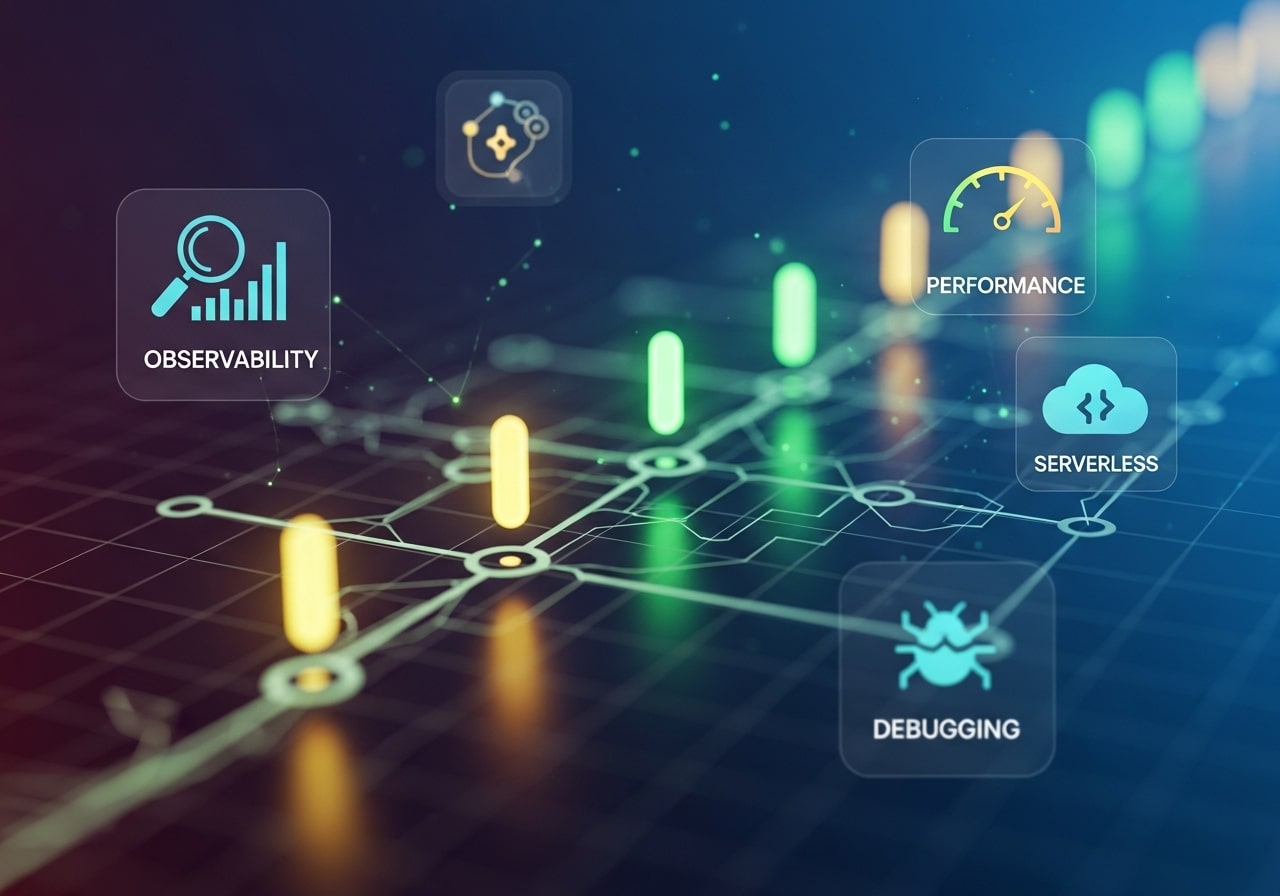
Visibility into serverless applications is crucial because functions are ephemeral and distributed across multiple services. Advanced observability involves collecting logs, metrics, and traces in real time, as well as correlating them across microservices to understand the full workflow. Tools like distributed tracing, structured logging, and centralized dashboards make debugging easier and faster. Establishing alerts for anomalies, failures, or performance regressions ensures that potential issues are caught before they impact users, providing a reliable and maintainable serverless environment.
Environmental Sustainability and Serverless
Serverless computing can contribute to greener technology practices by optimizing resource usage. Unlike traditional servers that run continuously, serverless functions only consume compute resources when actively executing, reducing overall energy consumption. Choosing cloud providers with renewable energy commitments, designing lightweight functions, and avoiding unnecessary invocations can further decrease your carbon footprint. By adopting serverless architectures thoughtfully, developers can not only build scalable applications but also align their projects with sustainable and energy-efficient computing practices.
Event-Driven Architecture in Serverless Applications
Serverless development naturally complements event-driven design, where functions are triggered by specific events rather than running continuously. Events can come from HTTP requests, database changes, message queues, IoT devices, or cloud storage updates. Designing applications around events encourages modularity and loose coupling, making it easier to scale, maintain, and extend functionality. Event-driven serverless architectures also allow for highly responsive applications, as each component reacts immediately to changes, enabling real-time processing without the overhead of constantly running services.
Serverless and Edge Computing
The combination of serverless and edge computing is transforming how applications deliver low-latency experiences. By deploying serverless functions closer to users on edge nodes, developers can reduce response times and improve performance for geographically distributed audiences. This approach is particularly valuable for applications requiring real-time updates, like gaming, media streaming, or IoT processing. Edge-enabled serverless architectures also allow for better load distribution, offloading work from centralised cloud regions and improving overall resilience and availability.
Serverless Observability and Performance Monitoring
Even though serverless abstracts away infrastructure management, monitoring and observability remain critical for maintaining high-performing applications. Developers should implement comprehensive logging, tracing, and metrics collection to understand how functions are performing, identify bottlenecks, and detect failures. Tools like AWS CloudWatch, Azure Monitor, and Google Cloud’s Operations Suite provide built-in monitoring, while third-party solutions can offer deeper analytics and visualizations. Performance monitoring should track invocation counts, latency, error rates, and cold start impacts, enabling teams to optimize resource allocation, improve reliability, and ensure a seamless user experience.
Future Trends in Serverless Web Development
Expect enhanced hybrid serverless models that seamlessly span cloud and edge environments. Look for more advanced local emulation tools, stronger support for containerized functions, and deeper AI/ML integrations directly within serverless platforms.
Conclusion
Serverless web development has matured into a powerful paradigm that lets you build scalable, cost-effective, and maintainable applications more quickly than ever before. By understanding its core concepts, adopting best practices, and leveraging the right tools, you can unlock new levels of agility and performance in 2026 and beyond.
Ready to dive in? Choose your preferred cloud provider, set up a simple function, and experience the freedom of writing code without servers. The serverless revolution is waiting for you.
FAQ: Serverless Web Development
1. Is serverless truly “server-free”?
No. Servers still exist behind the scenes, but developers never manage or configure them. The cloud provider takes full responsibility for provisioning, scaling, and maintaining infrastructure.
2. What types of applications are best suited for serverless?
Serverless works best for event-driven applications such as APIs, microservices, data processing pipelines, scheduled tasks, and lightweight backend workflows. It’s ideal for workloads with variable or unpredictable traffic.
3. Do serverless applications suffer from latency issues?
Sometimes. Serverless platforms may experience “cold starts” when functions haven’t been invoked recently. This can cause slight delays, but using provisioned concurrency, warmed-up functions, or optimized runtimes can minimize the impact.
4. How does serverless handle scalability?
Scaling happens automatically. When traffic increases, the provider spins up additional function instances. When traffic drops, instances scale down to zero—ensuring efficiency without manual configuration.
5. Is serverless cheaper than traditional hosting?
Often, yes. Since you only pay for actual execution time, it eliminates costs associated with idle servers. However, for consistently high-traffic or long-running workloads, other models may be more cost-effective.
6. Can I build full web applications using only serverless components?
Absolutely. You can build full apps using serverless functions, managed databases (DynamoDB, Firestore, Cosmos DB), storage services (S3, Blob Storage), and serverless front-end hosting (Netlify, Vercel, CloudFront). Many modern apps are fully serverless end-to-end.
7. Are serverless applications secure?
Yes—when configured correctly. Cloud providers offer strong security features, but developers must follow best practices like least privilege access, environment variable protection, and input validation to ensure strong security.
8. Which programming languages are supported?
Major serverless platforms support popular languages like JavaScript/Node.js, Python, Go, Java, C#, Ruby, and more. Some platforms also allow custom runtimes or container-based functions.
9. Can I use serverless in a multi-cloud or hybrid environment?
Yes. Solutions like Knative, OpenFaaS, Kubeless, and the Serverless Framework enable deploying serverless functions across multiple cloud providers or on-prem environments.
10. What are the biggest challenges with serverless development?
Common challenges include managing cold starts, debugging distributed functions, handling vendor lock-in, and monitoring systems spread across multiple cloud services. Good tooling and observability can reduce these complexities.
11. Is serverless suitable for long-running tasks?
Not usually. Serverless functions have time limits and are optimised for short, stateless executions. Long-running processes are better suited for containerised or VM-based architectures.
12. How do I deploy serverless applications?
+Most teams use IaC and CI/CD tools like the Serverless Framework, AWS SAM, Terraform, GitHub Actions, or Azure DevOps. These tools automate deployments, manage environments, and handle versioning.
Read more about this topic: How to Develop a Web Page: A Complete Beginner’s Guide