

The Future of Content Ecosystems: Embracing Headless CMS in 2025
Introduction
The digital landscape of 2025 demands unprecedented flexibility, speed, and seamless omnichannel delivery. As businesses expand their presence across web portals, mobile applications, digital assistants, and Internet of Things (IoT) devices, traditional monolithic content management systems (CMS) are showing their limitations. In response, an API-first, headless CMS architecture is emerging as the cornerstone of modern content ecosystems. By decoupling content storage from presentation layers, headless platforms empower development teams to leverage best-of-breed frontend frameworks while marketing teams maintain intuitive editorial control. Gartner forecasts that by the end of 2025, 75 percent of enterprise-level organizations will adopt headless or composable CMS solutions to support dynamic customer experiences (https://www.gartner.com/en/documents/3986611). This blog post explores why headless CMS is not merely a passing trend, but the future of content-driven web development.
1. Evolution from Monolithic to Headless CMS
In the early 2000s, monolithic CMS platforms integrated content storage, templating engines, and page rendering into a single codebase. While this approach simplified setup, it quickly became a bottleneck as digital channels multiplied. Updating themes, plugins, or core code risked breaking entire websites. Moreover, performance tuning beyond the platform’s built-in mechanisms was challenging.
Headless CMS emerged around 2015 to solve these pain points. By exposing content exclusively through RESTful or GraphQL APIs, headless platforms eliminate any opinionated frontend, allowing teams to select frameworks such as Next.js, Remix, Nuxt, or Flutter. This separation of concerns fosters parallel workflows: developers can push releases without waiting for editorial sign-off on design, and content authors can preview changes without redeploying code. The rise of microservices, containerization (e.g., Docker, Kubernetes), and serverless architectures further fuels headless adoption, enabling organizations to treat content delivery as just another service layer.
2. Core Architecture and API-First Design
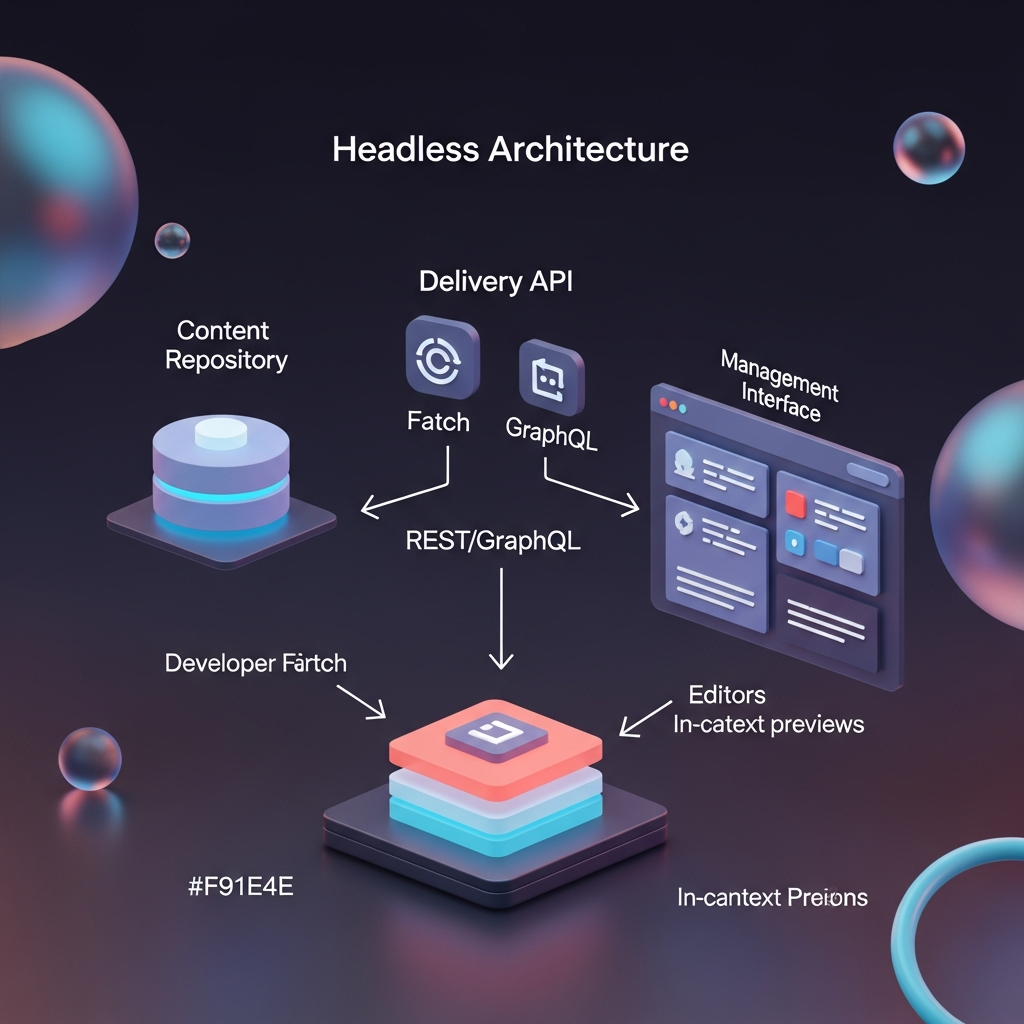
A headless CMS typically comprises three layers:
- Content Repository: A database or object store for structured content models.
- Delivery API: REST or GraphQL endpoints to expose content to any channel.
- Management Interface: A browser-based UI for content creation, review, and publishing.
In this model, developers consume content via lightweight API calls, rendering it with static site generators (SSG) or server-side rendering (SSR). For example, Next.js leverages Incremental Static Regeneration (ISR) to rebuild only updated pages on demand. Meanwhile, marketing teams rely on drag-and-drop editors and in-context previews. According to Mozilla’s MDN Web Docs (https://developer.mozilla.org/), API-first design is considered a best practice for scalable web architectures because it fosters better reusability, version control, and automated tests.
3. Benefits Driving Headless Adoption
A. Performance and SEO
Static assets can be served directly from Content Delivery Networks (CDNs), reducing server load and latency. Studies by Google’s Web Fundamentals (https://developers.google.com/web/fundamentals) show that a one-second delay in page load can reduce conversions by up to 7 percent.
B. Omnichannel Delivery
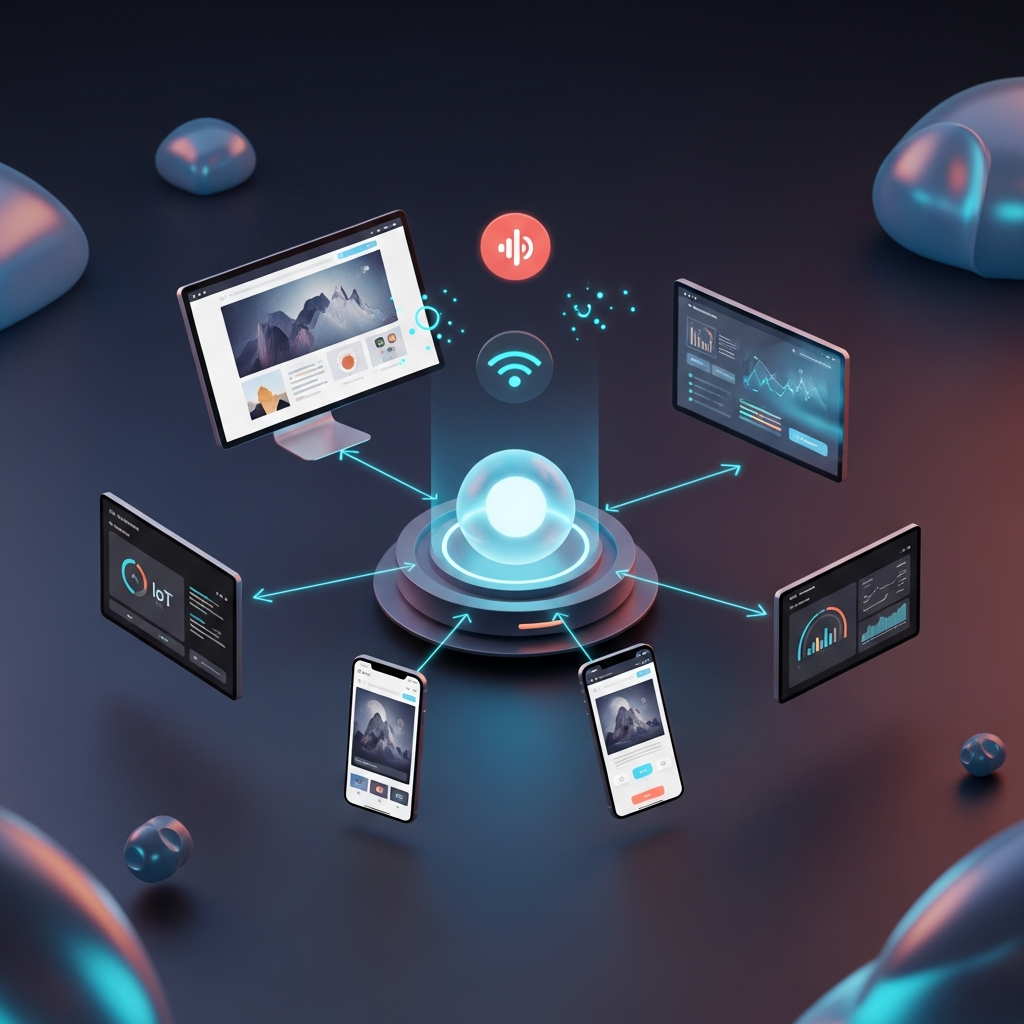
A single content source can feed mobile apps, voice assistants, digital signage, and IoT dashboards. This consistency ensures brand coherence and accelerates time-to-market for new channels.
C. Agility and Flexibility
Teams are free to adopt emerging frontend frameworks or iterate UI components independently of backend upgrades. This flexibility shortens release cycles and lowers technical debt.
D. Scalability
API endpoints can be independently scaled via horizontal container autoscaling or serverless functions. CDNs such as Cloudflare or Fastly handle cache invalidation with webhooks, ensuring content freshness at edge locations.
4. Selecting the Right Headless CMS
- API Capabilities: Look for GraphQL support, webhooks for real-time updates, SDKs in your preferred languages, and rate-limit thresholds.
- Content Modeling: Ensure the platform supports nested content types, dynamic zones, and relational fields. JSON schema validation and modular component libraries accelerate model iteration.
- Editorial Experience: Seek interfaces with in-context previews, multi-language workflows, media asset managers, and version history.
- Security and Compliance: Verify support for role-based access controls (RBAC), single sign-on (SSO) via OAuth2, audit logs, and encryption at rest. For regulated industries, confirm certifications like ISO 27001 or SOC 2.
- Ecosystem and Support: A vibrant developer community, comprehensive documentation, open-source plugins, and transparent pricing tiers—from free developer plans to enterprise SLAs—are essential.
5. Market Leaders and Emerging Players
- Contentful (https://www.contentful.com): An enterprise-grade solution with robust media management, multi-site capabilities, and a rich partner ecosystem.
- Strapi (https://strapi.io): An open-source headless CMS deployable on any infrastructure. Plugins cover authentication, GraphQL, and file uploads.
- Sanity (https://www.sanity.io): Real-time collaboration and a highly customizable editing studio, powered by GROQ query language.
- ButterCMS (https://buttercms.com): Quick onboarding for small teams, built-in SEO and blog features, with flexible page builders.
- Ghost in Headless Mode (https://ghost.org): Ideal for membership sites, newsletters, and blogs, combining simplicity with modern API access.
6. Integration with Modern Frontend Frameworks
- Next.js (React): Supports SSG, SSR, and ISR; ideal for dynamic e-commerce catalogs and blog sites.
- Gatsby (React): Leverages GraphQL data layer to combine multiple headless sources into a unified build.
- Nuxt.js (Vue): Offers hybrid rendering modes and seamless integration via modules, simplifying universal applications.
- Remix (React): Prioritizes web standards and progressive enhancement, enabling fast navigation and resilient user experiences.
- Flutter Web: Allows cross-platform mobile and web apps to fetch headless content via Dart SDKs.
7. Implementation Roadmap
Step 1: Requirements Gathering
- Define key personas, content workflows, and channel requirements.
- Map existing CMS limitations and future integration needs (CRM, e-commerce, analytics).
Step 2: Proof of Concept (PoC)
- Model core content types (e.g., product, article, author).
- Build a minimal frontend using SSG or SSR to fetch PoC data via APIs.
Step 3: Production Deployment
- Harden security: enforce HTTPS/TLS, implement API key rotation, and apply least-privilege access controls.
- Configure CDN caching and webhook triggers for cache invalidation.
- Establish CI/CD pipelines for both frontend and backend configurations.
Step 4: Editorial Onboarding
- Train marketing teams on content modeling, workflows, and preview environments.
- Develop style guides and templates for consistent formatting.
Step 5: Monitoring and Optimization
- Use real-user monitoring (RUM) tools like Google Analytics Real-Time and Lighthouse CI to track performance.
- Iterate on caching strategies, image optimization (WebP, AVIF), and code splitting.
8. Performance Best Practices
- Edge Caching: Leverage CDNs such as Fastly or AWS CloudFront to serve static assets at the network edge.
- SSR vs. SSG: Use SSG for content that updates infrequently and SSR or ISR for personalized or rapidly changing data.
- Lazy Loading: Defer non-critical scripts and images below the fold.
- Asset Optimization: Integrate with services like Imgix or Cloudinary for automated transformations and responsive delivery.
9. Security and Compliance
- OAuth2 and JWT: Implement token-based authentication for API endpoints; set token expiration and scopes.
- Web Application Firewall (WAF): Protect APIs with rate-limiting rules to mitigate denial-of-service attacks.
- Data Residency: For GDPR compliance, choose hosting locations within the European Economic Area (EEA).
- Audit Trails: Maintain write-activity logs to track content changes, approvals, and rollbacks.
10. Real-World Use Cases
A. Retail and E-commerce
- Global brands deploy headless storefronts that unify product catalogs, personalization engines, and loyalty programs across web, kiosk, and mobile.
- According to Statista (https://www.statista.com/statistics/1104565/cms-market-share-headless/), headless solutions captured over 20 percent of CMS market adoption in 2023.
B. Government and Public Sector
- Governments leverage headless platforms to deliver accessible, multilingual services. The UK Government Digital Service (GDS) shares guidance at https://www.gov.uk/service-manual.
C. Progressive Web Apps (PWAs)
- News outlets and content portals use headless CMS to feed offline-capable PWAs with real-time updates, push notifications, and background synchronization.
D. IoT Dashboards
- Manufacturing and logistics providers stream machine telemetry into custom dashboards, using webhooks or subscription APIs for near-real-time updates.
11. Overcoming Common Challenges
- Preview Workflows: Many headless systems lack built-in preview URLs. Implement staging environments or custom preview servers to simulate live conditions.
- Content Model Complexity: Avoid overly granular models; collaborate with content strategists to strike a balance between reusability and simplicity.
- Training and Change Management: Offer workshops, detailed documentation, and starter repositories to flatten the learning curve for both developers and editors.
12. Future Trends
- Composable Architecture: Integration of specialized microservices for search (e.g., Algolia), personalization (e.g., Dynamic Yield), and translation (e.g., Smartling) into a cohesive stack.
- AI-Driven Content: Automated content tagging, summary generation, and personalized recommendations powered by GPT-style models.
- WebAssembly Frontends: High-performance modules written in Rust or Go, consuming headless APIs for graphics-intensive applications.
- Headless Digital Asset Management (DAM): Unified libraries for images, video, and 3D assets accessible via APIs.
Conclusion
As we approach 2025, headless CMS stands out as the definitive solution for enterprises seeking agility, performance, and omnichannel consistency. By embracing API-first design, organizations can decouple their content strategy from presentation constraints, unlock parallel development workflows, and future-proof their digital platforms. Whether building an e-commerce storefront, a government portal, or an IoT dashboard, a headless architecture enables teams to respond swiftly to evolving user expectations. Begin your headless journey today: define clear requirements, select a proven platform, and embark on an API-driven transformation that will power your most ambitious digital experiences. Ready to get started? Explore authoritative resources such as MDN Web Docs (https://developer.mozilla.org/) and Government Design Systems (https://www.gov.uk/service-manual) to inform your architecture decisions and set the stage for a performant, scalable, and secure content ecosystem.