
Breaking into tech can feel overwhelming. With countless programming languages, frameworks, and career paths to choose from, many aspiring developers wonder where to start. Web development bootcamps have emerged as a popular alternative to traditional four-year computer science degrees, promising to teach job-ready skills in a matter of months.
What Is a Web Development Bootcamp?
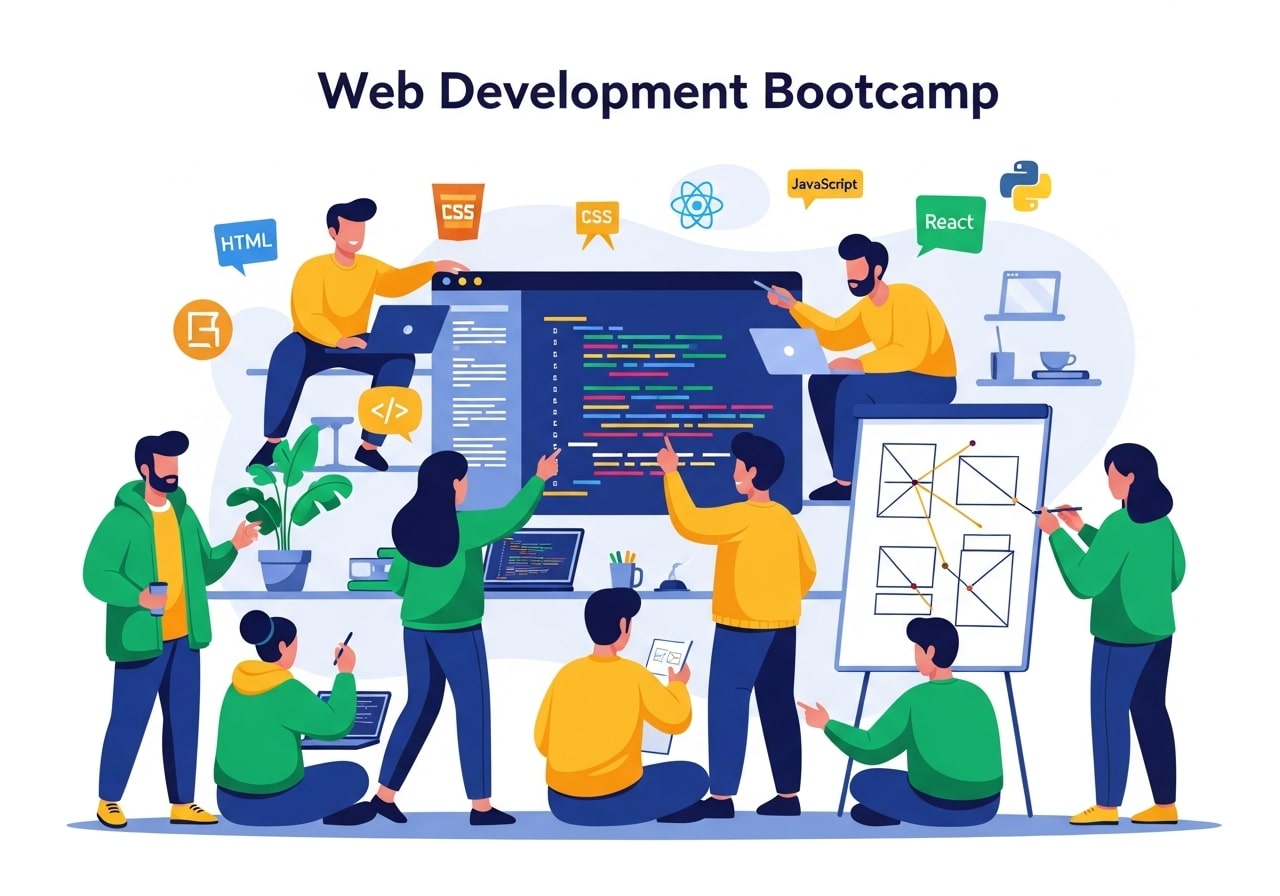
A web development bootcamp is an intensive, short-term training program designed to teach programming skills quickly. Most bootcamps focus on practical, hands-on learning rather than theoretical computer science concepts.
Typical bootcamp programs last between 12-24 weeks and can be completed full-time, part-time, or online. Students learn essential web development technologies, including HTML, CSS, JavaScript, and popular frameworks like React or Vue.js. Many programs also cover backend technologies such as Node.js, Python, or databases.
The curriculum emphasizes building real projects and developing a portfolio that demonstrates your abilities to potential employers. Most bootcamps conclude with career services support, including resume reviews, interview preparation, and networking opportunities.
Full-Stack vs. Specialized Programs
Web development bootcamps typically fall into two categories:
Full-stack programs teach both frontend and backend development. Students learn to build complete web applications from user interface design to database management. These comprehensive programs prepare graduates for versatile developer roles.
Specialized programs focus on specific areas like frontend development, backend development, or particular technologies. While more narrow in scope, they allow deeper exploration of specific skills.
The Benefits of Bootcamp Education
Accelerated Learning Timeline
Traditional computer science degrees take four years to complete. Web development bootcamps condense essential skills into months, allowing you to enter the job market much faster. This accelerated timeline appeals to career changers who want to transition quickly without years of additional schooling.
Practical, Job-Focused Curriculum
Unlike university programs that emphasize theoretical foundations, bootcamps prioritize immediately applicable skills. You’ll spend time building actual websites and applications rather than studying abstract algorithms. This practical approach means graduates often feel more prepared for day-one job responsibilities.
Career Services and Industry Connections
Quality bootcamps maintain relationships with hiring partners and provide extensive career support. This includes resume optimization, portfolio development, interview coaching, and sometimes direct introductions to employers. Some programs even offer job placement guarantees.
Structured Learning Environment
Self-teaching web development requires tremendous discipline and direction. Bootcamps provide structure, deadlines, and peer support that keep you accountable. The intensive format forces rapid skill development that might take much longer through independent study.
Networking Opportunities
Bootcamps connect you with fellow students, instructors with industry experience, and employer partners. These relationships often prove valuable for finding job opportunities, getting referrals, and building your professional network.
Potential Drawbacks to Consider

Limited Depth of Knowledge
The compressed timeline means bootcamps can only cover so much material. Graduates may lack a deeper understanding of computer science fundamentals, data structures, or algorithms that traditional programs provide. This knowledge gap might limit advancement opportunities at some companies.
High Intensity and Time Commitment
Bootcamp pace can be overwhelming, especially for full-time programs requiring 40-60 hours per week. Students with work or family obligations may struggle to keep up. The intensity can lead to burnout if you’re not prepared for the demanding schedule.
Significant Financial Investment
Quality bootcamps typically cost $10,000-$20,000, representing a substantial upfront investment. While generally less expensive than college degrees, the cost can be prohibitive for many people. Some programs offer income share agreements, but these come with their own considerations.
Variable Quality Between Programs
The bootcamp industry remains largely unregulated, leading to inconsistent program quality. Some schools prioritize marketing over education, resulting in inadequate preparation for actual job requirements. Researching specific programs thoroughly is essential.
Job Market Competition
Bootcamp graduates compete not only with each other but also with computer science degree holders and self-taught developers. Some employers still prefer traditional educational backgrounds, potentially limiting your opportunities.
Salary Expectations After a Web Development Bootcamp
Many prospective students want to know what kind of salary they can expect after completing a web development bootcamp. Entry-level web developers who graduate from bootcamps typically start with salaries that vary based on location, company size, and skill set. In many markets, junior developers can earn competitive starting salaries, especially if they have strong portfolios and in-demand skills like JavaScript frameworks. While bootcamp graduates may initially earn less than computer science degree holders, consistent skill development, real-world experience, and continuous learning can quickly close this gap and lead to higher-paying roles over time.
Importance of a Strong Portfolio
A strong portfolio is one of the most important factors for bootcamp graduates seeking employment. Employers often focus more on what you can build than where you studied. Bootcamp projects showcase your technical skills, problem-solving ability, and understanding of real-world development workflows. A well-structured portfolio with clean code, responsive design, and deployed projects can significantly improve your chances during interviews. Adding personal or freelance projects beyond bootcamp assignments demonstrates initiative and passion, helping you stand out in a competitive job market and prove your readiness for professional development roles.
Long-Term Career Growth After Bootcamp
Completing a web development bootcamp is just the first step in a long-term tech career. Technology evolves rapidly, and developers must continuously learn new tools, frameworks, and best practices. Bootcamp graduates who invest time in improving fundamentals, understanding system design, and learning backend or cloud technologies often experience steady career growth. Over time, many move into mid-level or senior roles, specialize in areas like frontend performance or backend scalability, or transition into related fields such as DevOps or product development. Continuous learning is the key to sustained success after bootcamp graduation.
Soft Skills Learned During a Bootcamp
Web development bootcamps do not only focus on technical skills but also help students develop essential soft skills. Communication, teamwork, time management, and problem-solving are practiced daily through group projects, code reviews, and presentations. Students learn how to explain technical ideas clearly, collaborate with others, and receive constructive feedback. These skills are crucial in real-world development environments where developers often work in teams and interact with designers, product managers, and clients. Strong soft skills can make bootcamp graduates more attractive to employers and help them succeed in professional settings.
How Bootcamps Compare to Other Learning Paths
Bootcamps vs. Computer Science Degrees
Computer science programs provide comprehensive theoretical knowledge and typically result in higher starting salaries. However, they require much more time and money to complete. Bootcamps offer faster entry to the workforce but may limit advancement in roles requiring deep technical knowledge.
Bootcamps vs. Self-Teaching
Self-teaching offers ultimate flexibility and lower costs, but requires exceptional self-discipline and motivation. Many people struggle without structure and accountability. Bootcamps provide guided learning and career support that self-teaching lacks.
Bootcamps vs. Online Courses
Online platforms like Coursera, Udemy, and freeCodeCamp offer affordable alternatives to bootcamps. However, they typically lack the intensity, structure, and career services that make bootcamps effective for many learners.
What to Look for in a Quality Program
Curriculum Relevance
Examine the technologies and frameworks taught. Quality programs stay current with industry trends and teach skills that employers actually seek. Look for programs covering modern JavaScript, popular frameworks, version control, and deployment practices.
Instructor Experience
The best bootcamps employ instructors with real industry experience, not just teaching backgrounds. Working developers understand current industry practices and can share practical insights beyond the curriculum.
Job Placement Support
Strong career services distinguish excellent programs from mediocre ones. Look for dedicated career counselors, employer partnerships, and concrete job placement statistics. Be wary of programs making unrealistic placement guarantees.
Student Reviews and Outcomes
Research graduate experiences through platforms like Course Report, SwitchUp, and LinkedIn. Pay attention to both positive and negative reviews to get a balanced perspective.
Flexible Payment Options
Many quality bootcamps offer income share agreements, deferred tuition, or scholarship opportunities. These options make programs accessible to students who cannot afford upfront payments.
Maximizing Your Bootcamp Success
Come Prepared
Success in boot camp often depends on your preparation level. Familiarize yourself with basic programming concepts through free resources before starting. This foundation will help you keep pace with the intensive curriculum.
Commit Fully to the Process
Treat bootcamp like a full-time job, even if you’re enrolled in a part-time program. Dedicate adequate time to homework, projects, and additional practice. Half-hearted effort rarely leads to successful outcomes.
Build Projects Beyond Requirements
Create additional projects that demonstrate your interests and abilities. A strong portfolio with diverse, well-executed projects can set you apart from other candidates during job searches.
Network Actively
Connect with classmates, instructors, and industry professionals. Attend meetups, join online communities, and engage with the broader web development community. Many job opportunities come through networking rather than formal applications.
Making the Right Decision for Your Career
Web development bootcamps can be an excellent investment for the right person. They work best for motivated individuals who can handle intensive learning environments and have clear career goals.
Consider a bootcamp if you’re looking to change careers quickly, prefer structured learning environments, and can commit significant time and money to the process. They’re particularly valuable for people who struggle with self-directed learning or need career services support.
Skip bootcamps if you prefer learning at your own pace, have limited financial resources, or need the comprehensive theoretical knowledge that traditional degrees provide.
Before enrolling, honestly assess your motivation, available time, and financial situation. Research specific programs thoroughly and consider less expensive alternatives like self-teaching or online courses.
Remember that completing a bootcamp is just the beginning of your web development journey. The industry evolves rapidly, requiring continuous learning throughout your career. The most successful developers remain curious, adaptable, and committed to ongoing skill development regardless of their educational background.
Web Development Bootcamps – FAQ
1. What is a web development bootcamp?
A web development bootcamp is a short-term, intensive training program designed to teach practical web development skills in a few months. These programs focus on hands-on learning, real-world projects, and job-ready technologies such as HTML, CSS, JavaScript, and popular frameworks, helping students prepare quickly for entry-level developer roles.
2. How long does a typical web development bootcamp last?
Most web development bootcamps last between 12 and 24 weeks. Some programs are full-time and highly intensive, while others are part-time or self-paced, allowing students to balance learning with work or other responsibilities.
3. Do web development bootcamps guarantee a job?
No bootcamp can truly guarantee a job, although some offer job placement support or conditional guarantees. Success depends on factors like your effort, portfolio quality, interview skills, and the job market. Bootcamps mainly increase your chances by providing structure, skills, and career support.
4. Are bootcamps better than a computer science degree?
Bootcamps and computer science degrees serve different purposes. Bootcamps focus on fast, practical skill development for quick entry into the workforce, while computer science degrees provide deeper theoretical knowledge and broader long-term career flexibility. The better option depends on your goals, time, and budget.
5. Can beginners with no coding experience join a bootcamp?
Yes, many bootcamps accept complete beginners. However, having basic knowledge of programming concepts before starting can significantly improve your experience and chances of success due to the fast-paced nature of bootcamp learning.
6. How much do web development bootcamps cost?
Web development bootcamps typically cost between $10,000 and $20,000. Some offer flexible payment options such as installment plans, deferred tuition, scholarships, or income share agreements, which allow students to pay after securing a job.
7. Are online bootcamps as effective as in-person ones?
Online bootcamps can be just as effective as in-person programs if they offer live instruction, mentorship, projects, and career support. The key factor is your ability to stay disciplined, engaged, and consistent in a remote learning environment.
8. What kind of jobs can I get after completing a bootcamp?
Graduates commonly qualify for entry-level roles such as junior web developer, frontend developer, backend developer, or full-stack developer. Job titles and responsibilities may vary depending on the program focus and your individual skill set.
9. Do employers take bootcamp certificates seriously?
Many employers value skills and project experience more than formal credentials. While some companies still prefer traditional degrees, a strong portfolio, real-world projects, and good interview performance can make bootcamp graduates competitive in the job market.
10. Is a web development bootcamp worth it?
A web development bootcamp can be worth it for motivated individuals who want to change careers quickly and benefit from structured learning and career support. However, it may not be ideal for those who prefer self-paced learning, have financial constraints, or want deep theoretical knowledge.