
The web development industry has experienced explosive growth over the past decade. With coding bootcamps, online courses, and self-taught developers flooding the market, many are questioning whether there’s still room for new talent. Headlines scream about market saturation, while others argue that demand continues to outpace supply.
So what’s the reality? Is web development truly oversaturated, or are we witnessing a natural evolution in a rapidly growing field? This post examines the current state of the web development market, explores the factors contributing to increased competition, and reveals where opportunities still exist for aspiring and experienced developers alike.
Current Trends in the Web Developer Market
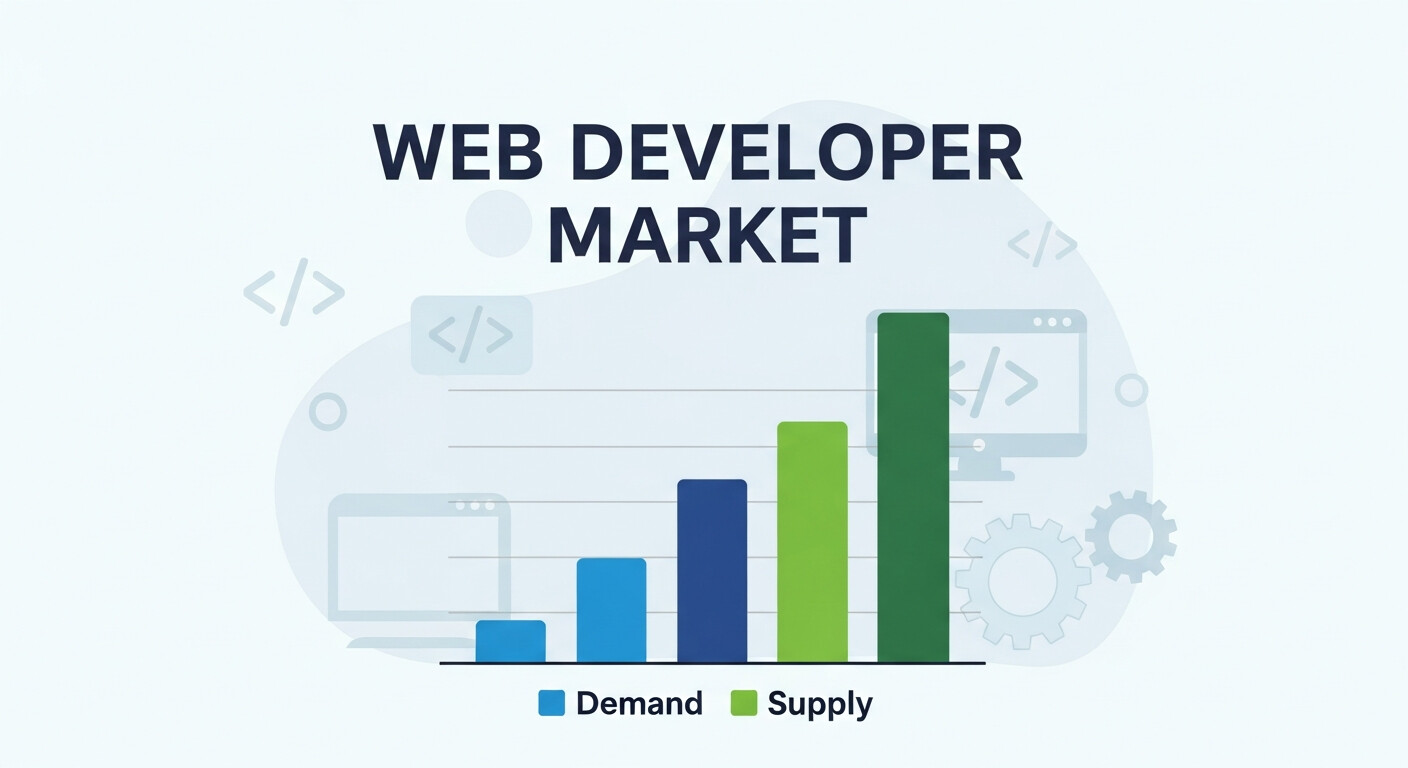
The web developer market continues to evolve rapidly as technology advances and businesses prioritize digital experiences. Demand for front-end, back-end, and full-stack developers remains high, but specialized skills are increasingly valuable. Companies now seek developers who can integrate modern frameworks, optimize performance, and enhance security. Remote work has broadened opportunities globally, allowing developers to access positions beyond local job markets.
The Numbers Behind the Saturation Claims
Recent data paints a complex picture of the web development landscape. The Bureau of Labor Statistics projects a 13% growth rate for web developers between 2020 and 2030, much faster than the average for all occupations. This translates to approximately 13,400 new job openings annually.
However, the supply side tells a different story. Coding bootcamps graduated over 35,000 students in 2022, while computer science programs continue to produce thousands more graduates each year. Add self-taught developers to the mix, and the influx of new talent becomes substantial.
This surge in supply has created heightened competition, particularly at the entry level. Junior developer positions now attract hundreds of applications, making it increasingly challenging for newcomers to secure their first role. Many entry-level positions require 2-3 years of experience—a paradox that frustrates new developers.
Why Competition Has Intensified
The Democratization of Learning
Online platforms like freeCodeCamp, Codecademy, and YouTube have made web development knowledge more accessible than ever. What once required a four-year degree can now be learned in months through intensive bootcamps or self-directed study.
This accessibility has benefits and drawbacks. While it’s opened doors for career changers and those without traditional educational backgrounds, it’s also increased the candidate pool significantly.
The Pandemic Effect
COVID-19 accelerated digital transformation across industries, creating immediate demand for web developers. Simultaneously, job losses in other sectors drove many professionals to pursue web development as a stable career alternative.
This perfect storm resulted in a spike in both demand and supply, with supply growth eventually outpacing demand in certain markets and skill levels.
Skills Mismatch
Many new developers focus on popular technologies like React or Node.js, creating oversaturation in specific niches while leaving gaps in others. Legacy system maintenance, specialized frameworks, and emerging technologies often lack sufficient talent.
Growth Trends in Web Development

The Web Developer Market continues to expand as businesses increasingly rely on websites, web apps, and e-commerce solutions. Demand for skilled developers spans front-end, back-end, and full-stack roles, while specialized skills in security, accessibility, and performance optimization are becoming highly valuable. Emerging technologies like Progressive Web Apps, Web3, and AI-powered web applications are creating fresh opportunities. Remote work has also broadened access, enabling developers to compete globally. Understanding these trends is crucial for professionals aiming to position themselves strategically. By analyzing demand patterns and technological shifts in the Web Developer Market, developers can focus on high-growth areas and ensure their skills remain relevant in an evolving digital landscape.
Entry-Level Challenges

Entry-level developers face heightened competition in the Web Developer Market due to the influx of bootcamp graduates, online learners, and self-taught coders. Many junior positions now require practical experience, which creates a barrier for newcomers. Hundreds of applications for a single role have become common, making it essential to differentiate through projects, internships, or contributions to open-source. Understanding these challenges in the Web Developer Market allows new developers to adopt effective strategies such as building strong portfolios, learning specialized skills, and networking. Awareness of market realities helps aspiring developers navigate the competitive landscape more effectively, positioning themselves for success despite saturation at the entry level.
Niche Specializations Driving Opportunities
Specialized domains remain in high demand within the Web Developer Market. Areas such as e-commerce development, web performance optimization, accessibility compliance, and cybersecurity offer premium opportunities due to limited talent. Developers with expertise in these niches can command higher salaries and experience faster career growth. Focusing on specialized skills allows professionals to stand out in an otherwise crowded market. Understanding the needs of businesses and aligning one’s skillset to meet these demands is critical. The Web Developer Market rewards individuals who combine deep technical knowledge with problem-solving capabilities and adaptability, providing a strategic advantage for those targeting specific, underserved segments of the industry.
Remote Work and Opportunities
Remote work has reshaped the Web Developer Market by expanding opportunities beyond traditional tech hubs. Developers in smaller cities or rural areas can now compete for high-demand roles globally. Companies increasingly value results and skill over physical location, creating a more level playing field. Professionals must adapt to virtual collaboration, remote project management, and communication across time zones. This shift in the Web Developer Market encourages developers to enhance digital presence, contribute to open-source communities, and leverage remote networking opportunities. Remote work enables access to higher-paying projects and specialized positions, allowing developers to strategically position themselves in a global, highly competitive marketplace.
Essential Skills to Stand Out
In today’s competitive environment, success requires more than coding proficiency. The Web Developer Market favors professionals who can write clean, maintainable code, integrate APIs, optimize performance, and solve complex problems. Complementary skills such as UI/UX design, cloud platforms, database administration, project management, and digital marketing enhance employability. Continuous learning is critical to stay ahead, as emerging technologies like AI, WebAssembly, and Web3 reshape the industry. Developers who combine strong fundamentals with niche expertise stand out, ensuring long-term relevance. Understanding the skill demands within the Web Developer Market allows professionals to prioritize learning paths that increase value, competitiveness, and career growth potential.
Portfolio Building Strategies
A strong portfolio is a critical differentiator in the Web Developer Market. Generic projects are often overlooked, whereas real-world applications, API integrations, responsive designs, and optimized code highlight technical skill and problem-solving ability. Portfolios showcasing practical business solutions, e-commerce platforms, or performance optimization projects demonstrate readiness for professional roles. Including diverse examples signals adaptability and versatility to potential employers. In a competitive Web Developer Market, portfolios often weigh more than certifications alone. By strategically curating projects, developers can effectively communicate capability, creativity, and initiative, significantly improving their chances of securing meaningful opportunities and establishing credibility within the industry.
Where Opportunities Still Exist
Specialized Domains
While general web development may feel saturated, specialized areas remain hungry for talent:
E-commerce Development: With online shopping continuing to grow, developers skilled in platforms like Shopify, WooCommerce, and custom e-commerce solutions are in high demand.
Web Performance Optimization: As page speed becomes increasingly crucial for SEO and user experience, specialists in performance optimization command premium rates.
Accessibility: With growing awareness of web accessibility requirements, developers who understand WCAG guidelines and inclusive design principles are highly valued.
Security: Cybersecurity concerns have made security-focused web developers essential for many organizations.
Geographic Variations
Market saturation varies significantly by location. While tech hubs like San Francisco and New York may feel oversaturated, smaller cities and rural areas often struggle to find qualified developers. Remote work has somewhat leveled this playing field, but local opportunities still exist.
Enterprise vs. Startup Markets
The startup ecosystem may feel saturated due to its appeal to new developers, but enterprise markets often have different needs. Large corporations frequently require developers comfortable with legacy systems, complex integrations, and enterprise-specific technologies.
The Quality vs. Quantity Debate
Market saturation discussions often overlook a crucial factor: quality. While the number of people calling themselves web developers has increased, the number of skilled, experienced developers capable of solving complex problems remains relatively stable.
Many employers report difficulty finding candidates who can:
- Write clean, maintainable code
- Understand fundamental computer science concepts
- Communicate effectively with non-technical stakeholders
- Debug complex issues independently
- Adapt to new technologies and requirements
This quality gap suggests that while the market may be saturated with beginners, there’s still significant demand for competent developers who can deliver results.
Strategies for Standing Out
Build a Strong Portfolio
Generic to-do list apps and calculator projects won’t differentiate you. Focus on building projects that demonstrate:
- Real-world problem-solving
- Integration with APIs and databases
- Responsive design principles
- Performance optimization
- Code quality and documentation
Develop Complementary Skills
Modern web development extends beyond coding. Valuable complementary skills include:
- UI/UX design principles
- Digital marketing knowledge
- Project management
- Database administration
- Cloud platform expertise
Focus on Continuous Learning
The web development landscape evolves rapidly. Developers who stay current with emerging technologies, best practices, and industry trends remain valuable regardless of market conditions.
Network and Contribute
Building relationships within the developer community through open-source contributions, tech meetups, and online forums can lead to opportunities that never reach job boards.
The Future of Web Development

Several trends suggest the web development market will continue evolving rather than simply becoming saturated:
AI and Automation: While AI tools may automate certain coding tasks, they also create new opportunities for developers who can effectively leverage these technologies.
New Platforms: Emerging platforms like WebAssembly, Progressive Web Apps, and Web3 technologies create fresh demand for skilled developers.
Increased Digitization: As more businesses move online and existing digital experiences become more sophisticated, the need for skilled web developers persists.
Making Your Move in Web Development
The web development market isn’t oversaturated—it’s maturing. This maturation brings both challenges and opportunities. Entry-level positions are more competitive, but skilled developers remain in demand.
Success requires more than just learning to code. Focus on developing strong fundamentals, building impressive projects, and positioning yourself in less crowded niches. The developers who thrive will be those who can adapt, continue learning, and deliver genuine value to their employers or clients.
Whether you’re considering entering web development or you’re already in the field, remember that quality always rises above quantity. The market has room for skilled professionals who can solve real problems and contribute meaningfully to their organizations.
Frequently Asked Questions (FAQ)
1. Is the web development market oversaturated?
Not entirely. While entry-level competition has increased due to bootcamps, online courses, and self-taught developers, demand for skilled, experienced developers still outpaces supply in many areas and specialized niches.
2. Which web development skills are currently in high demand?
Skills in specialized areas such as e-commerce development (Shopify, WooCommerce), web performance optimization, accessibility (WCAG), and security are highly sought after. Strong fundamentals, clean coding, and problem-solving remain crucial.
3. How can new developers stand out in a competitive market?
Building a strong portfolio with real-world projects, learning complementary skills (UI/UX, project management, cloud platforms), contributing to open-source, networking, and continuous learning are key strategies for differentiation.
4. Does geographic location affect job opportunities in web development?
Yes. While tech hubs may feel saturated, smaller cities and rural areas often have unmet demand. Remote work has broadened options, allowing developers to access opportunities outside their local market.
5. Will AI and automation reduce demand for web developers?
AI and automation may handle repetitive coding tasks, but they also create new opportunities. Developers who leverage AI tools, adapt to emerging platforms, and focus on problem-solving will remain valuable.
6. What types of projects should beginners focus on for a strong portfolio?
Focus on projects that solve real problems, integrate APIs, implement responsive design, optimize performance, and demonstrate clean, maintainable code. Quality and practical application matter more than quantity.
7. Are coding bootcamps sufficient to secure a web development job?
Bootcamps provide a fast track to learning, but securing a job often requires additional skills, practical projects, networking, and experience in less crowded or specialized areas to stand out.
8. What are emerging areas in web development with growth potential?
Emerging areas include WebAssembly, Progressive Web Apps (PWAs), Web3 technologies, AI-driven web applications, and accessibility-focused solutions. Developers skilled in these areas are increasingly in demand.
9. How important is experience versus certification in landing web development roles?
Experience and demonstrated skill through projects, internships, or open-source contributions generally outweigh certifications alone. Employers value developers who can solve real problems and deliver results.
10. What’s the best strategy for long-term success in web development?
Focus on continuous learning, staying updated with industry trends, specializing in niches with high demand, building a strong portfolio, and cultivating soft skills like communication and teamwork.