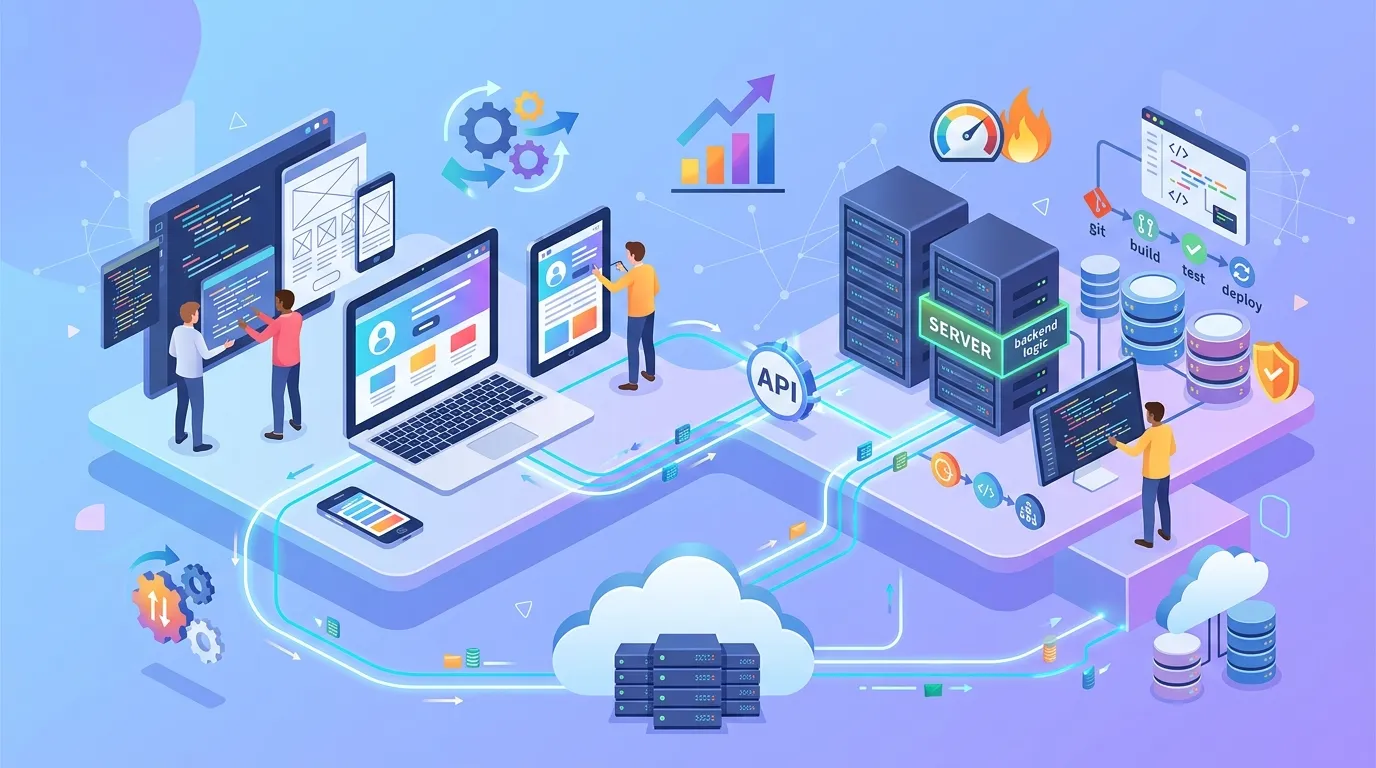
Full stack development services cover everything from frontend interfaces to backend logic, databases, and API integrations. Businesses that work with a full stack web development company get a single team managing the entire application, reducing delays, costs, and miscommunication.
Building a web application involves many decisions—technology stack, frontend and backend roles, and system integration. Without proper coordination, working with multiple vendors can slow down delivery and increase costs.
Full stack development services solve this by handling all layers of development under one roof, ensuring consistency, faster delivery, and better accountability from start to finish. This guide explains what these services include and how to choose the right development agency.
What Does a Full Stack Web Development Company Actually Do?
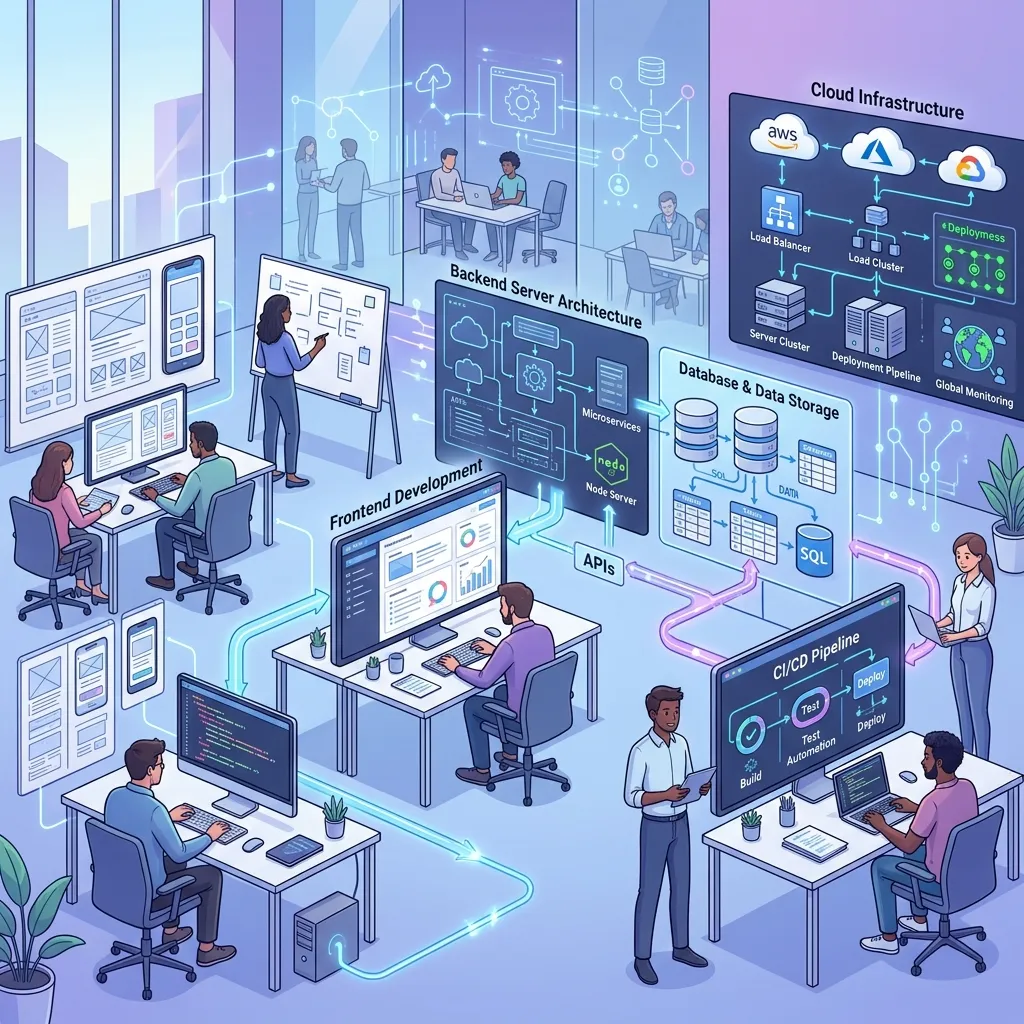
A full stack web development company designs, builds, and deploys complete web applications. “Full stack” refers to the full range of technologies involved in a working application: the frontend (what users see), the backend (server-side logic and databases), and the infrastructure that connects them.
Rather than working with separate specialists for each layer, clients work with one team capable of handling all of it. This matters most on projects where frontend and backend functionality are tightly interdependent—which, in modern web development, is nearly always.
Modern frontend systems are often built with frameworks like React, and if you’re new to it, this React beginner’s guide is a great starting point.
What Are End-to-End Web Development Services?
End-to-end web development services cover the complete lifecycle of a product, including:
- Discovery and architecture planning: Defining the system design, data models, and technology choices before development begins
- Frontend development: Building the user-facing interface using frameworks like React, Angular, or Vue.js
- Backend development: Writing server-side logic, managing databases, and handling business rules
- API development and integration: Connecting your application to third-party tools, payment gateways, or internal systems
- Testing and QA: Validating functionality, performance, and security across the full stack
- Deployment and DevOps: Configuring hosting environments, CI/CD pipelines, and cloud infrastructure
- Ongoing maintenance: Monitoring, updates, and feature development post-launch
When all of these services are delivered by a single agency, teams avoid translation errors and delays that often occur when multiple vendors are involved. This becomes especially important for platforms like ecommerce web development projects, where checkout systems, databases, and user interfaces must work seamlessly together.
Why Custom Full Stack Development Solutions Outperform Template Approaches
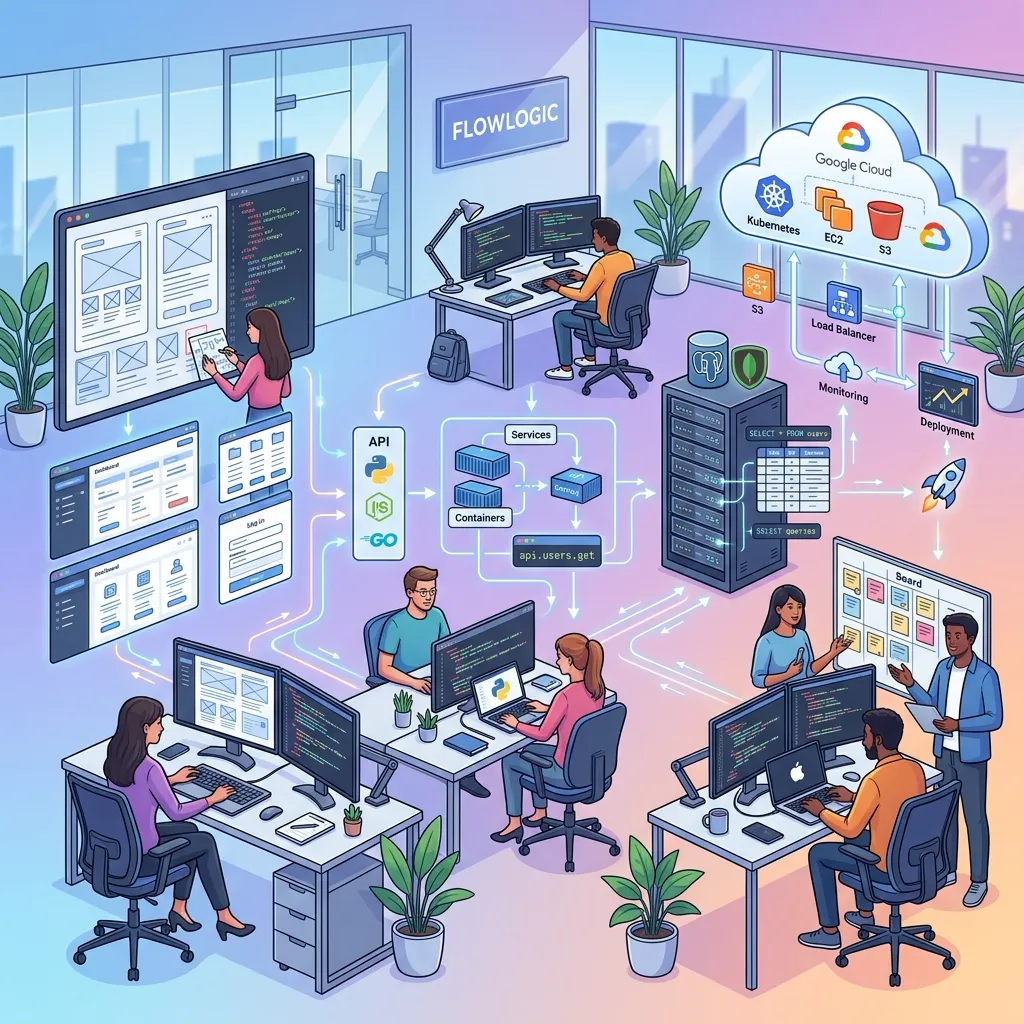
Off-the-shelf platforms work for simple use cases. A company selling a few products, running a basic blog, or booking appointments can often get by with a no-code or low-code tool. But when an application needs to handle complex business logic, large data volumes, real-time functionality, or deep third-party integrations, custom full stack development solutions become the more practical choice.
Custom builds give development teams control over performance optimization, security configurations, and architectural decisions that template platforms simply don’t allow. A custom solution can be built to scale with specific traffic patterns, integrate with existing internal tools, and evolve as business requirements change—without being constrained by a vendor’s product roadmap.
For startups building a core product, enterprises modernizing legacy systems, or SaaS companies launching new platforms, custom development typically delivers better long-term ROI than adapting an existing tool to fit a purpose it wasn’t designed for.
Frontend and Backend Development Services: How They Work Together
Frontend and backend development services are two sides of the same coin, and the quality of a web application depends on how well those sides are coordinated.
Frontend development focuses on everything a user sees and interacts with. This includes layout, typography, navigation, animations, and responsiveness across devices. Modern frontend development relies heavily on JavaScript frameworks like React, Angular, or Vue.js to create dynamic, fast-loading interfaces.
Backend development handles the logic that runs behind the scenes: user authentication, data processing, database queries, server communication, and business rules. Languages and frameworks commonly used here include Node.js, Python (Django or Flask), Ruby on Rails, Java Spring, and PHP Laravel.
The two must communicate seamlessly—typically through APIs. When frontend and backend teams work under one roof, the API contracts between them are established early, tested continuously, and updated without the friction that comes from cross-vendor coordination.
MERN Stack Development Services: When React and Node.js Are the Right Choice
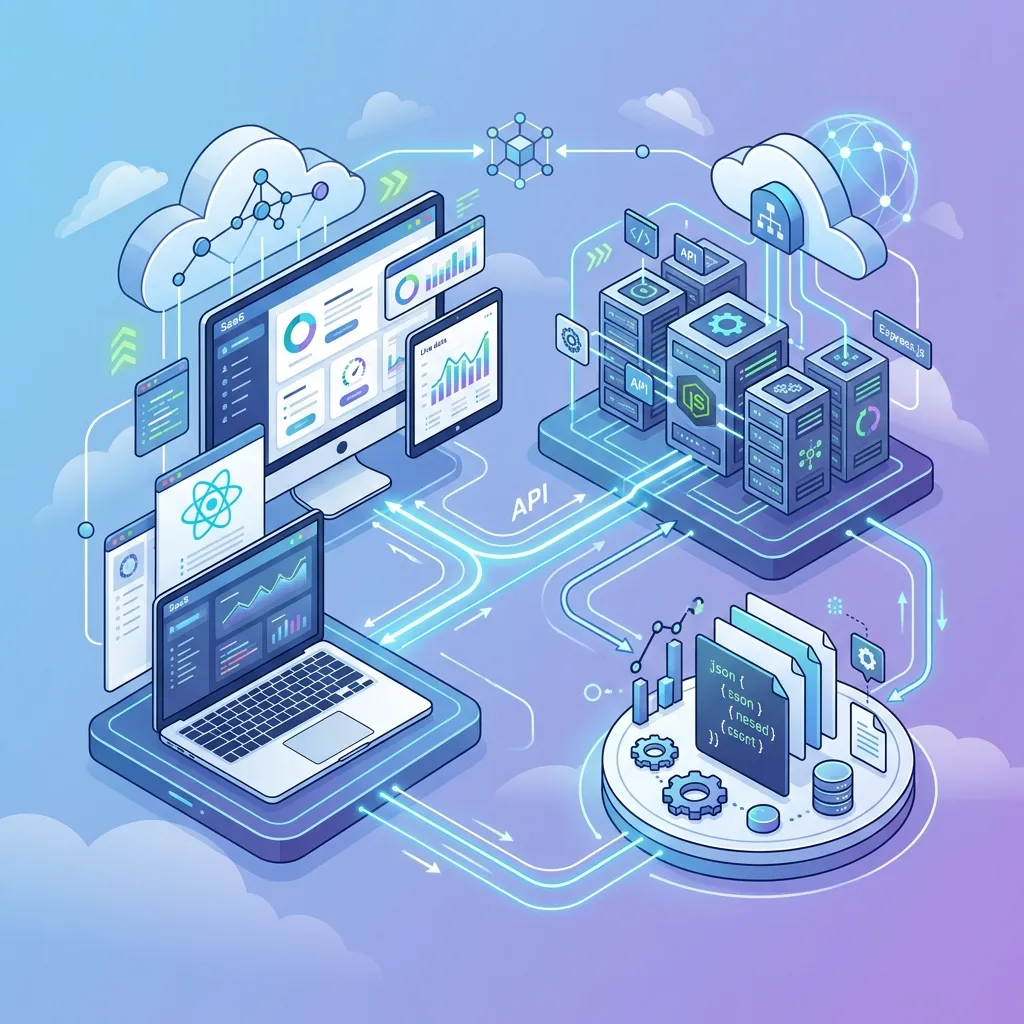
MERN stack development services are among the most in-demand offerings from full stack agencies today. The MERN stack consists of four technologies:
- MongoDB: A NoSQL document database that stores data in a flexible, JSON-like format
- Express.js: A lightweight Node.js framework for building server-side APIs
- React: A component-based JavaScript library for building dynamic user interfaces
- Node.js: A JavaScript runtime that executes server-side code
The primary advantage of the MERN stack is that it uses JavaScript across every layer of the application. Frontend and backend developers can share code, context, and conventions—reducing context-switching and making it easier to maintain the codebase over time.
MERN stack development works particularly well for:
- Single-page applications (SPAs) that require fast, interactive UIs
- Real-time applications like messaging platforms or live dashboards
- Startups and scale-ups that need rapid iteration without sacrificing flexibility
- Applications requiring a flexible, schema-less database structure
MEAN Stack Development Company: Angular as the Frontend Alternative
The MEAN stack replaces React with Angular, offering a more opinionated and structured approach to frontend development. A MEAN stack development company typically works with clients who need:
- Structured, enterprise-grade frontends: Angular enforces stricter architectural patterns, making it easier to manage large codebases across multiple teams
- Two-way data binding: Angular’s built-in two-way data binding simplifies the synchronization between the UI and the underlying data model
- TypeScript by default: Angular is built on TypeScript, which adds static typing and improves code reliability in larger projects
Both MEAN and MERN stacks share MongoDB, Express.js, and Node.js on the backend. The choice between Angular and React typically comes down to project size, team familiarity, and the level of structural enforcement required. Angular suits larger enterprise teams; React offers more flexibility for smaller, fast-moving projects.
Scalable Web Application Development: Building for Growth from Day One
One of the most common mistakes in web development is building for current requirements without accounting for future scale. Scalable web application development addresses this by making architectural decisions early that support growth without requiring a complete rebuild down the line.
Key practices that full stack agencies use to ensure scalability include:
- Microservices architecture: Breaking an application into independent services that can be deployed and scaled individually, rather than as a single monolith
- Horizontal scaling: Designing systems that can handle increased load by adding more server instances, rather than relying on increasingly powerful single machines
- Database optimization: Indexing strategies, caching layers (like Redis), and read replicas to handle growing data volumes without performance degradation
- Cloud-native infrastructure: Leveraging platforms like AWS, Google Cloud, or Azure with auto-scaling configurations to match capacity to demand in real time
A full stack software development agency that prioritizes scalability will conduct load testing, define performance benchmarks, and implement monitoring from the start—not as an afterthought.
API Integration and Backend Development: The Connective Tissue of Modern Apps
No web application exists in isolation. API integration and backend development form the connective tissue that links your application to payment processors, CRM systems, third-party data sources, analytics platforms, and internal tools.
A capable full stack development team approaches API integration with three priorities:
- Reliability: Integrations should handle errors gracefully, retry on failure, and degrade without breaking the core application
- Security: All API endpoints must be authenticated, and sensitive data must be encrypted in transit and at rest
- Documentation: Well-documented APIs make future development faster and reduce onboarding time for new developers
Backend development also includes building your own APIs—defining the endpoints your frontend uses to request data, submit forms, authenticate users, and trigger business logic. RESTful APIs remain the most widely used approach, though GraphQL has gained significant traction for applications with complex, nested data requirements.
Responsive Web App Development Services: Designing for Every Screen
A web application that works on desktop but breaks on mobile is a product problem, not just a design problem. Responsive web app development services ensure that applications render correctly and perform well across devices—from widescreen monitors to small smartphone screens.
Responsive development goes beyond flexible layouts. It also involves:
- Performance optimization: Lazy loading images, minimizing JavaScript bundles, and leveraging browser caching to ensure fast load times on mobile networks
- Touch-friendly interactions: Designing interactive elements sized and spaced appropriately for touchscreens
- Progressive Web App (PWA) capabilities: Enabling offline access, push notifications, and home screen installation for a near-native mobile experience without a separate app build
How to Choose the Right Full Stack Software Development Agency
Not every agency is the right fit for every project. When evaluating a full stack software development agency, consider the following:
- Technology depth: Does the agency have proven experience with the stack your project requires—whether that’s MERN, MEAN, or another combination?
- Portfolio relevance: Have they built applications similar to yours in complexity, industry, or scale?
- Process transparency: Do they use structured project management, version control, and regular client communication?
- Post-launch support: Will the agency maintain, monitor, and improve the application after launch, or does the relationship end at deployment?
- Scalability planning: Do they build with future growth in mind, or optimize only for current requirements?
A strong agency will ask hard questions before writing a line of code—about your users, your data model, your integration requirements, and your growth projections. That upfront rigor is usually a reliable indicator of what working with them will look like throughout the project.
If you’re planning to enter the industry yourself, learning how professionals market themselves as freelance web developers can also provide useful insights into how agencies operate and attract clients.
Build Smarter: Making the Most of Full Stack Development
Full stack development services give businesses a complete, coordinated approach to building web applications. From responsive frontend interfaces to scalable backend systems and seamless API integrations, the right development partner covers the entire product—not just pieces of it.
The technology choices matter: MERN stack suits fast-moving, JavaScript-centric projects; MEAN stack offers structure for enterprise-scale frontends; custom builds outperform templates when complexity or scalability is a priority. But the most important variable is the team executing the work.
Before engaging a full stack web development company, document your requirements clearly, define your scalability expectations, and ask specifically how the agency handles cross-layer communication, testing, and long-term support. The answers will tell you more than any portfolio ever could.
Frequently Asked Questions
What is a full stack development service?
A full stack development service covers all layers of a web application—frontend (user interface), backend (server logic and databases), and infrastructure. A full stack team can design, build, test, deploy, and maintain a complete application without needing to coordinate across multiple external vendors.
What is the difference between MERN and MEAN stack development?
Both stacks use MongoDB, Express.js, and Node.js. The difference is the frontend framework: MERN uses React, which is more flexible and suited to fast-moving projects; MEAN uses Angular, which is more structured and better suited to large enterprise applications requiring strict architectural consistency.
How much do full stack development services cost?
Costs vary based on project complexity, team size, and engagement model. A simple web application from a mid-tier agency may start around $20,000–$50,000, while complex, scalable platforms can exceed $200,000. Hourly rates for full stack developers typically range from $50–$150+ depending on location and expertise.
How long does a full stack web development project take?
Timelines depend heavily on scope. A minimum viable product (MVP) typically takes 8–16 weeks. More complex applications with multiple integrations, user roles, and custom workflows can take 6–12 months. Agencies that invest time in discovery and architecture planning at the start usually deliver faster and with fewer costly revisions.
When should I choose custom full stack development instead of a platform like Shopify or WordPress?
Choose custom development when your application requires complex business logic, unique integrations, high traffic scalability, or functionality that standard platforms cannot support without heavy customization. Platform-based tools are appropriate for straightforward use cases; custom development pays off when the application itself is a core business differentiator.