

Understanding Common Web Vulnerabilities

The Open Worldwide Application Security Project (OWASP) regularly publishes a list of the top ten most critical web application security risks. Familiarizing yourself with these threats is the first step toward building a robust defense.
Injection flaws remain a pervasive issue across the web. These occur when untrusted data is sent to an interpreter as part of a command or query. Attackers exploit this by sending malicious data that tricks the interpreter into executing unintended commands or accessing data without proper authorization. SQL injection is the most common variant, but command injection and LDAP injection are equally dangerous.
Broken authentication is another major vulnerability. When authentication and session management functions are implemented incorrectly, attackers can compromise passwords, keys, or session tokens. This allows them to assume the identities of legitimate users. Cross-Site Scripting (XSS) also poses a massive threat. XSS flaws occur whenever an application includes untrusted data in a web page without proper validation or escaping. This allows attackers to execute malicious scripts in the victim’s browser, which can hijack user sessions, deface websites, or redirect users to malicious sites.
Secure Coding Practices
Writing secure code is the foundation of any protected web application. Developers must adopt a security-first mindset, assuming that all input is potentially malicious. Input validation is a critical defense mechanism. Every piece of data entering the application from an external source must be strictly validated against a strict set of rules. Reject any input that does not conform to the expected format, length, or character set.
These practices are closely tied to broader development fundamentals covered in web development essentials from design to code, where structure, logic, and security intersect.
Output encoding is equally important for preventing XSS attacks. Before untrusted data is inserted into an HTML document, it must be properly encoded to ensure the browser treats it as text content rather than executable code. Context-aware encoding is necessary, as the encoding rules change depending on where the data is placed within the HTML document.
When interacting with databases, developers should completely avoid concatenating user input directly into database queries. Instead, use parameterized queries or prepared statements. These techniques ensure that the database treats user input strictly as data, never as executable code, thereby neutralizing the threat of SQL injection.
Authentication and Authorization Best Practices
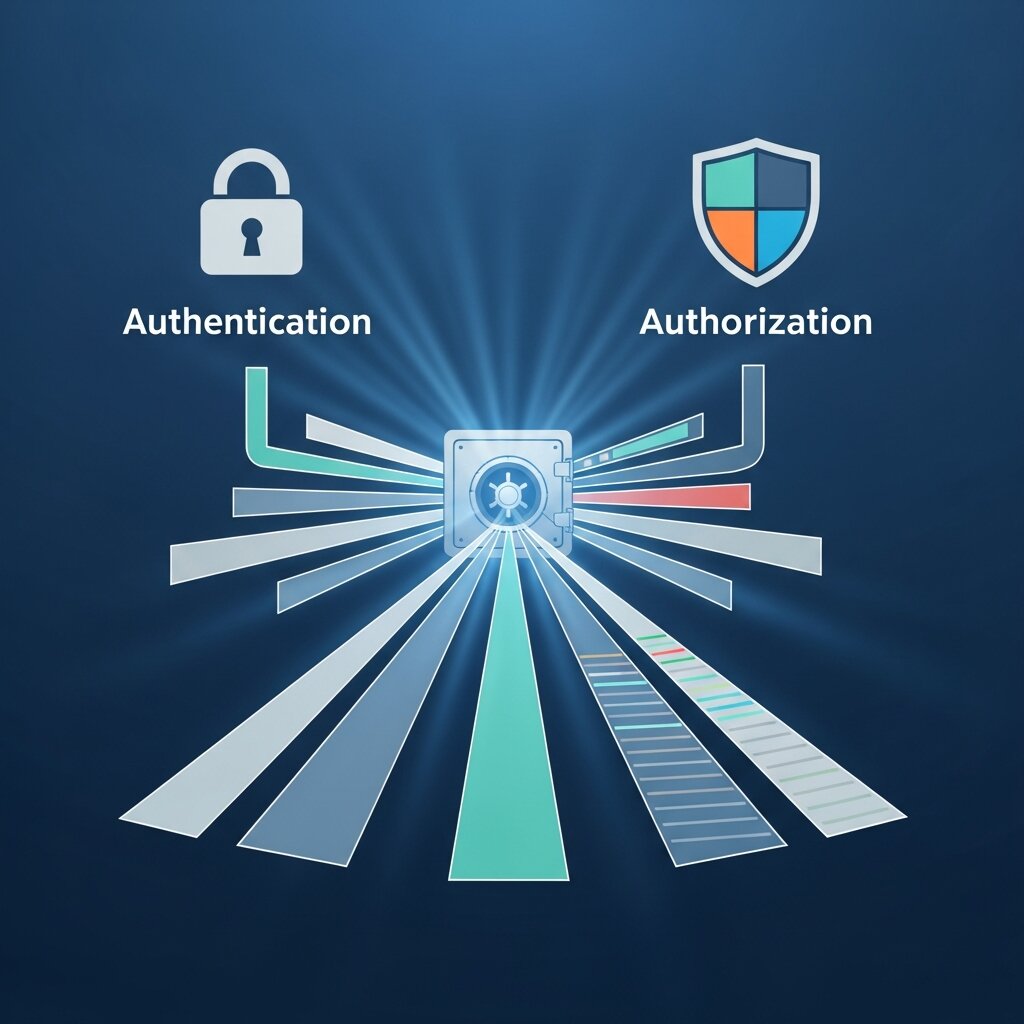
Verifying user identities and controlling access to resources are fundamental security requirements. Relying solely on passwords is no longer sufficient. Implementing Multi-Factor Authentication (MFA) drastically reduces the risk of account compromise. By requiring users to provide two or more verification factors, you create a layered defense that is highly resilient against credential stuffing and phishing attacks.
Session management must also be handled with extreme care. Session identifiers should be randomly generated, long enough to prevent brute-force attacks, and securely stored. Sessions should automatically expire after a period of inactivity, and users must be provided with a secure way to log out and terminate their sessions completely.
Authorization should follow the principle of least privilege. Users and system components should only be granted the minimum level of access necessary to perform their required tasks. Access control checks must be enforced on the server side for every restricted request, ensuring that users cannot bypass authorization logic by manipulating client-side code.
Data Protection and Encryption
Safeguarding sensitive data requires a combination of strong encryption and strict access controls. Data must be protected both when it is stored on your servers and when it is transmitted across the network.
For data in transit, Transport Layer Security (TLS) is mandatory. TLS creates an encrypted tunnel between the user’s browser and your web server, preventing attackers from eavesdropping on the communication or tampering with the data. Ensure that your servers are configured to use the latest versions of TLS and strong cipher suites, completely disabling deprecated and insecure protocols.
Data at rest must also be encrypted, particularly sensitive information like passwords, credit card numbers, and personal identifiers. Passwords should never be stored in plain text. Instead, use strong, slow hashing algorithms like bcrypt or Argon2, combined with a unique salt for each user. This protects user credentials even if the database is compromised.
For developers building full systems, encryption is often implemented alongside backend logic in full stack development workflows, ensuring both frontend and backend data security.
Security Testing and Auditing
You cannot secure what you do not test. Regular security assessments are vital for identifying vulnerabilities before attackers can exploit them. Static Application Security Testing (SAST) tools analyze your source code for security flaws without actually executing the program. These tools are excellent for catching coding errors early in the development lifecycle.
Dynamic Application Security Testing (DAST) takes a different approach. DAST tools interact with the running application from the outside, simulating the actions of a real attacker. They crawl the application, submitting unexpected inputs and analyzing the responses to uncover vulnerabilities like XSS and injection flaws.
Penetration testing provides the most realistic assessment of your security posture. Human security experts manually analyze your application, combining automated tools with creative problem-solving to uncover complex vulnerabilities that automated scanners might miss. Regular penetration tests should be a mandatory component of your security strategy.
Incident Response and Recovery
Even with the best defenses, security incidents can still occur. Having a well-defined incident response plan is crucial for minimizing damage and restoring operations quickly. Preparation is the most important phase. Establish a dedicated incident response team, clearly define roles and responsibilities, and create detailed procedures for handling different types of security breaches.
When an incident is detected, the immediate focus must shift to containment. Isolate affected systems from the network to prevent the attacker from moving laterally and causing further damage. Once the threat is contained, begin the eradication process. Remove malware, disable compromised accounts, and patch the vulnerabilities that allowed the breach to occur.
Recovery involves restoring systems to normal operation using known good backups. Closely monitor the restored systems to ensure the attacker has not left behind any backdoors. Finally, conduct a thorough post-incident analysis. Identify the root cause of the breach, evaluate the effectiveness of your response, and update your security procedures to prevent a similar incident from happening again.
Emerging Threats and Future Trends
The threat landscape is constantly shifting, requiring security professionals to stay informed about emerging risks. Artificial Intelligence is increasingly being weaponized by attackers to automate vulnerability discovery, craft highly convincing phishing emails, and generate sophisticated malware. Defending against AI-driven attacks requires organizations to leverage AI in their own security tools to detect anomalies and respond to threats in real time.
API security is another growing concern. Modern web applications rely heavily on APIs to communicate with backend services and third-party integrations. These APIs often expose sensitive data and critical business logic, making them prime targets for attackers. Securing APIs requires strict authentication, robust input validation, and careful rate limiting.
Serverless architectures, while offering scalability and cost benefits, introduce unique security challenges. The shared responsibility model means that while the cloud provider secures the underlying infrastructure, you are still responsible for securing your application code and configurations. Developers must understand the specific security implications of serverless environments to avoid unintended data exposure.
These evolving risks also influence how developers choose frameworks and tools, especially in modern ecosystems like web development and marketing integration, where performance and trust directly impact business outcomes.
Key Takeaways for Robust Web Security

Securing a web application is a complex but entirely manageable challenge. By understanding the most common vulnerabilities, adopting secure coding practices, and implementing strong authentication mechanisms, you can drastically reduce your risk exposure. Remember to protect sensitive data with robust encryption and validate your defenses through regular security testing.
Security is a continuous journey. Stay educated on the latest threats, update your incident response plans, and foster a culture of security awareness within your development teams. By prioritizing security at every stage of the application lifecycle, you can build digital experiences that are both highly functional and deeply secure.
Web Application Security Architecture Best Practices
Designing security into a web application from the beginning is far more effective than trying to add it later. A strong security architecture follows the principle of defense in depth, where multiple layers of protection are applied across the system. This means even if one layer is compromised, additional safeguards still protect critical assets. Secure architecture design also includes proper separation of concerns, where authentication, business logic, and data access layers are clearly isolated to reduce attack surfaces and prevent unauthorized access between components. API gateway security plays a key role in modern systems by acting as a centralized entry point that enforces authentication, rate limiting, and request validation before traffic reaches backend services. Additionally, secure backend communication should always use encrypted channels like TLS to prevent data interception or tampering. Many modern frameworks also provide built-in security features such as CSRF protection, input validation, and secure session handling, which help developers implement safer systems more efficiently while supporting long-term Securing Web Applications strategies.
Frequently Asked Questions
What is Securing Web Applications?
Securing Web Applications refers to the process of protecting websites and web apps from cyber threats by implementing secure coding, authentication, encryption, and regular testing practices.
Why is Securing Web Applications important?
It helps protect sensitive data, prevent cyber attacks, and ensure user trust while maintaining the stability and reliability of web systems.
What are the most common web application vulnerabilities?
Common threats include SQL injection, XSS (Cross-Site Scripting), broken authentication, insecure APIs, and misconfigured security settings.
How does SQL injection affect web applications?
It allows attackers to manipulate database queries by injecting malicious input, potentially exposing or altering sensitive data.
What is Cross-Site Scripting (XSS)?
XSS is a vulnerability where attackers inject malicious scripts into web pages that execute in users’ browsers, leading to data theft or session hijacking.
What is secure coding in web development?
Secure coding is writing application code with built-in security practices like input validation, output encoding, and safe database queries.
How does Multi-Factor Authentication improve security?
MFA adds an extra layer of protection by requiring multiple verification steps, reducing the risk of unauthorized access.
Why is encryption important in web applications?
Encryption protects data during transmission and storage, ensuring that sensitive information cannot be read if intercepted.
What is TLS in web security?
TLS (Transport Layer Security) is a protocol that encrypts communication between a user’s browser and a web server.
What are SAST and DAST in security testing?
SAST analyzes source code for vulnerabilities, while DAST tests running applications to detect real-time security issues.
What is penetration testing?
Penetration testing is a simulated cyber attack performed by security experts to identify vulnerabilities in a web application.
How does session management affect security?
Poor session management can lead to session hijacking, so secure tokens, expiration, and logout mechanisms are essential.
What is the principle of least privilege?
It means users and systems should only have the minimum access needed to perform their tasks, reducing security risks.
How often should web applications be tested for security?
Regularly—ideally during every development cycle and after major updates—to ensure continuous Securing Web Applications practices.
What are emerging threats in web application security?
AI-powered attacks, API vulnerabilities, and insecure serverless configurations are some of the growing modern threats.
Conclusion
In today’s digital world, Securing Web Applications is no longer optional—it is a critical requirement for protecting data, users, and business reputation. By understanding common vulnerabilities, applying secure coding practices, implementing strong authentication, and using encryption, organizations can build a strong security foundation. Regular testing, monitoring, and incident response planning further strengthen defenses against evolving threats. Ultimately, consistent attention to Securing Web Applications ensures safer, more reliable, and future-ready digital systems.






[…] developers working on security-sensitive applications, this guide to securing web applications can provide additional […]
[…] For more information, see the site’s guide to securing web applications. […]