A webinar email sequence is a series of automated emails that guide people from registration to attendance and beyond. A strong sequence includes registration confirmations, reminders before the event, and follow-up emails afterward. Done well, it boosts sign-ups, lifts attendance rates, and turns attendees into customers.
Hosting a webinar takes serious effort. You research a topic, build slides, rehearse your talk, and set up the tech. But here’s the catch: even the best webinar falls flat if nobody shows up. On average, only 40-50% of registrants actually attend a live webinar, which means half your hard work can vanish without the right nudges.
That’s where a well-planned email sequence comes in. The emails you send before, during, and after your webinar do the heavy lifting—reminding people to register, keeping them excited, and following up while your message is still fresh in their minds.
This guide breaks down every stage of a webinar email campaign, from the first invitation to the final nurture email. You’ll learn what to include in each message, when to send it, and how to write copy that gets people to click, attend, and convert. Let’s get into it.
What is a webinar email sequence?
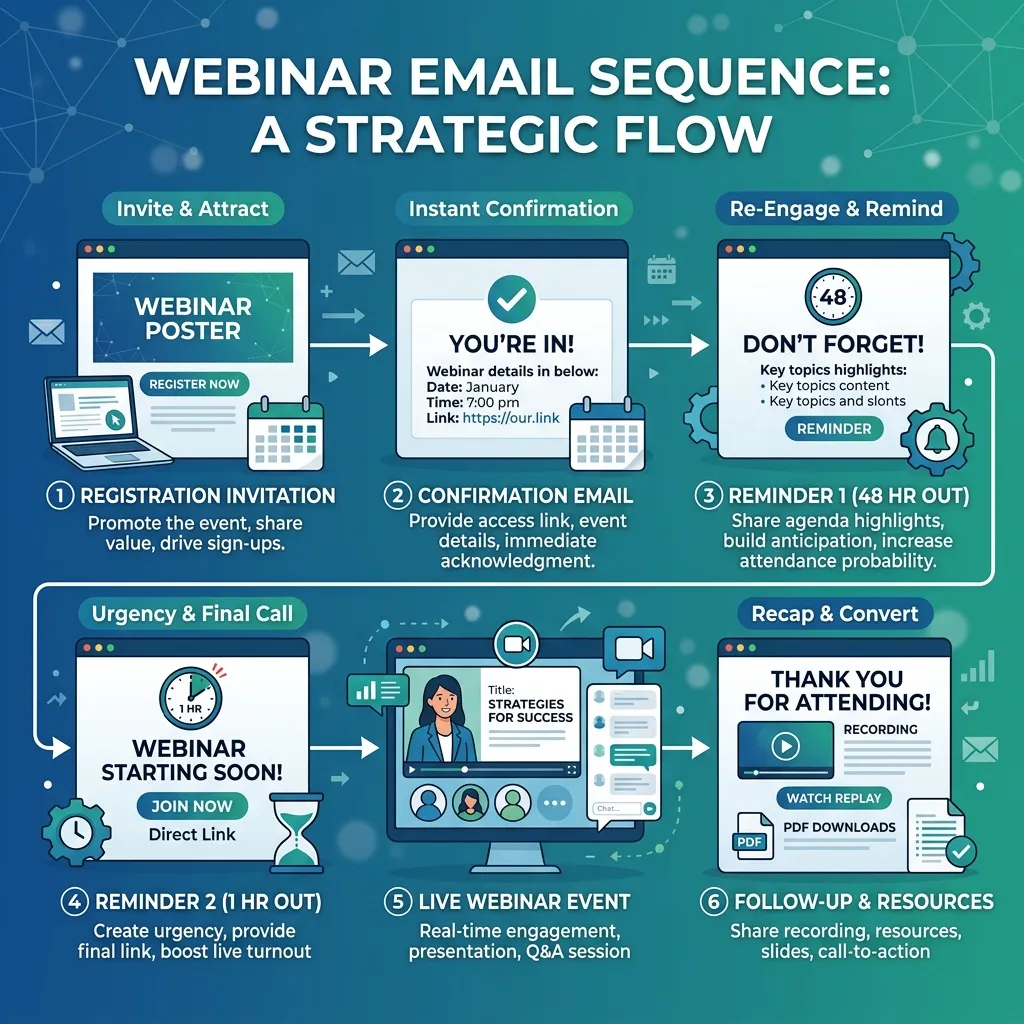
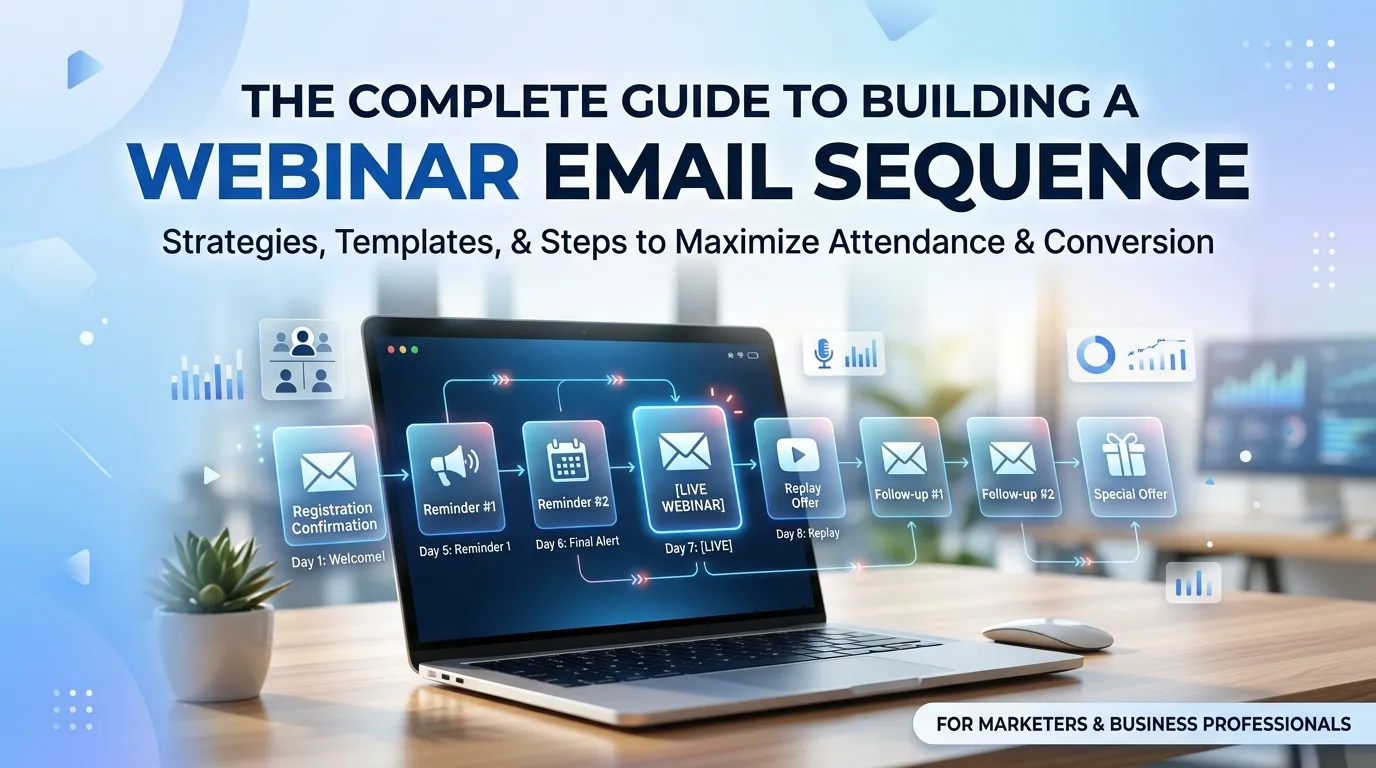
A webinar email sequence is a connected series of emails designed to move people through the stages of your event. It starts with an invitation, continues through registration and reminders, and wraps up with follow-up messages after the webinar ends.
To understand how these systems fit into the bigger digital ecosystem, it helps to start with the fundamentals of what is web development a complete guide, since email automation tools and landing pages rely heavily on modern web infrastructure.
Think of it as a guided path. Each email has a single job—get the sign-up, secure the attendance, or drive the next action. When these emails work together, they create momentum that a single message never could.
Most sequences fall into three broad phases:
- Pre-webinar emails: Invitations, registration confirmations, and reminders that build anticipation.
- Live-day emails: Last-minute nudges sent on the day of the event.
- Post-webinar emails: Thank-you notes, replays, and nurture messages that turn attendees into leads or customers.
Why does a webinar email marketing strategy matter?
A scattered approach to webinar emails leaves results on the table. A clear strategy, on the other hand, keeps every message purposeful and timed for impact.
Successful execution also depends on how well your marketing and technical systems align. This is similar to the principles in how marketing and web development work together, where strategy and implementation must stay tightly connected.
Consider the numbers. Email remains one of the highest-performing marketing channels, with research from organizations like the Data & Marketing Association reporting strong returns for every dollar spent. For webinars specifically, reminder emails alone can lift attendance rates substantially compared to sending no reminders at all.
A solid webinar email marketing strategy delivers three big wins:
- More registrations. Compelling invitation emails expand your audience and fill your virtual room.
- Higher attendance. Well-timed reminders cut down on no-shows.
- Better conversions. Follow-up emails capture interest while it’s hot, turning passive viewers into paying customers.
The key is automation. By setting up an automated webinar email workflow, you free yourself from manual sending and ensure no registrant slips through the cracks.
What goes in a webinar registration email sequence?
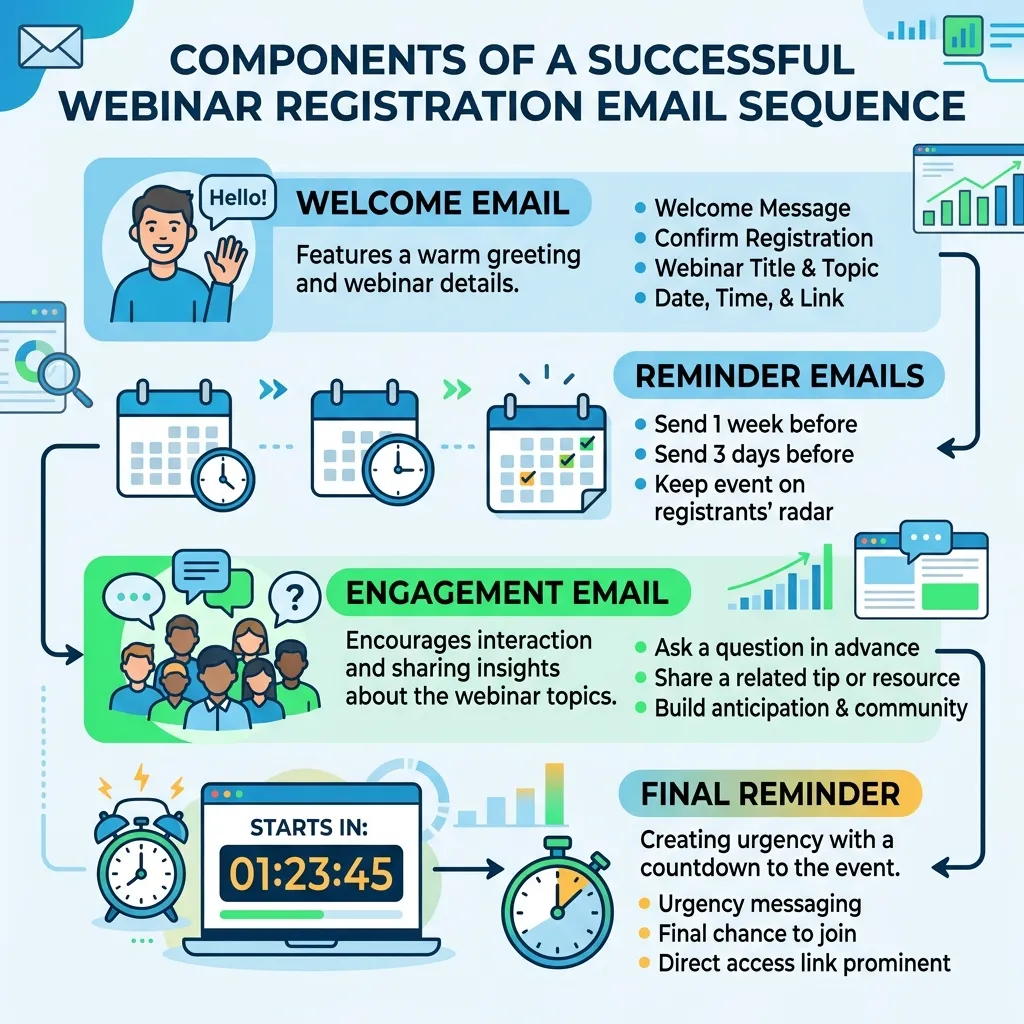
The registration phase is where you turn interest into commitment. This part of the sequence has two goals: convince people to sign up, then confirm their spot.
The webinar invitation email
Your invitation is the first impression, so make it count. A great invitation answers one question fast: why should I spend my time on this?
Strong webinar invitation email templates usually include:
- A benefit-driven subject line. Focus on what the reader will gain, like “Learn how to double your email open rates in 45 minutes.”
- A clear value proposition. Spell out the problem you’ll solve and what attendees will walk away with.
- Key details. Date, time (with time zone), and duration, all easy to spot.
- A standout speaker bio. Build credibility by highlighting who’s presenting and why they’re worth listening to.
- A single, obvious call to action. One button: “Save my seat.”
Keep the copy tight. People decide in seconds whether an event is worth their time, so lead with the payoff.
The registration confirmation email
Once someone signs up, send a confirmation right away. This email reassures registrants and sets expectations.
A good confirmation email includes:
- A warm thank-you for registering.
- The webinar date, time, and a calendar link (Google, Outlook, and Apple options are a nice touch).
- The unique join link or instructions for accessing the event.
- A preview of what they’ll learn to keep excitement high.
Adding an “add to calendar” button here is one of the simplest ways to boost attendance. It plants your event directly into the registrant’s schedule.
How do you build a webinar reminder email sequence?
Reminders are the unsung heroes of webinar marketing. Most people register with good intentions but forget when the day arrives. A reminder sequence solves that problem.
Timing and efficiency here are similar to optimizing systems for speed and responsiveness in web performance optimization techniques guide.
Here’s a reliable reminder schedule:
One week before
Send a friendly reminder that reinforces the value. Recap what attendees will learn and tease any bonus content, like a downloadable resource or live Q&A. This is also a smart time to ask registrants to share the webinar with colleagues.
One day before
This email should build urgency. Remind people the event is almost here, restate the time and time zone, and include the join link front and center. Keep it short and scannable.
One hour before
The final nudge. By now, the join link should be the star of the email. A single line like “We’re going live in one hour—here’s your link” works better than a wall of text. Many no-shows happen simply because people lose the link, so make it impossible to miss.
A quick tip: personalize these emails with the registrant’s first name and the webinar title. Small touches make the message feel less automated and more relevant.
What should a webinar follow-up email sequence include?
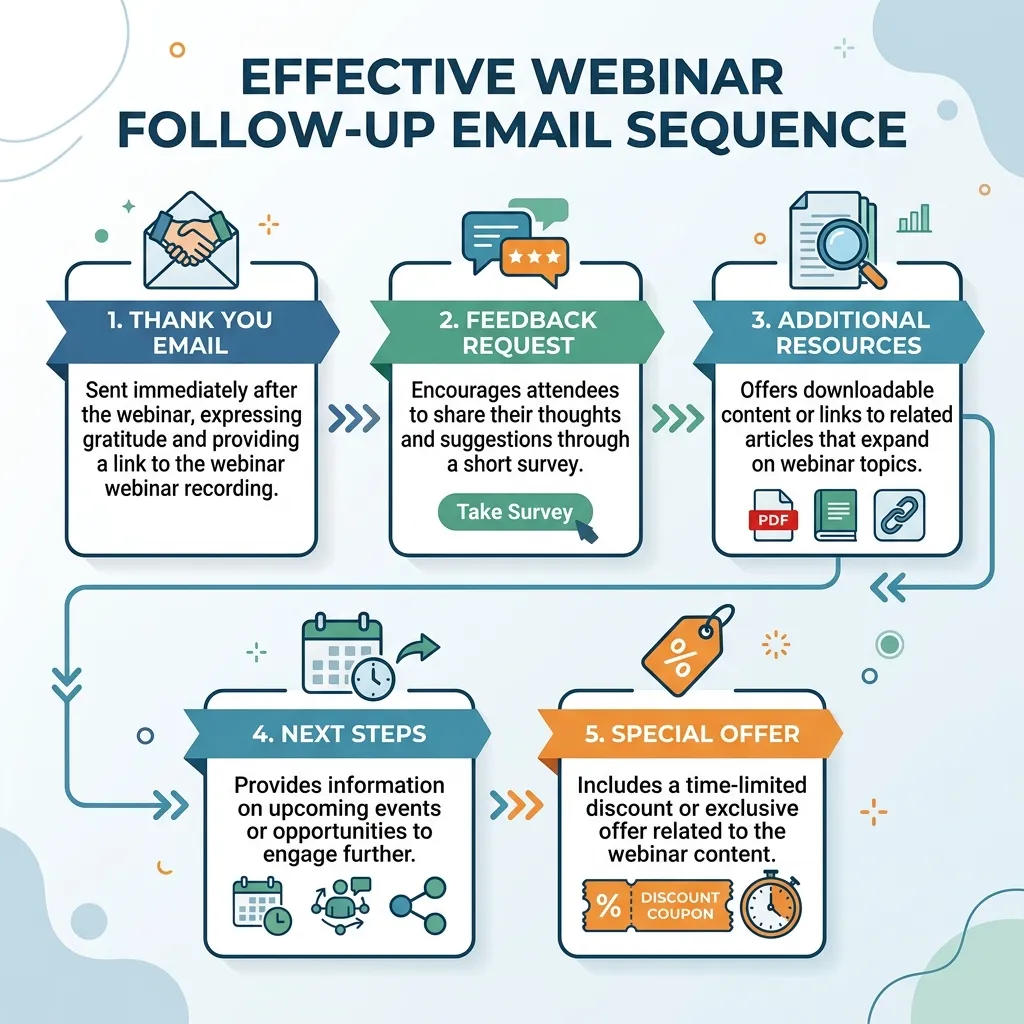
The webinar is over, but your email work isn’t. The follow-up phase is where you capture value and move people toward your goal—whether that’s a sale, a demo, or a deeper relationship.
Your post-webinar nurture emails should treat attendees and no-shows differently, because they need different messages.
For attendees
Send a thank-you email within 24 hours while the experience is fresh. Include:
- A genuine thank-you for attending.
- A link to the recording and slides so they can revisit key points.
- Any resources you promised during the session.
- A clear next step, such as booking a demo or starting a free trial.
For no-shows
Don’t write off the people who missed it. They registered, so they were interested. Send a “sorry we missed you” email with a link to the replay. This often recovers a meaningful chunk of your audience.
The nurture follow-up
A few days later, send a second follow-up that goes deeper. Share a related blog post, a case study, or answers to questions raised during the live Q&A. This keeps the conversation going and positions you as a helpful resource rather than a pushy seller.
How do you keep attendees engaged during the webinar?
Webinar attendee engagement emails aren’t only about before and after—you can use email to support the live experience too.
Consider sending a “we’re live now” email at the start of the session for anyone who hasn’t joined yet. During longer webinars, a mid-event email pointing to a poll or downloadable resource can re-engage distracted viewers. After the event, an email asking for feedback through a short survey shows you value their input and gives you data to improve future webinars.
Engagement is a two-way street. The more you invite interaction, the more invested your audience becomes.
How do you automate a webinar email workflow?
Sending all these emails by hand would be a nightmare. An automated webinar email workflow handles the timing for you, triggering each message based on a registrant’s actions.
Here’s how a typical automation flows:
- Trigger: Someone registers through your sign-up form.
- Immediate action: The confirmation email fires automatically.
- Scheduled reminders: The one-week, one-day, and one-hour emails send on a set schedule.
- Post-event branching: The system splits your list into attendees and no-shows, then sends the right follow-up to each group.
Most email marketing and webinar platforms—such as Mailchimp, HubSpot, ActiveCampaign, and Zoom Webinars—offer built-in automation tools to set this up. Once it’s running, your sequence works around the clock without extra effort from you.
The biggest advantage of automation is consistency. Every registrant gets the same polished experience, no matter when they sign up or how many people register.
Putting your webinar email sequence into action
A great webinar deserves a great email sequence. By mapping out a clear path—from invitation to registration, reminders to follow-up—you give every registrant the best chance of showing up and taking the next step.
Start simple. If you’ve never built a sequence before, focus on the essentials first: a strong invitation, a confirmation, three reminders, and two follow-ups. Once that’s running smoothly, layer in engagement emails and deeper nurture sequences to squeeze more value from every event.
The work you put into your emails pays off long after the webinar ends. So before you plan your next event, plan the emails that will make it a success.
Frequently asked questions
How many emails should a webinar sequence have?
A solid webinar sequence usually includes 6 to 8 emails: one invitation, one confirmation, three reminders (one week, one day, and one hour before), and two to three follow-ups after the event. You can add more for engagement or nurturing, but this core set covers the essentials.
When should I send webinar reminder emails?
Send reminders at three key points: one week before, one day before, and one hour before the webinar. The one-hour reminder is especially important, since many no-shows happen simply because people forget or lose the join link.
What’s the best way to follow up after a webinar?
Send a thank-you email with the recording within 24 hours of the event. Treat attendees and no-shows differently—attendees get a recap and next step, while no-shows get a “sorry we missed you” message with the replay link. A few days later, send a nurture email with related content.
How do I reduce webinar no-shows?
The best way to cut no-shows is a strong reminder sequence paired with calendar invites. Include “add to calendar” links in your confirmation email and send timely reminders, especially one hour before the event when the join link should be front and center.
Can I automate my entire webinar email sequence?
Yes. Platforms like HubSpot, Mailchimp, ActiveCampaign, and Zoom Webinars let you build an automated workflow triggered by registration. The system sends confirmations, reminders, and follow-ups on schedule, and can even split your list into attendees and no-shows for tailored follow-up.
What is a Webinar Email Sequence?
A Webinar Email Sequence is a series of automated emails sent before, during, and after a webinar to guide users from registration to conversion.
Why is a Webinar Email Sequence important?
It helps increase webinar registrations, improve attendance rates, and ensure consistent communication with participants.
What emails are included in a Webinar Email Sequence?
It typically includes invitation emails, registration confirmations, reminder emails, live-day alerts, and post-webinar follow-ups.
How many emails should be in a Webinar Email Sequence?
Most effective sequences include 6–8 emails, depending on the complexity of the campaign and audience behavior.
When should webinar reminder emails be sent?
Reminder emails are usually sent one week before, one day before, and one hour before the webinar starts.
How does a Webinar Email Sequence improve attendance rates?
By sending timely reminders and calendar invites, it reduces forgetfulness and encourages registrants to attend live.
What should be included in a webinar follow-up email?
Follow-up emails should include a thank-you message, replay link, key takeaways, and a clear next-step offer.
Can a Webinar Email Sequence be automated?
Yes, platforms like HubSpot, Mailchimp, and ActiveCampaign allow full automation of webinar email workflows.
How does segmentation improve a Webinar Email Sequence?
Segmentation separates attendees and no-shows, allowing personalized follow-ups that increase engagement and conversions.