Website Design Services help businesses create professional, responsive, and SEO-friendly websites that attract visitors and convert them into customers. These services include custom design, eCommerce development, UI/UX optimization, and ongoing support. Choosing the right provider depends on your goals, budget, and required features, whether you need a simple small business site or a large corporate platform.
Website design services help businesses build sites that look professional, work on every device, and convert visitors into customers. The best services combine custom design, responsive layouts, SEO optimization, and ongoing support—tailored to your goals, whether you run a small shop or a large corporation.
Your website is often the first thing a potential customer sees. A clunky layout, slow load time, or confusing menu can send them straight to a competitor. A clean, fast, well-structured site does the opposite—it builds trust and turns curiosity into sales.
But picking the right website design service isn’t always simple. There are dozens of options, from freelance designers to full-service agencies, and prices range from a few hundred dollars to tens of thousands. How do you know which one fits your needs and budget?
This guide breaks down the main types of website design services, what each one offers, and how to choose wisely. By the end, you’ll know exactly what to look for, what questions to ask, and how to get a site that actually works for your business.
What are professional website design services?
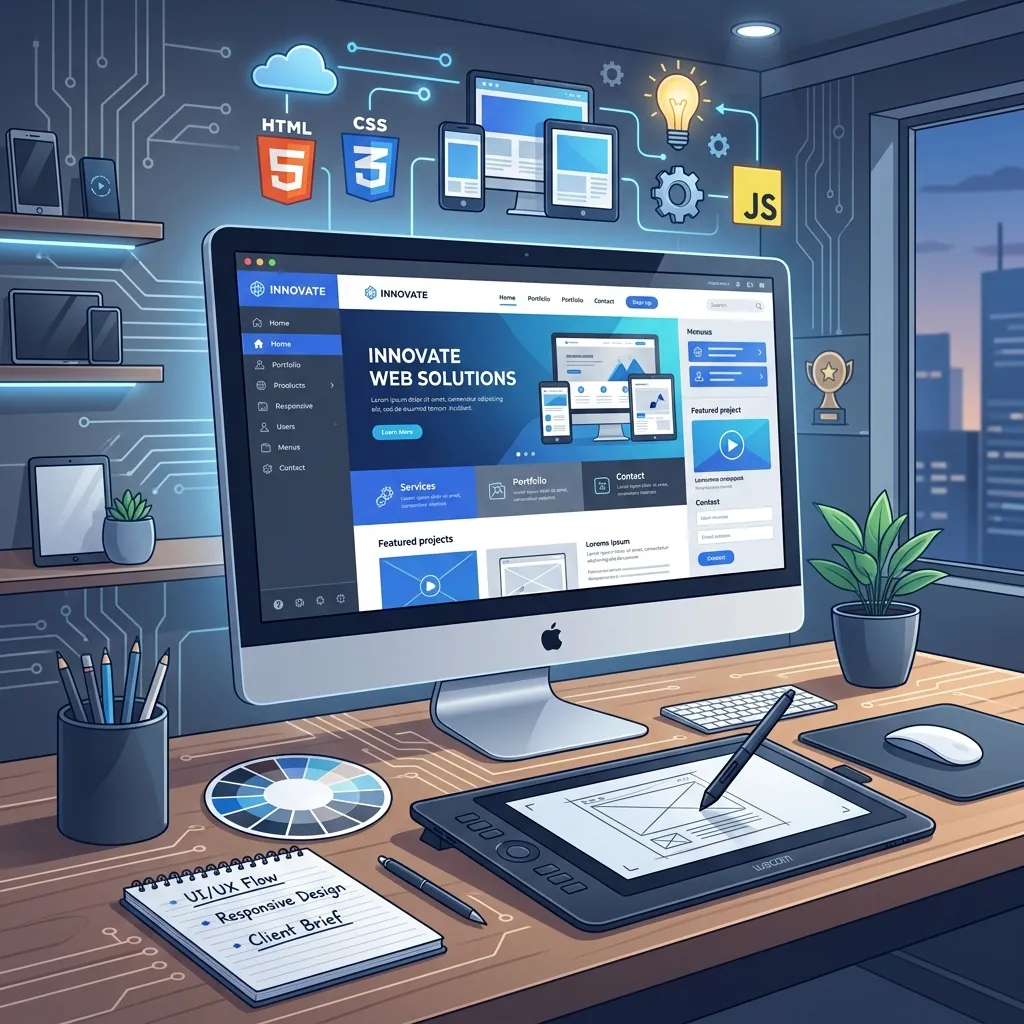
Professional website design services cover the planning, design, and building of a website by trained experts. Instead of using a drag-and-drop template on your own, you work with designers and developers who shape the site around your brand, goals, and customers.
A professional service usually handles several things at once:
- Strategy and planning: Mapping out your site’s structure, pages, and user flow before any design begins.
- Visual design: Creating a layout, color scheme, and typography that match your brand.
- Development: Turning the design into a working website with clean, functional code.
- Testing and launch: Checking the site across browsers and devices, then publishing it live.
The main advantage is expertise. Professionals know how to balance good looks with usability, speed, and search performance—three things that beginners often overlook.
For businesses unfamiliar with the technical side, understanding what web development is can help clarify the work that happens behind the scenes after the design phase is complete.
How do custom website design solutions differ from templates?
A custom website design solution is built from scratch to fit your specific needs. Templates, by contrast, are pre-made designs you fill in with your own text and images.
Templates are cheaper and faster, which makes them a fine starting point for very small projects. But they come with limits. You’re stuck with the layout someone else designed, and thousands of other businesses may be using the exact same look.
Custom solutions remove limitations and often support long-term growth. They are particularly useful when integrating marketing systems, CRMs, or custom functionality. Businesses looking to align design with growth goals often benefit from understanding how marketing and web development work together. Custom sites also tend to perform better because the code is written for your needs rather than packed with extra features you’ll never use.
Choose a custom solution if brand identity, unique functionality, or long-term growth matter more than upfront cost. Choose a template if you need a simple site live quickly and on a tight budget.
Is an affordable website design company worth it?
Affordable doesn’t have to mean low quality. Plenty of website design companies offer strong work at reasonable prices, especially for small and mid-sized businesses.
The key is knowing what drives the cost. A basic five-page brochure site costs far less than a 200-page eCommerce store with custom integrations. When comparing quotes, look beyond the headline price and check what’s included:
- Number of pages and revisions
- Mobile responsiveness
- Basic SEO setup
- Content management system (so you can edit the site yourself later)
- Post-launch support and maintenance
Be cautious of quotes that seem far too cheap. A site built with poor code or no SEO foundation often costs more to fix down the road. The best value comes from a company that’s transparent about what you’re paying for and why.
Why are responsive web design services essential?
Responsive web design services ensure your site looks and works well on any screen—phones, tablets, laptops, and desktops. More than half of all global web traffic now comes from mobile devices, so a site that only works on desktop is missing a huge slice of its audience.
Responsive design uses flexible layouts that adjust automatically to screen size. Text stays readable, buttons stay tappable, and images resize without breaking the layout. This matters for more than convenience.
Google uses mobile-first indexing, which means it primarily looks at the mobile version of your site when deciding how to rank it. A site that isn’t responsive can drop in search results, no matter how good it looks on a computer. Responsive design is no longer optional—it’s a baseline requirement for any modern website.
What do small business website design services include?
Small business website design services focus on getting local and growing companies online without the complexity—or price tag—of an enterprise project.
These services typically include a clean, mobile-friendly design, a handful of core pages (home, about, services, contact), and basic SEO so local customers can find you. Many also add features that matter most to small businesses:
- A contact form and click-to-call button
- Google Maps integration for your location
- Links to your social media profiles
- A simple blog or news section for updates
The goal is to give small businesses a polished online presence that competes with larger rivals. A well-built small business site can pay for itself quickly by bringing in calls, bookings, and walk-in customers.
Many small businesses use platforms like WordPress because they’re easy to manage and scale. Understanding how to become a WordPress developer and work with WordPress sites can also help business owners make better platform decisions.
What should eCommerce website design services offer?
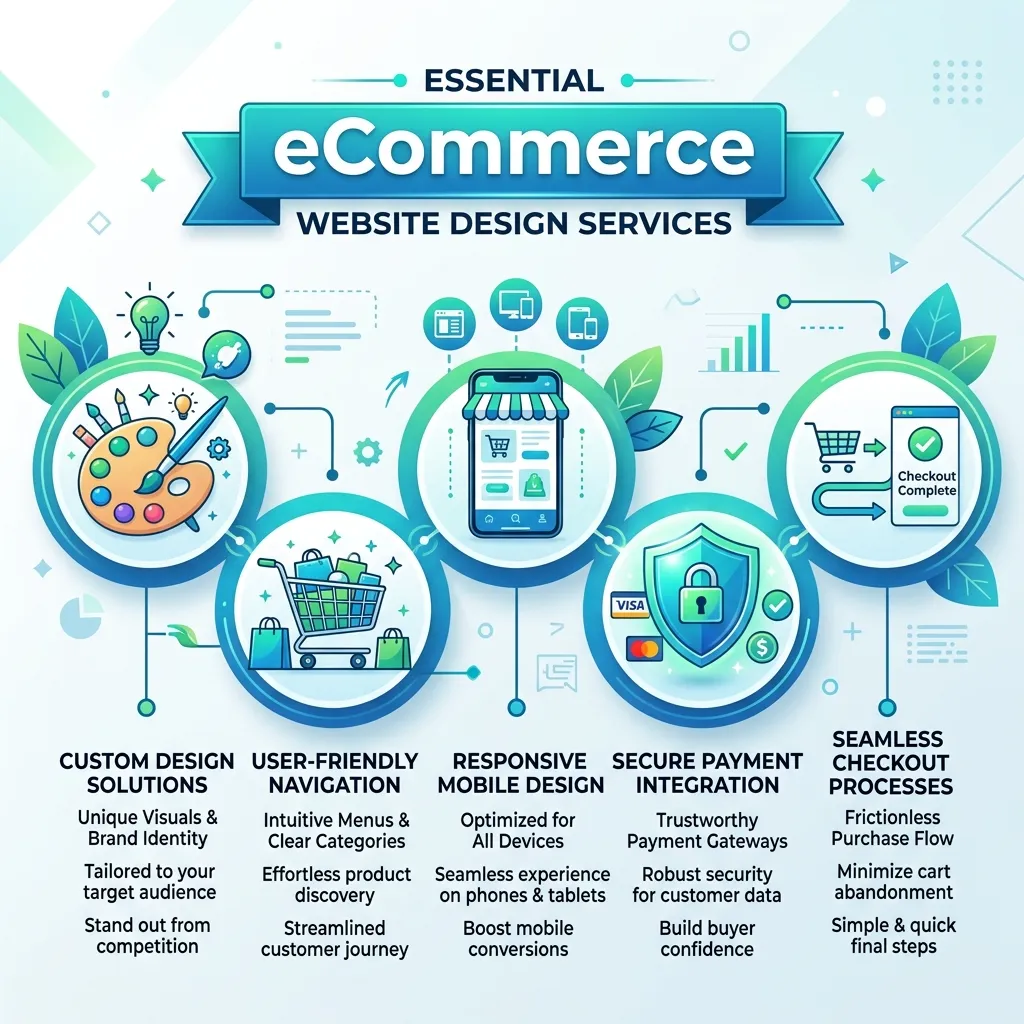
eCommerce website design services build online stores that make buying easy and secure. Selling online involves far more than a regular brochure site—you need product pages, a shopping cart, payment processing, and inventory tools.
A strong eCommerce design service should deliver:
- Clear product pages with high-quality images, descriptions, and reviews.
- A smooth checkout with as few steps as possible, since long checkouts cause cart abandonment.
- Secure payment options that support cards, digital wallets, and other popular methods.
- Mobile optimization, because a growing share of shopping happens on phones.
- Inventory and order management tools that connect to your back end.
Speed and trust are everything in eCommerce. A slow or confusing store loses sales, while a fast, secure, easy-to-use store turns browsers into repeat buyers.
How do UI/UX website design services improve results?
UI/UX website design services focus on how a site looks (UI, or user interface) and how it feels to use (UX, or user experience). Together, they shape whether visitors stay and act—or leave and forget.
Good UI design covers the visual details: buttons, colors, fonts, spacing, and layout. Good UX design covers the journey: how easily someone can find information, complete a purchase, or contact you.
When these work together, the results show up in your numbers. Clear navigation reduces frustration. Fast, logical checkout flows lift conversions. Thoughtful page layouts keep people reading longer. UI/UX services use research, testing, and design principles to remove friction at every step, so your site does what you built it to do.
What makes SEO-friendly website design services valuable?
SEO-friendly website design services build search engine optimization into the site from the start, rather than bolting it on later. This gives your site a stronger chance of ranking on Google and bringing in free, organic traffic.
An SEO-friendly build usually includes:
- Fast load times, since speed is a ranking factor and affects user patience.
- Clean, crawlable code that search engines can read easily.
- Mobile responsiveness, which ties directly to Google’s mobile-first indexing.
- Proper heading structure and meta tags that signal what each page is about.
- An organized site structure that helps both users and search engines navigate.
Building SEO in from day one is far cheaper than fixing a poorly structured site later. A design that ignores SEO can look great yet stay invisible in search results.
When should you hire a corporate website design agency?
A corporate website design agency handles large, complex projects for established companies and organizations. These agencies bring bigger teams, deeper resources, and experience with brands that have strict requirements.
Consider a corporate agency if your project involves:
- Multiple departments or stakeholders with input
- Large amounts of content across many pages
- Integration with internal systems like CRMs or databases
- Strict brand guidelines and compliance rules
- Ongoing support and updates at scale
Corporate agencies cost more than freelancers or small studios, but for a business with complex needs, that investment buys reliability and capacity. Choose a corporate agency if your project is large, high-stakes, or needs to scale. Choose a smaller studio if your needs are simpler and budget is tight.
What’s involved in website redesign and development services?
Website redesign and development services update or rebuild an existing site that’s outdated, slow, or no longer serving your goals. A redesign isn’t just a fresh coat of paint—it’s a chance to fix what isn’t working.
The process usually starts with an audit. The team reviews your current site’s performance, traffic, design, and weak points. From there, they plan improvements that might include a modern look, faster load times, better mobile support, and stronger SEO.
Signs it’s time for a redesign include:
- Your site looks dated compared to competitors
- It loads slowly or breaks on mobile devices
- Traffic or conversions are dropping
- It’s hard to update or manage
- Your business has changed and the site no longer reflects it
A smart redesign keeps what works—like content that ranks well—while fixing what doesn’t. Done right, it can boost traffic, engagement, and sales without starting from zero.
How to choose the right website design service
With so many options, the right choice comes down to matching the service to your goals. Here’s a simple way to narrow it down:
- Define your goals. Do you want more leads, online sales, or a stronger brand presence? Your goal shapes the type of service you need.
- Set a realistic budget. Know what you can spend, then find services that fit—while staying wary of prices that seem too good to be true.
- Review portfolios. Look at past work to judge quality and style. A good portfolio shows range and results.
- Ask about SEO and mobile. Make sure both are included, not treated as extras.
- Check support options. Find out what happens after launch. Ongoing maintenance keeps your site secure and current.
Build a website that works as hard as you do
A great website is one of the best investments a business can make. It works around the clock—answering questions, showing off your products, and bringing in customers while you sleep. The right website design service turns that potential into reality.
Start by getting clear on your goals and budget. Then look for a service that offers responsive design, built-in SEO, and the right mix of features for your industry. Whether you need a simple small business site, a full eCommerce store, or a complete redesign, there’s a service built to match.
Ready to move forward? Compare a few providers, request quotes, and review their past work. The sooner you start, the sooner your website can start working for you.
Frequently asked questions
How much do website design services cost?
Costs vary widely based on complexity. A basic small business site may run from a few hundred to a few thousand dollars. Custom eCommerce stores or corporate sites can cost tens of thousands. Always confirm what’s included—pages, revisions, SEO, and support—before comparing prices.
How long does it take to design a website?
A simple site can take two to four weeks. More complex projects, like eCommerce stores or corporate sites, often take two to four months. Timelines depend on the number of pages, custom features, and how quickly you provide content and feedback.
Do I need custom design or is a template enough?
A template works for simple, budget-conscious projects that need to launch fast. A custom design is better if you need unique features, a distinct brand identity, or room to grow. Custom sites cost more upfront but offer more flexibility long term.
Will my new website be mobile-friendly?
Any reputable website design service should deliver a responsive, mobile-friendly site by default. With more than half of web traffic coming from mobile and Google using mobile-first indexing, this is now a standard requirement rather than an add-on.
Can I update the website myself after it’s built?
Yes, if your site is built on a content management system like WordPress. A good design service will set this up and may offer training so you can edit text, swap images, and add pages without technical help. Confirm this before you sign on.
What’s the difference between web design and web development?
Web design focuses on how a site looks and feels—layout, colors, and user experience. Web development focuses on building the site with code so it functions properly. Most full-service providers handle both together.