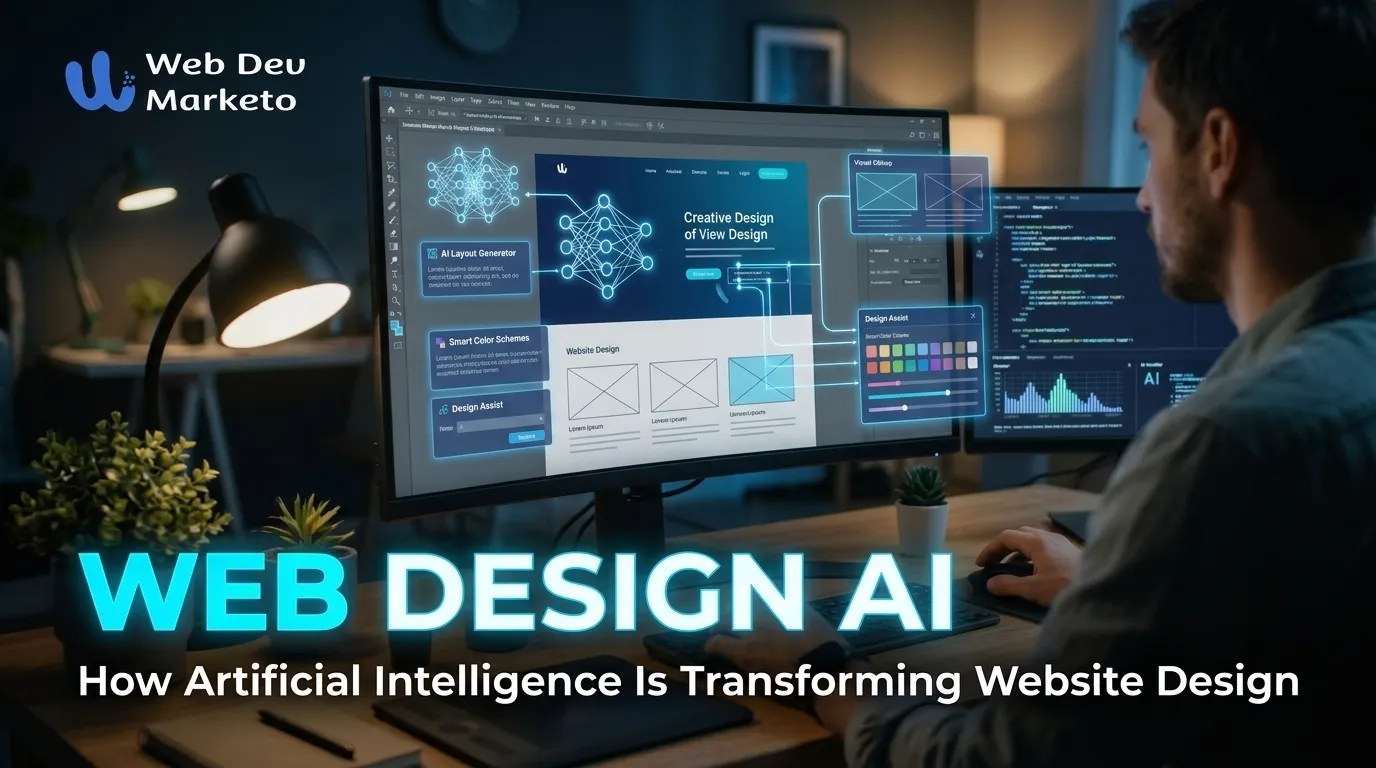
Artificial intelligence is changing how businesses create, design, and manage websites. From generating website layouts to improving user experiences and automating repetitive tasks, modern AI technologies are making website creation faster, easier, and more accessible. AI web design allows businesses, designers, and developers to build professional websites with less manual effort while maintaining creativity, functionality, and visual consistency.
Whether you are a small business owner, digital marketer, freelancer, or professional web designer, understanding AI-powered design tools can help you improve productivity and create better digital experiences. This guide explores the best AI technologies, their benefits, practical applications, and how businesses can use them to build modern, responsive websites.
AI Web Design Tools
AI web design tools are software applications that use artificial intelligence to simplify different stages of website creation. These tools can generate website layouts, recommend color combinations, create visual elements, write website content, and suggest improvements based on user requirements. Instead of designing every element manually, users can provide a description of their desired website and allow AI technology to generate an initial design.
Popular platforms such as Wix AI, Framer AI, Hostinger AI Website Builder, and Durable offer features that help users create websites without requiring extensive coding or professional design experience. Some tools focus on generating complete websites, while others specialize in individual design tasks such as image creation, typography, content generation, and interface development. One of the biggest advantages of these platforms is their ability to reduce the time required to complete repetitive design activities. For example, an AI-powered tool can generate several homepage layouts within minutes, allowing designers to compare different concepts before selecting the most suitable option. This makes the creative process more efficient and gives professionals additional time to focus on branding, user experience, and business objectives.
However, choosing the right tool depends on the project’s requirements. A personal portfolio website may need a simple website builder, whereas a large business website may require advanced customization, integrations, and development capabilities. AI web design tools work best when combined with human creativity, technical knowledge, and a clear understanding of the target audience.
Artificial Intelligence in Web Design
Artificial intelligence in web design refers to using intelligent technologies to improve how websites are planned, created, optimized, and maintained. These technologies analyze information, recognize patterns, and generate recommendations that help designers make better decisions throughout the development process. For example, AI can analyze website visitors’ behavior to identify which sections attract the most attention, where users experience difficulties, and which elements may need improvement. Designers can use these insights to create more intuitive navigation, improve page layouts, and make important information easier to find.
Artificial intelligence also supports content creation and visual development. Generative AI can produce website copy, suggest headlines, create illustrations, and recommend design styles based on a business’s industry and branding requirements. These capabilities make it easier to experiment with different creative directions without starting every design from scratch.
Another important application is personalization. Websites can use AI-driven recommendations to display relevant products, services, and content based on visitors’ preferences and previous interactions. This creates more meaningful experiences and can encourage visitors to spend more time exploring a website. For businesses, an effective website is not only about appearance. It must also support marketing, customer communication, and long-term growth. Combining intelligent design technology with strategies that encourage brand loyalty can help companies create consistent digital experiences that strengthen customer relationships.
AI Website Builder
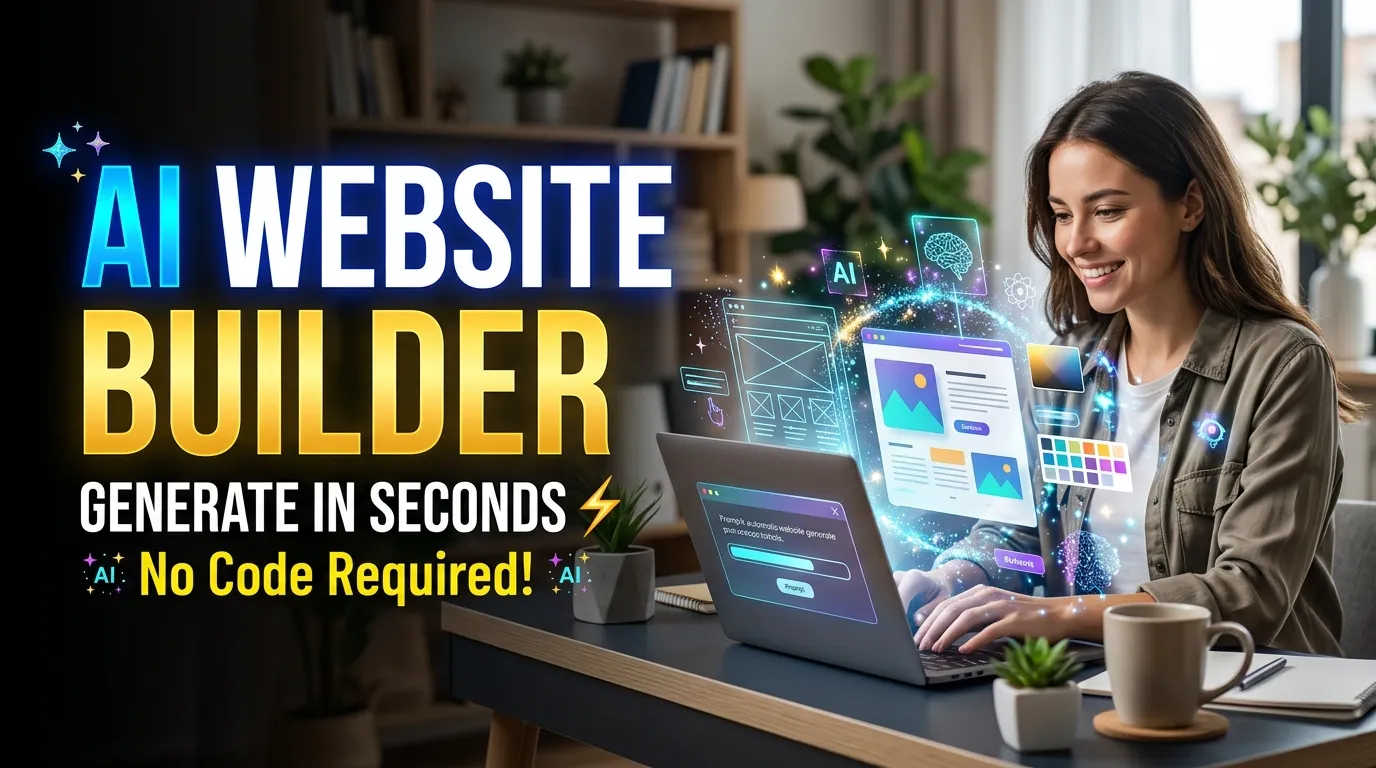 An AI website builder is a platform that uses artificial intelligence to create websites automatically from user instructions. Instead of manually selecting templates, arranging sections, and writing all the content, users can describe their business, website purpose, preferred design style, and required features. The platform then generates a website structure based on those details. Most AI website builders provide features such as automatic layout generation, content suggestions, image recommendations, customizable templates, and responsive design. Some platforms also include hosting, domain connections, search engine optimization settings, and basic ecommerce functionality.
For example, a restaurant owner can describe the type of restaurant, its menu, location, and preferred visual style. The AI builder can generate a homepage, menu section, contact page, and reservation area. The owner can then customize the content, upload original photographs, and adjust the layout to match the business identity. These platforms are particularly useful for startups, freelancers, and small businesses that need an online presence without investing heavily in custom development. Nevertheless, automated website generation has limitations. Complex applications, advanced integrations, and unique business requirements may require professional developers.
Businesses should also consider their long-term requirements before selecting a platform. A website that works well as a basic business page may not provide the flexibility needed for future expansion. When a project requires custom functionality, understanding web application development costs can help businesses make informed decisions about their technology and development budgets.
Best AI Tools for Web Design
The best AI tools for web design depend on the user’s experience, project complexity, budget, and desired level of customization. Different platforms provide different capabilities, so businesses should evaluate their features before choosing a solution. Wix AI is a popular option for users who want to generate a website through conversational instructions. It can create website structures, suggest content, and provide customization options within its website-building environment. It is particularly suitable for small businesses and individuals who want an accessible way to establish an online presence.
Framer AI is useful for designers who want to generate visually appealing website concepts and modern page layouts. It offers design flexibility and allows users to refine generated pages using a visual editing environment. This makes it suitable for portfolios, landing pages, and creative business websites. Hostinger AI Website Builder provides an accessible website creation experience with AI-assisted content generation, design suggestions, and other website management features. It can be useful for individuals and small businesses looking for an integrated website-building solution.
Durable focuses on helping businesses generate websites quickly through simple descriptions. It can be particularly useful for service providers and entrepreneurs who want to create an initial business website without spending extensive time on design. Other tools, including ChatGPT, Adobe Firefly, and Canva, can support different parts of the creative process. They can assist with content writing, visual generation, marketing graphics, and design brainstorming. When comparing AI web design software, businesses should evaluate customization options, mobile responsiveness, integrations, hosting, security, pricing, and scalability. The most expensive platform is not necessarily the best choice. The right solution is the one that supports the website’s actual requirements and provides sufficient flexibility for future improvements.
AI-Powered Website Design
AI-powered website design combines intelligent automation with traditional design principles to create attractive, functional, and user-friendly websites. Rather than relying entirely on predefined templates, modern AI systems can generate design recommendations based on business information, audience preferences, and project objectives. One important application is automated layout generation. AI tools can suggest where to place headings, images, buttons, navigation menus, and content sections. These recommendations provide a starting point for designers who want to explore different website structures.
Color and typography recommendations are another useful feature. AI-powered platforms can suggest color palettes that match a brand’s identity and recommend font combinations that improve readability. They can also help maintain visual consistency across multiple pages. Website personalization is becoming increasingly important as businesses compete for online attention. AI technologies can analyze visitor interactions and help deliver relevant content or product recommendations. For example, an ecommerce website may display products based on browsing history, while a service-based business may highlight information that matches a visitor’s interests.
Visual content also plays an important role in website engagement. Businesses can combine AI-generated images, animations, and illustrations with a broader digital video marketing strategy to create more engaging online experiences. Although automated design can speed up production, designers should always review generated content and visuals. Brand consistency, accessibility, image quality, and usability require careful human evaluation. AI web design should support professional decision-making rather than replace it entirely.
Automated Web Design Solutions
 Automated web design solutions use artificial intelligence and predefined workflows to reduce the manual work involved in creating and maintaining websites. These solutions can assist with generating page structures, updating content, optimizing images, checking layouts, and identifying potential design issues. For example, a business that frequently publishes landing pages can use automation to generate consistent page structures based on existing design guidelines. This helps maintain a recognizable visual identity while reducing the time required to create new pages.
Automation can also improve website maintenance. Certain platforms can identify broken links, recommend image optimization, detect performance issues, and provide suggestions for improving search engine visibility. Some advanced systems can assist with content updates and repetitive administrative activities. Marketing automation is another important area where automated website workflows provide value. A website can connect with email marketing platforms, customer relationship management systems, and analytics tools to support lead generation and customer communication.
Businesses exploring these capabilities can benefit from understanding how marketing automation software compares. Selecting suitable automation software can help organizations connect website activity with their wider marketing operations. Automated web design solutions are particularly valuable for businesses managing multiple websites or frequently updating digital content. However, automation should always include quality checks. Automatically generated pages must be reviewed for accuracy, accessibility, performance, and consistency with the company’s branding.
AI Website Development
AI website development involves using artificial intelligence to support the technical process of building and maintaining websites. While website design focuses primarily on appearance and user experience, development also includes coding, functionality, databases, integrations, security, and performance. AI coding assistants can help developers generate code snippets, explain programming concepts, identify errors, and suggest improvements. These capabilities can make development workflows more efficient, particularly when working with repetitive coding tasks or familiar frameworks.
For example, a developer building a contact form can use AI assistance to generate an initial HTML structure, suggest validation logic, and explain how the form connects to a backend service. The developer can then review and modify the code to ensure that it meets the project’s technical requirements. AI can also assist with testing and debugging. Some development tools can identify potential errors, suggest fixes, and help developers understand unexpected behavior. This can reduce troubleshooting time, although generated code still requires proper testing and security reviews.
For larger projects, AI web design may be only one part of a broader development process. Businesses building ecommerce platforms, customer portals, booking systems, or web applications may require custom architecture and specialized development expertise. Security should remain a priority throughout development. Developers must review authentication, data protection, API connections, and access permissions rather than assuming AI-generated code is automatically secure. Ultimately, AI can improve development productivity, but successful websites still depend on sound technical architecture, experienced professionals, and thorough quality assurance.
Website Design Automation
Website design automation focuses on using technology to handle repetitive design and website management tasks. It allows designers and businesses to maintain consistent layouts, reusable components, and standardized visual elements across different website pages. One common example is template automation. Businesses can create reusable page sections for headers, footers, service descriptions, testimonials, and calls to action. When a new page is required, these components can be reused instead of designing every section independently.
AI-powered content systems can also assist with generating page descriptions, product information, blog layouts, and other website content. This is especially useful for organizations that manage large websites with frequently changing information. Another application involves website optimization. Automated systems can monitor certain performance indicators and recommend improvements related to loading speed, image sizes, mobile usability, and navigation. These insights help teams identify issues before they negatively affect visitors.
Automation can also connect website activities with broader marketing campaigns. For instance, a landing page can collect visitor information and send it to a CRM system, where the business can organize leads and manage follow-up communication. Companies that regularly conduct digital campaigns may also use webinar-based landing pages and registration systems. Developing a clear webinar marketing goals and strategy can help businesses connect website design with lead generation, audience engagement, and measurable marketing objectives. The main advantage of website design automation is consistency. However, businesses should avoid creating websites that look generic because of excessive reliance on automated templates. Original branding, thoughtful content, and human design decisions remain essential.
AI Web Design Software
 AI web design software includes platforms that use artificial intelligence to simplify visual design, website development, content creation, and optimization. These applications are designed for different users, including professional designers, developers, entrepreneurs, and marketing teams. Some software focuses on complete website generation, while other solutions provide specialized assistance with wireframing, image creation, coding, and user experience research. Understanding these differences helps businesses select the right tools for their workflow.
For example, a professional designer may use Figma with AI-assisted features to explore interface concepts and organize design components. A developer may use GitHub Copilot to receive coding suggestions, while a marketing team may use ChatGPT to develop website copy and content ideas. Adobe Firefly can support visual content creation, and Canva provides design features that help users produce website graphics and other marketing materials. These tools can complement website builders and professional development platforms.
When evaluating software, businesses should consider usability, integration capabilities, customization, data privacy, and pricing. It is also important to understand whether a platform allows users to export their work or move their website to another hosting environment. A reliable AI web design workflow should combine multiple capabilities without making the process unnecessarily complicated. Using fewer, well-integrated tools can often be more productive than subscribing to numerous platforms with overlapping features. The best software should make the design process more efficient while allowing users to maintain control over their website’s appearance, functionality, and long-term direction.
Responsive Website Design with AI
Responsive website design ensures that a website displays correctly across different screen sizes and devices, including smartphones, tablets, laptops, and desktop computers. Since people access websites through a wide range of devices, responsive design is essential for providing a consistent user experience. AI technologies can help designers create and evaluate responsive layouts more efficiently. Some tools automatically adjust page structures, resize visual elements, and suggest alternative arrangements for smaller screens. This can reduce the manual effort involved in preparing separate layouts for different devices.
For example, a desktop website may display a navigation menu horizontally, while its mobile version uses a compact menu. AI-assisted design tools can recommend these changes and help designers maintain visual consistency across screen sizes. AI can also support responsive content optimization. It may suggest shorter headlines, improved image placement, and simplified page sections to make information easier to access on mobile devices.
However, responsive design requires more than automatically resizing elements. Developers and designers must consider touch-friendly buttons, readable typography, appropriate spacing, image quality, navigation behavior, and page loading speed. Testing is equally important. A website should be reviewed on different devices and browsers to identify layout problems, overlapping elements, and navigation difficulties. Businesses should also monitor real user behavior after launch. Analytics can reveal whether visitors experience problems on particular devices and help teams prioritize improvements. When implemented correctly, responsive AI web design helps businesses deliver accessible and consistent digital experiences while reducing some of the repetitive work associated with multi-device optimization.
Conclusion
Artificial intelligence is transforming the website creation process by making design, development, content generation, and optimization more efficient. From automated website builders to intelligent coding assistants, these technologies provide businesses with new opportunities to create professional digital experiences. However, successful websites still require thoughtful planning, original branding, user-focused design, technical expertise, and continuous improvement. AI-generated layouts and content should always be reviewed to ensure accuracy, accessibility, security, and consistency. Businesses that approach AI web design strategically can reduce repetitive work, explore creative possibilities, and improve their online presence. The most effective approach is to combine intelligent automation with human creativity and professional judgment to build websites that serve both business objectives and visitor expectations.
FAQ
1. What is AI web design?
AI web design is the process of using artificial intelligence technologies to assist with website planning, layout generation, content creation, visual design, and optimization. It helps designers and businesses create websites more efficiently while reducing repetitive manual tasks.
2. Can AI build a complete website?
Yes, many AI website builders can generate complete websites from simple text descriptions. They can create page layouts, suggest images, write initial content, and provide customization options. However, complex websites may still require professional developers for advanced functionality and integrations.
3. What are the best AI tools for web design?
Popular options include Wix AI, Framer AI, Hostinger AI Website Builder, Durable, ChatGPT, Adobe Firefly, and Canva. Each platform offers different capabilities, so the best choice depends on project requirements, customization needs, and budget.
4. Is AI web design suitable for beginners?
Yes, AI-powered website builders make website creation more accessible to beginners. Users can generate initial designs through simple instructions without needing advanced programming or design knowledge. Some basic understanding of website content, branding, and usability is still helpful.
5. Can AI replace professional web designers?
AI can automate certain design tasks, but it cannot completely replace professional designers. Human expertise remains important for creative direction, brand identity, user experience, accessibility, and complex project requirements. AI is most effective as a tool that supports designers.
6. How does AI improve website user experience?
AI can analyze visitor behavior, recommend layout improvements, support personalized content, and help identify navigation problems. These capabilities allow businesses to make websites more relevant, accessible, and convenient for their audiences.
7. Are AI-generated websites SEO-friendly?
AI-generated websites can be SEO-friendly when they are properly optimized. Businesses should review page titles, meta descriptions, heading structures, content quality, image descriptions, loading speed, mobile responsiveness, and internal links. Using AI does not automatically guarantee higher search rankings.
8. How much does an AI-built website cost?
The cost depends on the website builder, subscription plan, hosting, domain registration, design requirements, and additional integrations. Basic websites may be relatively affordable, while advanced business websites and custom applications can require a larger investment.
9. Can AI create responsive websites for mobile devices?
Yes, many AI website builders include responsive design features that help websites adapt to smartphones, tablets, and desktop screens. However, users should test the finished website on different devices to ensure that layouts, buttons, images, and navigation work correctly.
10. What is the future of AI in web design?
The future of AI in web design is likely to involve more advanced personalization, automated development assistance, intelligent design recommendations, and improved website optimization. As these technologies develop, designers and businesses will have more opportunities to create efficient, interactive, and user-focused digital experiences.