Web application development cost can range from a few thousand dollars to well over six figures, and the difference almost always comes down to complexity, team structure, and scope. This guide breaks down exactly what drives web application development cost, realistic price ranges by project type, and how to budget without underestimating hidden expenses.
“How much will this cost?” is usually the first question a business asks when planning a custom web application, and it’s also one of the hardest to answer with a single number. Web application development cost depends on so many variables — features, design complexity, the team building it, and ongoing maintenance needs — that any quote given without understanding your specific requirements should be treated with caution.
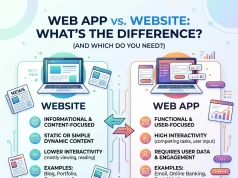
This guide breaks down exactly what drives web application development cost, realistic price ranges across different project types, and the hidden expenses that often catch businesses off guard after launch. For foundational context on what a web app actually involves before budgeting one, our guide on web app vs website: what’s the real difference is a useful starting point.
What Determines Web Application Development Cost?
Several core factors combine to determine the final web application development cost for any given project, and understanding each one helps set realistic expectations before requesting quotes from developers or agencies.
Feature Complexity
The number and sophistication of features requested is usually the single biggest driver of web application development cost. A simple app with basic forms and a database costs far less than one requiring real-time collaboration, complex search functionality, payment processing, or advanced data visualization. Our guide on web application development frameworks covers how technology choices can also influence how efficiently complex features can be built.
Design and User Experience
Custom, highly polished design work generally increases web application development cost compared to using pre-built component libraries or simpler interface patterns. Businesses building consumer-facing products with high design expectations should budget more heavily for UX research, wireframing, and visual design than internal tools where functionality matters more than visual polish.
Backend Architecture and Database Complexity
Applications requiring complex data relationships, high scalability, or integration with multiple data sources generally cost more to build than simpler applications with straightforward data needs. Our detailed guide on web application architecture explains how these underlying technical decisions directly affect both initial development time and long-term web application development cost through maintenance and scaling needs.
Third-Party Integrations
Connecting to external services — payment processors, CRM systems, mapping APIs, or authentication providers — adds development time and therefore cost, particularly when integrations involve complex data syncing or handling edge cases in how external systems behave.
Platform and Device Requirements
Building an application that needs to work flawlessly across desktop, tablet, and mobile browsers requires additional testing and responsive design work compared to a desktop-only internal tool. Similarly, applications requiring offline functionality or native-like mobile experiences through Progressive Web App techniques add development complexity.
Team Structure and Location
Who builds your application significantly affects web application development cost. Freelance developers typically offer the lowest hourly rates but may lack the range of specialized skills a larger project requires. Development agencies offer more comprehensive teams and project management but at higher rates. Offshore development teams can reduce cost but sometimes introduce communication and time zone challenges that affect project timelines.
Testing and Quality Assurance
Thorough testing — including functional testing, security testing, and cross-browser compatibility checks — adds cost but significantly reduces the risk of expensive post-launch bugs. Our guide on web application security covers why skimping on this phase to reduce upfront web application development cost often backfires through costly vulnerabilities discovered after launch.
Realistic Price Ranges by Project Type
While every project is different, understanding general price ranges helps set realistic budget expectations for web application development cost.
Simple Web Applications
Basic applications with straightforward functionality — a simple booking form, a basic internal dashboard, or a minimal viable product for testing an idea — typically represent the lower end of web application development cost, especially when built using existing frameworks and templates rather than fully custom architecture.
Medium-Complexity Applications
Applications requiring user accounts, moderate custom functionality, database-driven content, and a handful of third-party integrations sit in the middle range of typical web application development cost. This category includes many small business tools, membership platforms, and customer portals.
Complex and Enterprise Applications
Highly custom applications with advanced features — real-time collaboration, complex workflow automation, extensive third-party integrations, or applications needing to support large numbers of concurrent users — represent the highest end of web application development cost, often requiring dedicated teams working over many months.
SaaS Products
Building a full SaaS product typically involves the highest overall web application development cost among common project types, since it usually requires ongoing feature development, multi-tenant architecture, billing system integration, and continuous investment well beyond the initial launch. Our guide on SaaS development services covers what’s involved in planning a realistic budget for this type of long-term product investment.
Hidden Costs That Often Get Overlooked
Beyond the visible development costs, several hidden expenses frequently catch businesses off guard when planning web application development cost.
- Hosting and infrastructure — ongoing server costs that scale with usage, which can grow significantly as an application’s user base expands
- Third-party service fees — many integrations charge based on usage volume, meaning costs can increase substantially as an application grows
- Ongoing maintenance and updates — security patches, framework updates, and bug fixes require continued investment well beyond initial launch
- Post-launch feature requests — most applications require iteration based on real user feedback, adding to overall project cost over time
- Scaling infrastructure — applications that grow beyond initial expectations may require architecture changes that weren’t accounted for in original budgets
Failing to account for these ongoing expenses is one of the most common ways businesses underestimate the true, total web application development cost of a project over its full lifecycle rather than just the initial build.
Development Models and Their Cost Implications
In-House Development Teams
Building an in-house team gives businesses the most control and long-term institutional knowledge but requires significant upfront investment in salaries, benefits, and infrastructure, making this option generally suited to businesses planning extensive, ongoing development work rather than a single project.
Development Agencies
Agencies offer comprehensive project management, design, and development expertise under one roof, typically at a premium compared to freelance or offshore options, but with reduced coordination overhead and generally more predictable web application development cost estimates upfront.
Freelance Developers
Freelancers can offer the lowest rates for well-defined, smaller projects, though managing multiple freelancers across different specialties can introduce coordination challenges that agencies typically handle internally.
Offshore and Nearshore Teams
Offshore development can meaningfully reduce web application development cost due to lower regional labor rates, though businesses should budget additional time for communication, time zone coordination, and potentially more detailed documentation to bridge any language or cultural gaps in requirements.
How to Reduce Web Application Development Cost Without Sacrificing Quality
Several practical strategies can help manage web application development cost responsibly:
- Start with a minimum viable product. Building core functionality first and adding advanced features later reduces initial investment while validating the concept with real users.
- Use established frameworks and libraries. Leveraging existing, well-tested tools rather than building everything from scratch reduces development time significantly.
- Prioritize ruthlessly. Not every feature needs to launch in version one — focusing budget on the features that matter most avoids overspending on nice-to-haves.
- Plan for maintenance from day one. Budgeting realistically for ongoing costs prevents unpleasant surprises and supports better long-term financial planning.
- Choose the right team structure for your project size. Matching team type to project scope, rather than defaulting to the most expensive option, keeps spending proportional to actual needs.
Our guide on the web application development process walks through how a structured approach to planning and execution naturally supports more predictable, controlled web application development cost throughout a project’s lifecycle.
Web Application Development Cost by Industry
Different industries tend to see different cost patterns based on typical complexity and compliance requirements. Financial services and healthcare applications often carry higher web application development cost due to strict security and regulatory compliance requirements that demand additional development and testing rigor. E-commerce applications vary widely depending on whether they’re built on existing platforms or require fully custom checkout and inventory systems. Internal business tools for operations or HR functions often cost less than customer-facing products, since design polish and cross-device compatibility matter less for applications used by a smaller, controlled internal audience.
Getting an Accurate Estimate
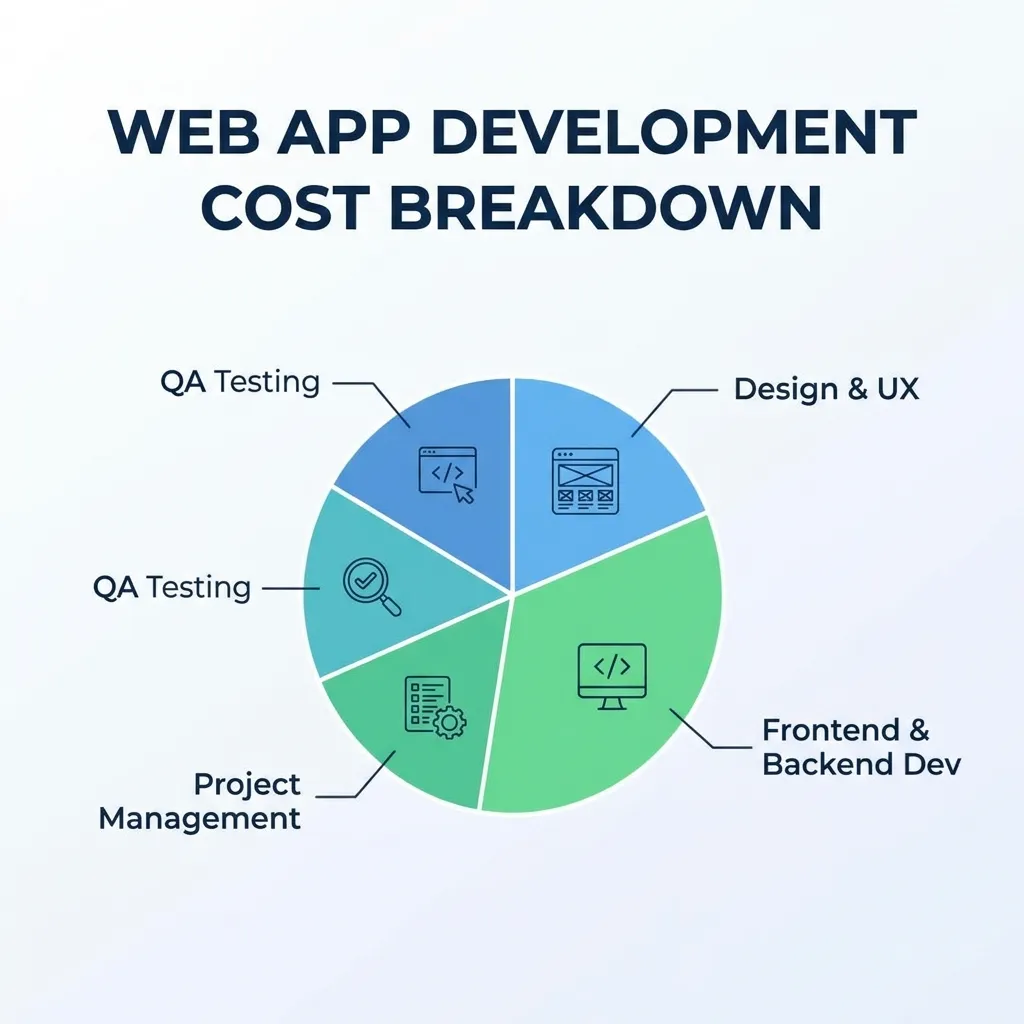
To get a realistic web application development cost estimate, businesses should come to development conversations with a clear, written outline of core features, target users, and any known integration requirements. Vague requirements almost always lead to unreliable estimates, since developers or agencies typically have to guess at complexity without sufficient detail. Requesting a detailed breakdown by phase — design, development, testing, and deployment — rather than a single lump sum also helps identify where the majority of the budget is actually being allocated.
Common Budgeting Mistakes
Even experienced businesses make avoidable mistakes when estimating web application development cost:
- Focusing only on the initial build cost while ignoring ongoing maintenance and hosting expenses
- Choosing the cheapest option without evaluating quality or communication, often leading to costly rework later
- Underestimating design and UX work, treating it as a minor add-on rather than a core project component
- Failing to plan for post-launch iteration, assuming the first version will meet all user needs without adjustment
- Skipping proper testing to save money upfront, which frequently results in more expensive bug fixes after launch
Thinking About Web Application Development Cost in the Context of Total Business Budget
It’s worth remembering that web application development cost rarely exists in isolation — it’s usually one line item within a broader technology and marketing budget that also needs to cover things like hosting, customer acquisition, and ongoing support. Businesses planning a new application often find it helpful to compare how they approach budgeting in other major spend categories, since the same core discipline of scoping requirements clearly before requesting quotes applies broadly. For example, our external resource on how much television advertising costs demonstrates a similar principle in a completely different channel — pricing varies enormously based on scope and specifics, and vague requirements almost always lead to unreliable estimates regardless of what’s being budgeted for.
Keeping web application development cost in proportion to the expected business value of the application is equally important. A simple internal tool that saves a small team a few hours per week likely doesn’t justify a six-figure investment, while a customer-facing product expected to drive significant new revenue may well justify a much larger budget, provided the projected return supports that level of spend. Framing the investment decision this way — as a return-on-investment question rather than simply the cheapest available quote — tends to produce better long-term outcomes than treating cost minimization as the primary goal on its own.
Planning for Long-Term Total Cost of Ownership
Beyond the initial build, it’s worth thinking about web application development cost across the full lifecycle of the product rather than just the launch phase. Applications that succeed and grow typically require continued investment in new features, performance optimization, and security updates for years after the original launch. Businesses that plan realistically for this long-term total cost of ownership from the outset tend to make better architectural decisions early on, since some cost-saving shortcuts during initial development can create significantly more expensive problems once an application needs to scale or add substantial new functionality later. Building this longer-term view into initial budget conversations, rather than focusing exclusively on the upfront number, generally leads to healthier, more sustainable software investments over time.
Conclusion
Web application development cost varies enormously based on complexity, team structure, and long-term maintenance needs, which is why any credible estimate requires a clear understanding of your specific project requirements rather than a generic industry average. By understanding the core cost drivers, budgeting realistically for hidden and ongoing expenses, and choosing a development approach that matches your project’s actual scope, businesses can plan for web application development cost accurately and avoid the budget surprises that derail so many software projects after launch.
Frequently Asked Questions (FAQs)
1. What is the average web application development cost? There’s no single average, since cost depends heavily on complexity — simple applications may cost a few thousand dollars, while complex enterprise systems can run into six figures or more.
2. What factors affect web application development cost the most? Feature complexity, design requirements, backend architecture, third-party integrations, and the type of development team all significantly influence overall cost.
3. Is it cheaper to hire a freelancer or an agency for web application development? Freelancers often offer lower rates for smaller, well-defined projects, while agencies typically provide more comprehensive expertise and project management at a higher cost.
4. What hidden costs should I plan for beyond initial development? Ongoing hosting, third-party service fees, ongoing maintenance, and post-launch feature development are commonly overlooked costs beyond the initial build.
5. Does offshore development actually reduce costs? Yes, offshore teams often offer lower rates due to regional labor cost differences, though communication and coordination challenges can offset some of these savings.
6. How can I reduce web application development cost without sacrificing quality? Starting with a minimum viable product, using established frameworks, and prioritizing core features over nice-to-haves are effective ways to manage cost responsibly.
7. Why do quotes for the same project vary so widely between developers? Vague or incomplete project requirements often lead to widely varying estimates, since different teams may assume different levels of complexity without clear specifications.
8. Does a SaaS product cost more to build than a typical web application?
Yes, SaaS products generally involve higher overall cost due to ongoing feature development, multi-tenant architecture, and billing system requirements beyond a typical one-time application build.
9. Should I budget for maintenance costs after launch?
Yes, ongoing maintenance, security updates, and bug fixes are essential and should be planned for as part of the total cost rather than treated as an afterthought.
10. How does design complexity affect web application development cost?
Highly custom, polished design work increases cost compared to using pre-built components, particularly for consumer-facing products with high visual design expectations.
11. Why do healthcare and financial applications often cost more to build?
Stricter security and regulatory compliance requirements in these industries typically demand additional development and testing rigor, increasing overall cost.
12. What’s the best way to get an accurate cost estimate?
Providing a clear, written outline of features, target users, and integration requirements helps developers or agencies produce a more reliable and detailed estimate.