
Web technology includes the tools, languages, and frameworks used to build modern websites and applications. It covers front-end technologies like HTML, CSS, and JavaScript, back-end systems, and modern innovations such as cloud computing, PWAs, and AI integration. Together, these technologies power fast, secure, and scalable digital experiences across the internet.
Web technology encompasses the tools, programming languages, and frameworks used to build, manage, and scale websites and applications. It includes front-end languages like HTML, CSS, and JavaScript, back-end server infrastructure, and modern innovations like cloud computing and Progressive Web Apps (PWAs) that deliver fast, responsive digital experiences.
Web technology forms the invisible infrastructure of the internet. Every time a user opens a browser, purchases an item online, or streams a video, a complex ecosystem of code and servers works quietly in the background. The digital tools and frameworks that power these interactions dictate how information flows across the globe.
Understanding these systems is critical for developers, business owners, and IT professionals. The specific web technology an organization chooses to implement dictates how fast a webpage loads, how secure user data remains, and how easily a company can scale its digital operations during periods of high traffic. Making informed technical decisions early on prevents costly rebuilds and technical debt down the line.
This comprehensive guide breaks down the core components of modern web technology. You will learn about foundational programming languages, explore the critical differences between front-end and back-end systems, and discover the latest web technology innovations shaping the future of digital development.
What are the foundational web development technologies?
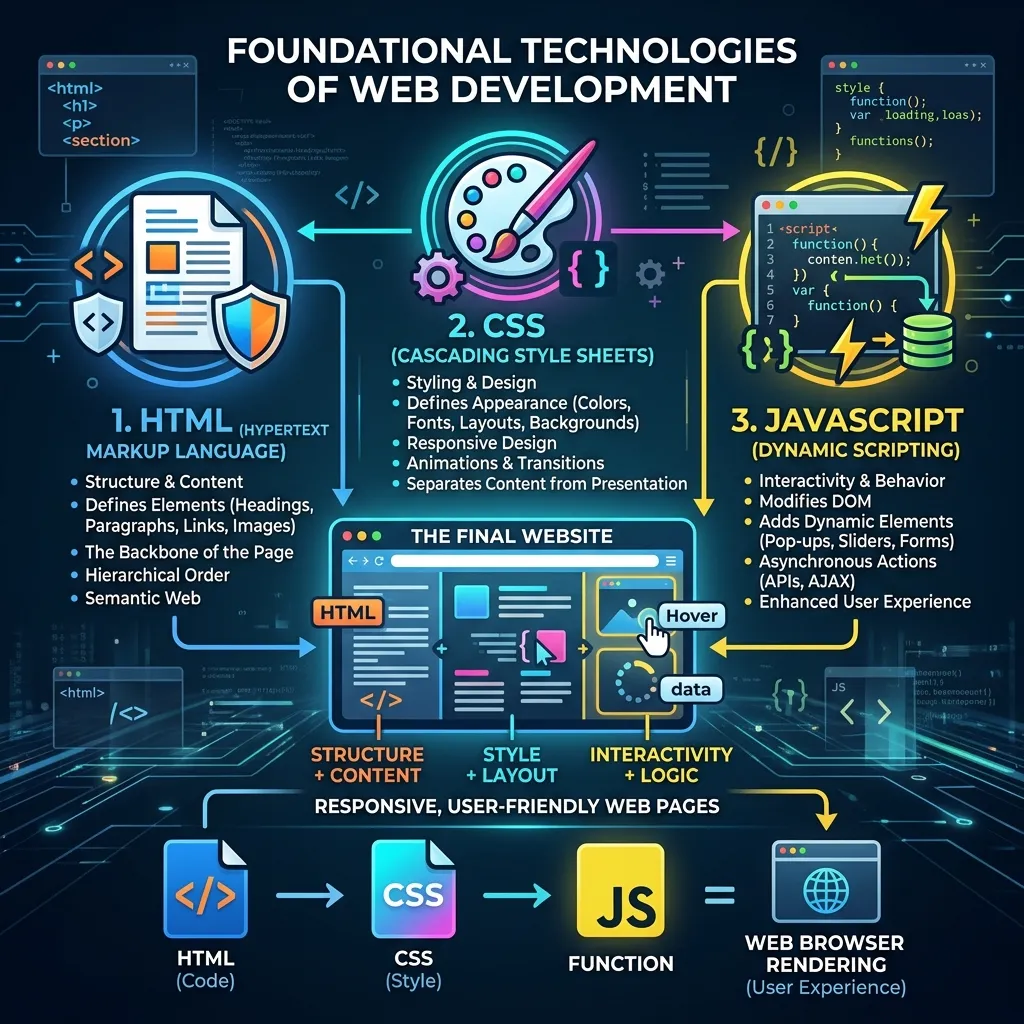
Every website relies on a core set of web development technologies to render content in a browser. These foundational tools determine how information is structured, styled, and manipulated.
If you are just starting out, it helps to first explore what web development is in a complete guide to understand how these technologies fit into the bigger picture.
How do HTML, CSS, and JavaScript frameworks work together?
The architecture of the web relies on three primary languages working in tandem:
- HTML (HyperText Markup Language): HTML provides the structural foundation of a webpage. It defines the text, images, links, and layout elements that browsers read and display.
- CSS (Cascading Style Sheets): CSS dictates the visual presentation of the HTML elements. Developers use CSS to control colors, typography, spacing, and overall aesthetics.
- JavaScript: JavaScript introduces interactivity and dynamic behavior. It allows pages to update in real-time, animate elements, and respond to user inputs without requiring a page reload.
To accelerate the development process, engineers frequently utilize HTML CSS JavaScript frameworks. Frameworks provide pre-written code modules and standardized structures. For styling, frameworks like Tailwind CSS and Bootstrap offer ready-to-use utility classes. For interactivity, JavaScript frameworks like React, Angular, and Vue.js enable developers to build complex, highly interactive user interfaces with reusable components. Choose React if your project requires a massive community ecosystem and flexible component architecture.
What is the difference between front-end and back-end web technologies?
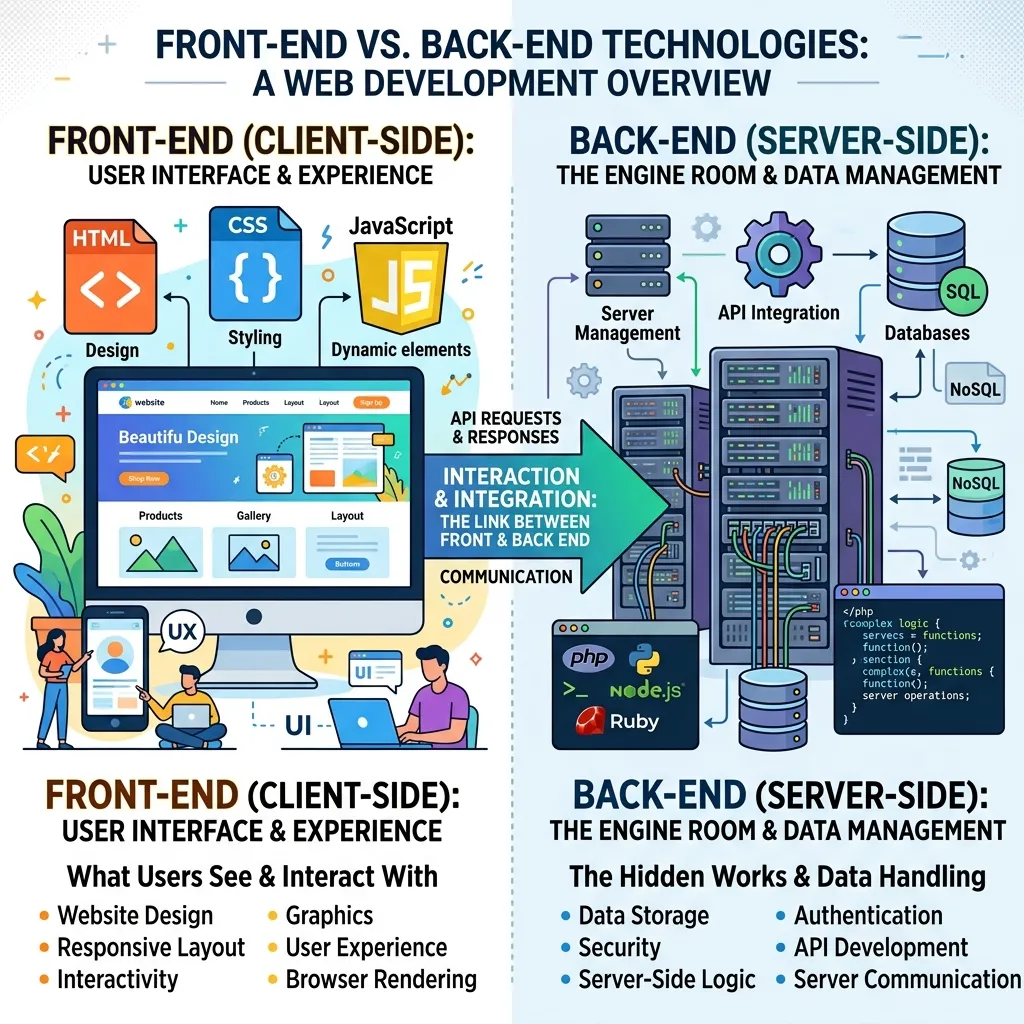
Web technology is generally divided into two distinct environments: the client side (front-end) and the server side (back-end).
Front-end web technologies focus entirely on what the user interacts with directly. This encompasses the visual layout, user interface components, and client-side logic powered by HTML, CSS, and JavaScript. The primary goal of front-end development is to ensure a smooth, accessible, and engaging user experience across different devices and browsers.
Back-end web technologies operate behind the scenes. This environment consists of the server, the database, and the application logic that processes requests. When a user submits a login form, the back-end verifies the credentials against a database and sends an authorization token back to the front-end. Common back-end programming languages include Python, Node.js, Ruby, and Java. Relational databases like PostgreSQL and non-relational databases like MongoDB store the application’s critical data.
To better understand how these systems interact, it’s useful to study full-stack development and how front-end and back-end connect.
What makes up a modern website development technologies stack?
A website development technologies stack refers to the specific combination of software products, programming languages, and frameworks used to create a web application. Selecting the right stack ensures that the front-end and back-end communicate efficiently.
Historically, the LAMP stack (Linux, Apache, MySQL, PHP) dominated the industry. However, modern development heavily favors JavaScript-based stacks. The MERN stack (MongoDB, Express.js, React, Node.js) allows developers to write the entire application using JavaScript. Choose the MERN stack if seamless language consistency across the front-end and back-end matters more than utilizing traditional relational database structures.
What are the most effective web application development tools?
Building robust digital products requires specialized web application development tools that streamline coding, testing, and deployment.
- Integrated Development Environments (IDEs): According to the 2023 Stack Overflow Developer Survey, Visual Studio Code (VS Code) remains the most popular IDE among developers globally. It provides syntax highlighting, debugging capabilities, and thousands of productivity extensions.
- Version Control Systems: Git allows multiple developers to collaborate on the same codebase simultaneously without overwriting each other’s work. Platforms like GitHub and GitLab host these repositories and facilitate continuous integration.
- Package Managers: Tools like npm (Node Package Manager) and Yarn allow developers to easily install, update, and manage third-party libraries within their projects.
How do responsive web design technologies improve user experience?
Internet traffic heavily skews toward mobile devices. Responsive web design technologies ensure that websites automatically adapt their layout and content to fit the screen size of the device rendering them, whether it is a massive desktop monitor or a compact smartphone.
CSS Media Queries serve as the backbone of responsive design. They allow developers to apply different styling rules based on the user’s viewport width. Modern layout modules like CSS Flexbox and CSS Grid provide flexible grid systems that automatically realign content blocks to prevent horizontal scrolling and unreadable text.
What is Progressive Web Apps (PWA) technology?
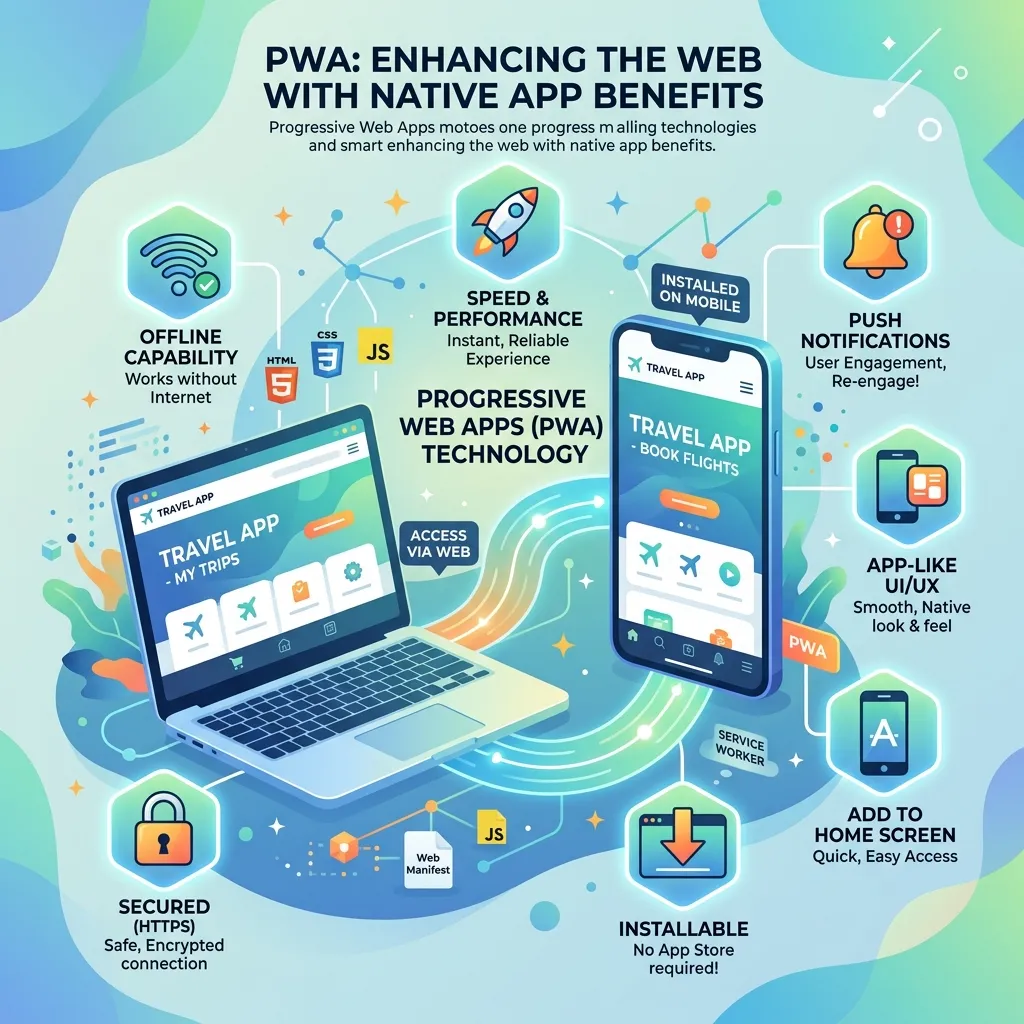
Progressive web apps (PWA) technology represents a hybrid approach to application development. PWAs are web applications built using standard web technology (HTML, CSS, JavaScript) that function like native mobile applications.
PWAs utilize “service workers”—scripts that run in the background, separate from the webpage. Service workers enable features traditionally reserved for native apps, such as push notifications, offline functionality, and background data synchronization. Companies adopt PWA technology to bypass app store fees and provide users with a fast, app-like experience directly through a mobile browser.
To understand their evolution and real-world applications, you can read about Progressive Web Apps and modern web experiences.
How are cloud-based web technologies transforming digital infrastructure?
Traditional web hosting required companies to purchase and maintain physical servers. Cloud-based web technologies have replaced this model by offering on-demand computing resources delivered over the internet.
Providers like Amazon Web Services (AWS), Google Cloud Platform (GCP), and Microsoft Azure offer scalable infrastructure. If a website experiences a sudden spike in traffic, cloud-based load balancers automatically distribute the requests across multiple virtual servers to prevent crashes. Additionally, serverless computing allows developers to deploy code without managing the underlying server operating systems at all, drastically reducing infrastructure maintenance costs.
What are the latest web technology innovations and trends?
The web technology landscape evolves continuously. Several modern web technology trends are currently reshaping how developers build applications:
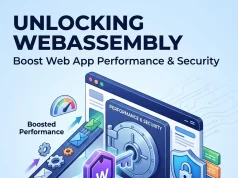
- WebAssembly (Wasm): WebAssembly allows developers to run high-performance code written in languages like C++ or Rust directly in the browser at near-native speeds. This innovation unlocks the ability to run complex software, like video editors and 3D games, entirely within a web browser.
- Edge Computing: Instead of routing all user requests to a centralized server, edge computing processes data at the periphery of the network, closer to the user’s physical location. This drastically reduces latency and improves application speed.
- AI Integration: Artificial intelligence is deeply embedding itself into web development. AI-powered coding assistants like GitHub Copilot help developers write code faster, while machine learning APIs enable websites to offer personalized content recommendations and advanced natural language processing functionalities.
Preparing Your Business for the Next Wave of the Web
Navigating the complexities of web technology requires continuous learning and strategic planning. The tools that power the internet are becoming faster, more secure, and increasingly accessible. By understanding the foundational languages, adopting modern frameworks, and leveraging cloud infrastructure, organizations can build resilient digital platforms capable of scaling alongside their business objectives.
Review your current website development technologies stack. Identify bottlenecks in your deployment process or areas where responsive design fails on mobile devices. Upgrading your web infrastructure today secures your competitive advantage for the digital demands of tomorrow.
Frequently Asked Questions (FAQ)
How much does it cost to implement a new web technology stack?
The cost varies significantly based on project scope. Basic template-based websites cost a few hundred dollars, while custom enterprise applications utilizing advanced cloud-based web technologies and microservices can cost tens of thousands of dollars in development and infrastructure fees.
How long does it take to learn modern web technology?
A dedicated learner can master the basics of HTML, CSS, and introductory JavaScript in three to six months. However, achieving proficiency in complex back-end architectures, cloud deployments, and advanced JavaScript frameworks typically requires one to two years of consistent practice.
What are the security risks associated with cloud-based web technologies?
Primary risks include misconfigured data storage, inadequate access controls, and vulnerable third-party APIs. Organizations mitigate these risks by enforcing multi-factor authentication, applying regular security patches, and utilizing cloud security posture management (CSPM) tools.
What are the best alternatives to traditional web application development tools?
For non-technical users or rapid prototyping, “low-code” and “no-code” platforms like Webflow, Bubble, and Framer are excellent alternatives. These tools allow users to build functional web applications using visual drag-and-drop interfaces instead of writing raw code.
Who should use progressive web apps (PWA) technology?
E-commerce brands, news publishers, and SaaS companies with high mobile traffic should use PWAs. Choose PWA technology if you need to engage mobile users with push notifications and offline access but lack the budget or timeline to develop and maintain separate native iOS and Android applications.
What is web technology?
Web technology refers to the tools, programming languages, and frameworks used to create and run websites and web applications on the internet.
What are the main types of web technologies?
The main types are front-end technologies (HTML, CSS, JavaScript) and back-end technologies (Node.js, Python, Java, databases).
What is front-end web technology?
Front-end technology controls what users see and interact with, including layout, design, and user experience in a browser.
What is back-end web technology?
Back-end technology handles server-side operations like databases, authentication, and application logic.
What is a web technology stack?
A web technology stack is a combination of tools and frameworks used to build a complete web application, such as MERN or LAMP.
What are modern web technologies?
Modern web technologies include cloud computing, Progressive Web Apps (PWAs), WebAssembly, and AI-powered development tools.
What are web development frameworks?
Frameworks are pre-built libraries like React, Angular, and Vue.js that help developers build applications faster and more efficiently.
Why is cloud computing important in web technology?
Cloud computing allows websites and apps to scale easily, handle traffic spikes, and reduce infrastructure costs.
What is a Progressive Web App (PWA)?
A PWA is a web application that behaves like a mobile app, offering offline access, push notifications, and fast loading.
How is web technology evolving?
Web technology is evolving with AI integration, faster frameworks, edge computing, and more interactive user experiences.


[…] You can explore modern options in the complete guide to modern web technology. […]