The Architecture of a Headless CMS
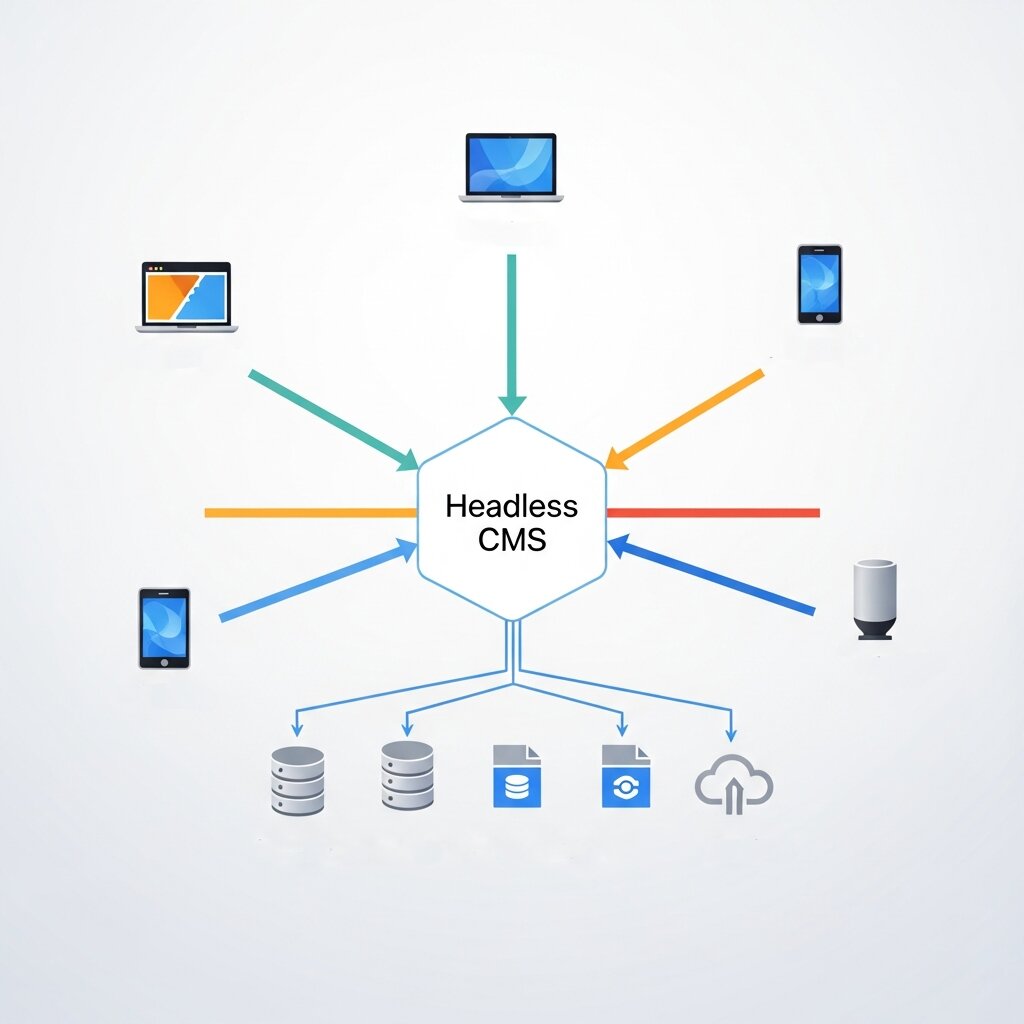
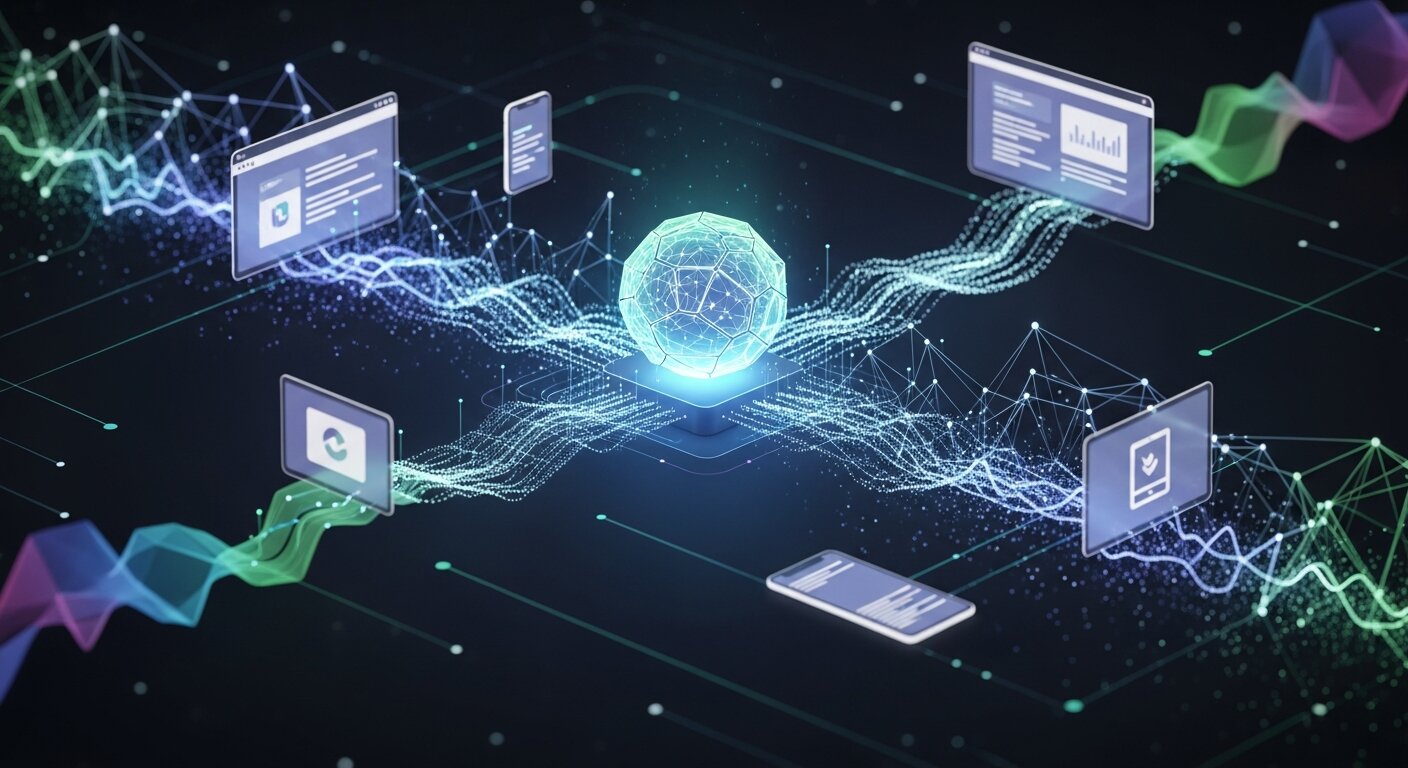
Understanding the power of a headless CMS requires looking closely at its underlying architecture. The fundamental shift lies in decoupling the frontend and the backend.
Decoupled Front-end and Back-end
In a traditional CMS, the database, the code that manages the content, and the templates that display it are all bundled together. A headless CMS completely removes the presentation layer—the “head.” It acts solely as a content repository. This means developers can store text, images, and videos in a secure backend environment without dictating how or where that content will eventually appear. The frontend presentation is handled entirely separately by whatever modern framework or application the development team chooses to utilize.
API-First Approach: RESTful and GraphQL APIs
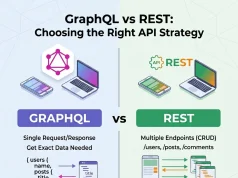
Because there is no built-in frontend, a headless CMS relies entirely on Application Programming Interfaces (APIs) to distribute content. This API-first approach ensures that any device capable of making a network request can retrieve and display the stored data. Most platforms offer RESTful APIs for standard, predictable data retrieval, alongside GraphQL APIs that allow developers to query exactly the specific data they need. This reduces bandwidth consumption and dramatically speeds up application performance.
Content as a Service (CaaS)
This architecture gives rise to the concept of Content as a Service (CaaS). Instead of thinking of content as a static web page, organizations can treat their content as raw data available on demand. A single centralized repository serves multiple endpoints. You write a product description once, and the API serves it simultaneously to your website, your mobile app, and your physical store’s interactive kiosk.
Key Benefits of Adopting a Headless CMS
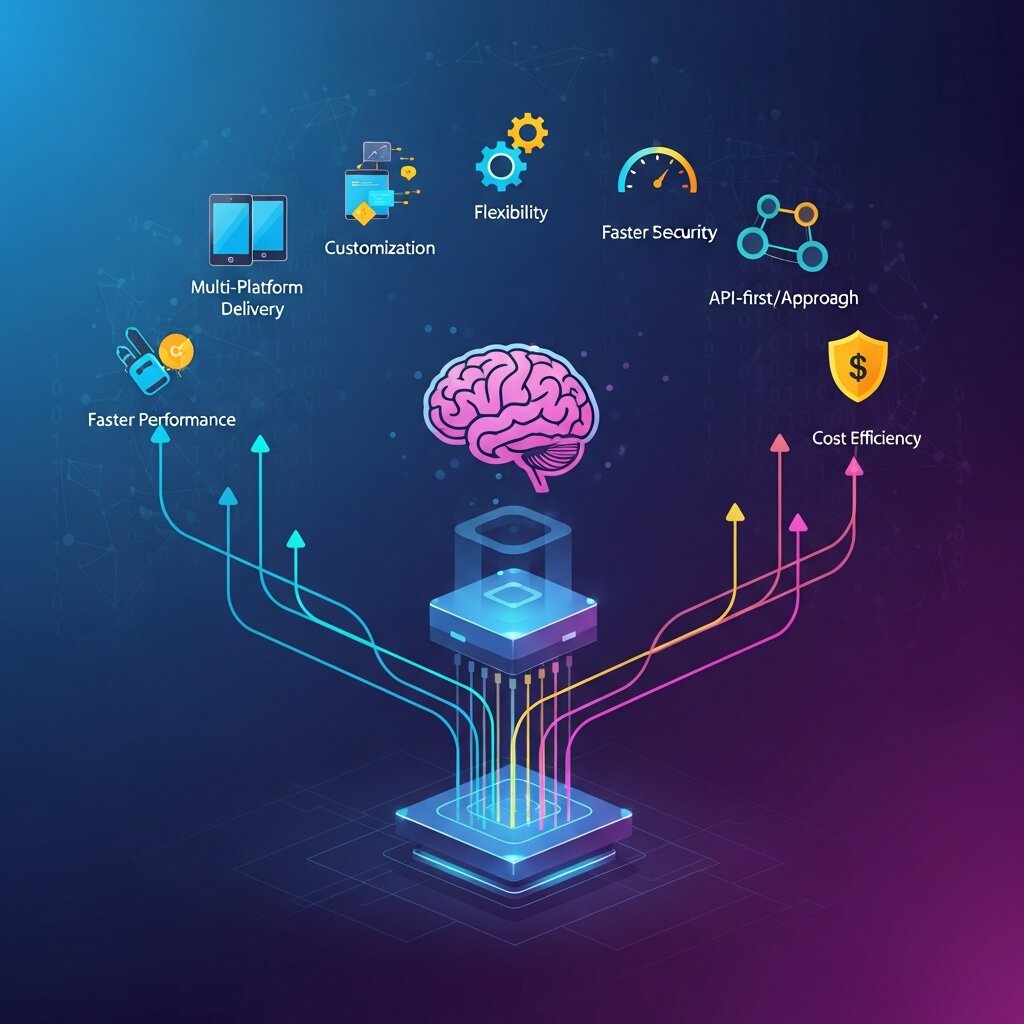
Making the switch to a headless architecture provides several distinct advantages that directly impact both the development team and the end user.
Enhanced Flexibility and Freedom for Developers
Developers are no longer forced to work with outdated templating languages dictated by a monolithic CMS. They have complete technology stack agnosticism. If a team wants to build a website using React, Vue.js, or Angular, they are completely free to do so. This freedom leads to significantly faster development cycles. Frontend and backend teams can work in parallel, without stepping on each other’s toes, allowing companies to push new features to market with incredible speed.
One of the biggest advantages of headless architecture is freedom in technology choice. Developers can use modern frameworks and approaches discussed in full stack development to build scalable, high-performance applications.
Superior Omnichannel Experience
Delivering content to any device or platform is the primary superpower of a headless CMS. Organizations can establish a consistent user experience across all digital touchpoints. When marketing updates a campaign slogan in the headless repository, that change reflects instantly across the e-commerce store, the iOS app, and the promotional email sequence. This creates a cohesive brand journey that is difficult to achieve when managing content in isolated silos.
Headless CMS platforms allow content to be delivered across websites, apps, and devices seamlessly. This is especially powerful for businesses building e-commerce web development solutions, where consistency across platforms is critical for conversions.
Improved Performance and Scalability
Web performance is a critical factor for both user retention and search engine optimization. Headless systems inherently support faster load times because the frontend can be optimized independently of the backend. Developers can leverage static site generators and content delivery networks to serve pre-rendered pages globally. Furthermore, as your content needs grow, scaling the backend repository is much easier. The system does not have to render web pages under heavy traffic loads; it simply serves API requests, making it incredibly resilient during traffic spikes.
Future-Proofing Your Content Strategy
Technology moves quickly. A frontend framework that is popular today might be obsolete in five years. A headless CMS provides unmatched adaptability to emerging technologies. If a new smart device enters the market, you only need to build a new frontend application that connects to your existing API. Your content remains safe and untouched, drastically reducing vendor lock-in and eliminating the need for painful database migrations down the line.
Use Cases and Real-World Applications
The flexibility of a headless architecture makes it suitable for a wide variety of digital projects across different industries.
E-commerce Platforms
Modern e-commerce requires lightning-fast performance and the ability to sell products across web, mobile, and social media. A headless setup allows retailers to use a specialized commerce engine for transactions while using the CMS to deliver rich, engaging editorial content alongside product listings.
Mobile Applications
Native mobile apps require structured data rather than HTML web pages. An API-driven CMS provides raw JSON data directly to iOS and Android applications, ensuring that app content remains synchronized with the primary website without requiring app store updates for simple text changes.
IoT Devices and Wearables
From smart refrigerators to Apple Watches, the Internet of Things demands bite-sized, structured content. Headless platforms are uniquely equipped to feed data to these unconventional screen sizes seamlessly.
Corporate Websites and Portals
Large enterprises often manage dozens of regional websites and internal employee portals. A centralized headless repository allows them to share core assets globally while maintaining localized frontend presentations for different markets.
Progressive Web Apps (PWAs)
Progressive Web Apps combine the reach of the web with the functionality of a native app. They rely heavily on JavaScript frameworks and API data to function offline and load instantly. A headless CMS is the perfect backend companion for delivering data to a PWA.
Challenges and Considerations
While the benefits are substantial, migrating to a headless architecture is not without its hurdles. Organizations must weigh these challenges carefully before making a transition.
Increased Development Complexity
The initial setup of a headless project involves a steep learning curve. You are essentially building the frontend from scratch, which requires configuring routing, state management, and deployment pipelines. This increased development complexity can lead to higher upfront costs and longer initial timelines compared to launching a pre-built monolithic template.
Greater Responsibility for Front-end Development
Because the CMS provides no presentation layer, the development team assumes full responsibility for security, accessibility, and performance on the frontend. There are no plugins to magically fix SEO or add a contact form; these features must be custom-built and maintained by the engineering team.
Tooling and Ecosystem Maturity
While the ecosystem is growing rapidly, certain traditional marketing tools like visual page builders and instant preview features are sometimes less robust in a headless environment. Bridging the gap between raw data and visual editing requires careful selection of modern frameworks and supporting software.
Content Management for Non-Technical Users
Marketers and editors accustomed to traditional systems might find the headless interface jarring. Without a one-to-one visual representation of the final web page, content creators must rely on abstract data fields. Training non-technical users to think about content in terms of structure rather than design is a crucial step in the adoption process.
Choosing the Right Headless CMS
Selecting the right system often depends on your technical strategy. Businesses focused on performance and SEO often benefit from insights in SEO-focused web development, ensuring content is structured for discoverability and speed.
Key Features to Look For
A robust content modeling system is the most important feature. The platform should allow you to create custom content types and define exact relationships between different pieces of data. API capabilities are equally vital; look for high rate limits and support for both REST and GraphQL. Scalability, performance, security, and uptime reliability must be guaranteed by the vendor’s Service Level Agreements. Finally, developer experience matters. Clear documentation, active community support, and robust software development kits (SDKs) will make your engineering team much more productive.
Popular Headless CMS Platforms
The market is filled with excellent options. Contentful is widely recognized for its enterprise-grade features and powerful API. Sanity offers incredible flexibility with its real-time collaborative editing environment. Strapi provides a popular open-source alternative for teams that prefer to self-host their infrastructure. Each platform offers unique strengths, so evaluating them against your specific technical requirements is essential.
Implementing a Headless CMS: Best Practices
A successful implementation relies heavily on strategic planning before a single line of code is written.
Planning Your Content Model
The foundation of a headless project is the content model. Take the time to audit your existing content and break it down into modular, reusable chunks. Do not model your data based on how a specific web page looks; model it based on what the content actually represents.
Designing Your API Strategy
Determine how your frontend applications will consume data. Decide whether you will fetch data at build time using a static site generator or fetch it on the client side at runtime. A well-planned API strategy ensures optimal performance and prevents unnecessary network requests.
Integrating with Front-end Frameworks
Select a frontend framework that aligns with your team’s expertise and project goals. Next.js and Gatsby are exceptionally popular for React-based projects, while Nuxt.js leads the way for Vue developers. Establish clear CI/CD pipelines to automate testing and deployment whenever content or code is updated.
Workflow and Collaboration
Bridge the gap between developers and content creators. Implement staging environments where editors can preview their changes before pushing them live. Use webhooks to trigger site rebuilds or notify team members when new content is published, keeping everyone aligned throughout the editorial process.
The Future of Content Management
The headless CMS landscape continues to evolve rapidly, introducing new concepts that will further shape how we manage digital experiences.
AI and Personalization in Headless CMS
Artificial intelligence is beginning to integrate directly into content repositories. AI tools will soon assist editors by automatically generating metadata, suggesting content models, and optimizing text for search engines. Furthermore, headless architectures make it easier to plug in third-party personalization engines, allowing businesses to serve unique content variations based on user behavior in real time.
The Rise of “Hybrid” CMS Solutions
Recognizing the struggles of non-technical users, many platforms are moving toward a hybrid approach. These solutions maintain the decoupled API-first backend but offer optional, integrated visual editing tools. This gives developers the architectural freedom they crave while providing marketers with the drag-and-drop page-building experience they rely on.
Continued Evolution of the Content Landscape
As virtual reality, augmented reality, and voice interfaces become more mainstream, the separation of content and presentation will become an absolute necessity. The headless CMS will cease to be just an alternative architecture; it will become the foundational standard for all digital content creation.
Rethinking Digital Experiences
The transition to a headless CMS represents a fundamental shift in how organizations approach digital strategy. By breaking free from the constraints of traditional monolithic platforms, businesses gain the agility required to compete across an ever-expanding array of digital channels.
While the architectural shift introduces new complexities and requires a more mature development workflow, the long-term benefits far outweigh the initial hurdles. Embracing an API-first, decoupled approach ensures your content remains fluid, your performance remains top-tier, and your digital presence is completely future-proofed against the next wave of technological innovation.
Frequently Asked Questions
What is a headless CMS?
A headless CMS is a content management system that separates the backend content repository from the frontend presentation layer, delivering content via APIs.
How is a headless CMS different from a traditional CMS?
Unlike traditional CMS platforms, a headless CMS does not include a built-in frontend, giving developers full control over how content is displayed.
What does “decoupled architecture” mean?
It means the frontend and backend operate independently, allowing content to be managed separately from how it is presented.
Why is an API-first approach important?
An API-first approach ensures that content can be delivered to any device or platform, improving flexibility and scalability.
What are REST and GraphQL APIs in headless CMS?
REST APIs provide structured endpoints for data retrieval, while GraphQL allows more flexible queries to fetch only the required data.
What is Content as a Service (CaaS)?
CaaS treats content as reusable data that can be delivered across multiple platforms from a single source.
What are the main benefits of a headless CMS?
Key benefits include flexibility, faster development, improved performance, scalability, and seamless omnichannel delivery.
Is a headless CMS good for SEO?
Yes, when paired with optimized frontends like static site generators, it can significantly improve site speed and SEO performance.
What are common use cases for a headless CMS?
It is widely used for e-commerce, mobile apps, IoT devices, corporate websites, and progressive web apps (PWAs).
Does a headless CMS improve website performance?
Yes, it allows developers to optimize the frontend independently, leading to faster load times and better user experience.
What are the challenges of using a headless CMS?
Challenges include higher initial development complexity, lack of built-in frontend tools, and the need for technical expertise.
Is a headless CMS suitable for non-technical users?
It can be, but it may require training since content is managed in a structured format without visual page previews.
What are some popular headless CMS platforms?
Popular options include Contentful, Sanity, and Strapi, each offering different features and levels of flexibility.
How do you choose the right headless CMS?
Consider factors like scalability, API capabilities, content modeling, developer experience, and integration options.
What is the future of headless CMS?
The future includes AI-driven content management, personalization, and hybrid CMS solutions that combine flexibility with user-friendly interfaces.
Conclusion
The rise of the headless CMS marks a significant evolution in how digital content is created, managed, and delivered. By adopting a decoupled, API-first architecture, businesses gain the flexibility to build dynamic experiences across multiple platforms without being constrained by traditional systems. While the shift may introduce additional complexity and require a more advanced development workflow, the long-term advantages—such as improved performance, scalability, and future readiness—make it a powerful solution for modern digital needs. As technology continues to evolve, embracing a headless CMS ensures that your content strategy remains adaptable, efficient, and ready for the next generation of digital experiences.